

SUBJECT: PURSUE RELEASE 01 // INSTITUTIONAL CHAIN OF CUSTODY // 59-DAY ADMINISTRATIVE HOLD // OPERATION EPIC FURY OVERLAP // WAR.GOV/UFO
DATE: MAY 11, 2026
CROSS-REF: THE PORTAL | THE THEATER | THE OPERATOR | THE FLOOR | THE ATTRITION (Series)
DATA CONFIDENCE: HIGH (WAR.GOV/UFO RELEASE 01, CENTCOM.MIL OFFICIAL BIOGRAPHY OF MG HARRISON, CENTCOM.MIL OFFICIAL BIOGRAPHY OF MG TEGTMEIER, CSIS ANALYSIS OF OPERATION EPIC FURY, WHITE HOUSE APRIL 8 CEASEFIRE STATEMENT, CNN COVERAGE OF MAY 5 RUBIO BRIEFING, TIME COVERAGE OF MAY 5 RUBIO BRIEFING, BRITANNICA ENTRY ON OPERATION EPIC FURY, WIKIPEDIA 2026 IRAN WAR, FORENSIC ANALYSIS RUN ON 115 UNIQUE PDFs LOCALLY)
We are building the video side of this operation. If you want the briefings in a format you can watch, subscribe to The Sentinel Network on YouTube.
THE OPENING
PURSUE Release 01 launched on Friday, May 8, 2026. The portal at war.gov/UFO was framed as a presidential transparency directive. The press materials described decades-old files emerging from classification.
The metadata on the files describes something different.
The files were internally cleared “For Open Publication” on March 10, 2026. They were held for fifty-nine days. The portal launched on May 8, 2026, exactly three days after the Secretary of State formally announced the conclusion of Operation Epic Fury, the United States military campaign against the Islamic Republic of Iran.
The same combatant command whose officers personally cleared the documents for release is the same combatant command that ran the war. The same airbase that hosted the ISR aircraft that captured these UAP encounters was struck by Iranian missiles two months before the public saw the encounter records.
We documented the portal’s launch and press reception in THE PORTAL. We documented the geographic concentration of the released material in THE THEATER.
This briefing is the structural finding. Not what was in the documents. What the documents are.
THE BUILD
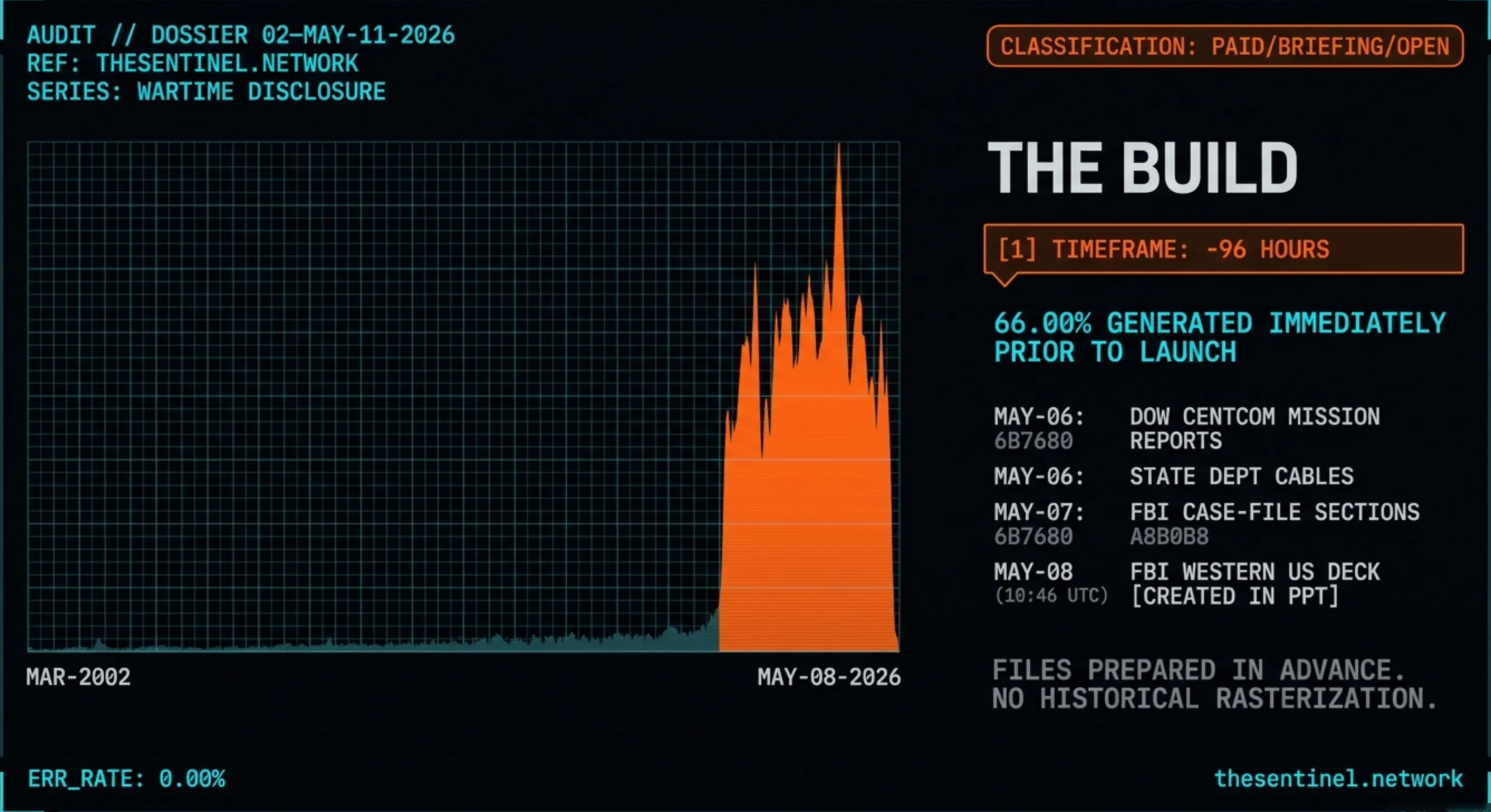
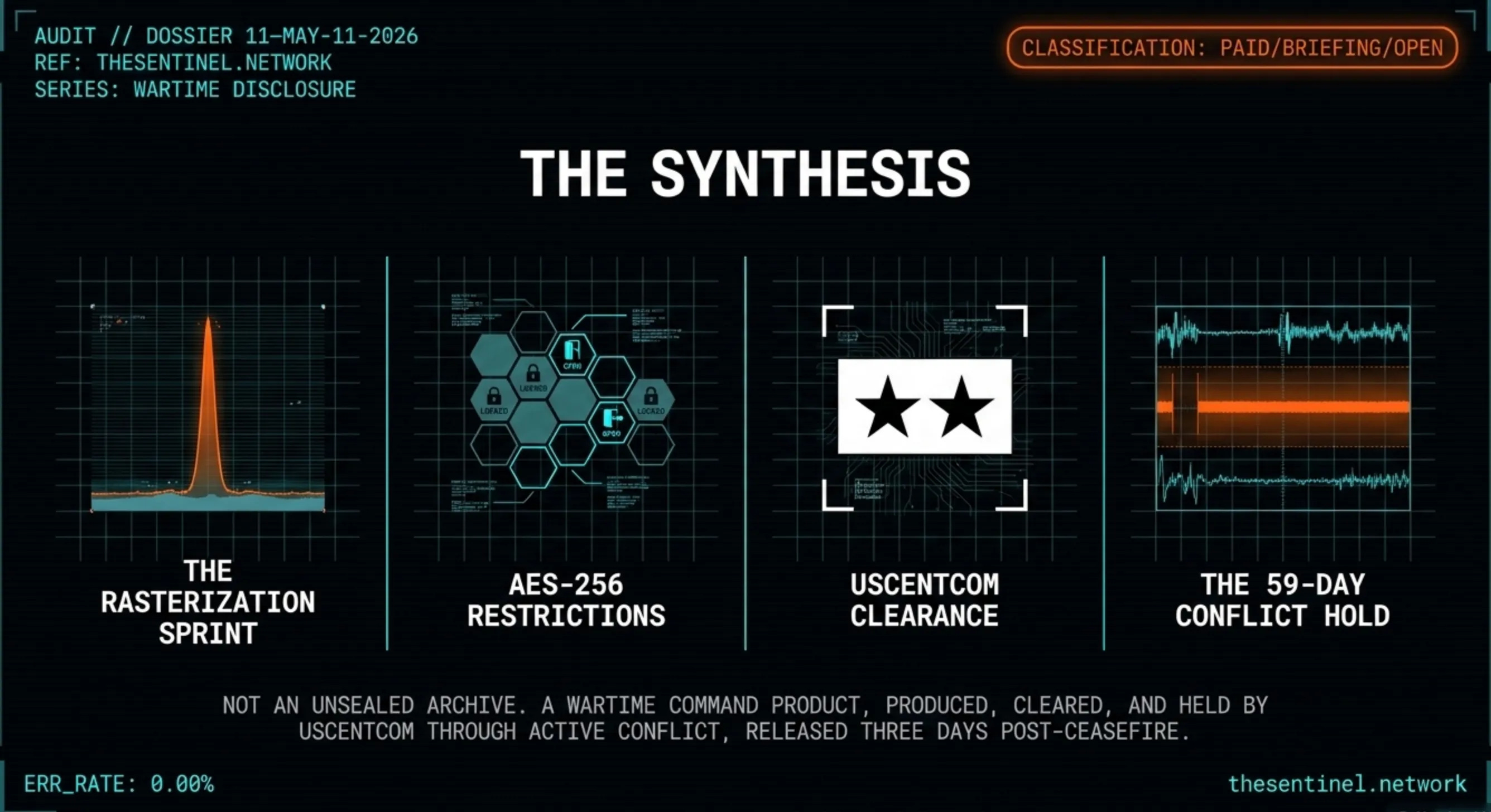
A genuine archive unsealing produces files with creation dates from when the files were originally created. PURSUE Release 01 produces files with creation dates from the days before public release.
The release contains 115 unique PDFs. The creation timestamps cluster as follows.
May  5, 2026:   2 PDFs
May  6, 2026:  21 PDFs
May  7, 2026:  52 PDFs
May  8, 2026:   1 PDF (the day of release)

Total in 4-day window:  76 PDFs (66 percent of the release)
Two-thirds of the released files were generated in the ninety-six hours before the public could see them. The May 7 batch contains the bulk of the FBI’s case-file sections. The May 6 batch contains the Department of War’s CENTCOM mission reports, the NASA Apollo crew debriefings, and the Department of State diplomatic cables. The single May 8 file is the FBI’s Western US event briefing deck, created in PowerPoint at 10:46 UTC on launch morning.
The institution had files prepared in advance. It also produced two-thirds of the release in the four days before launch.
THE LOCK
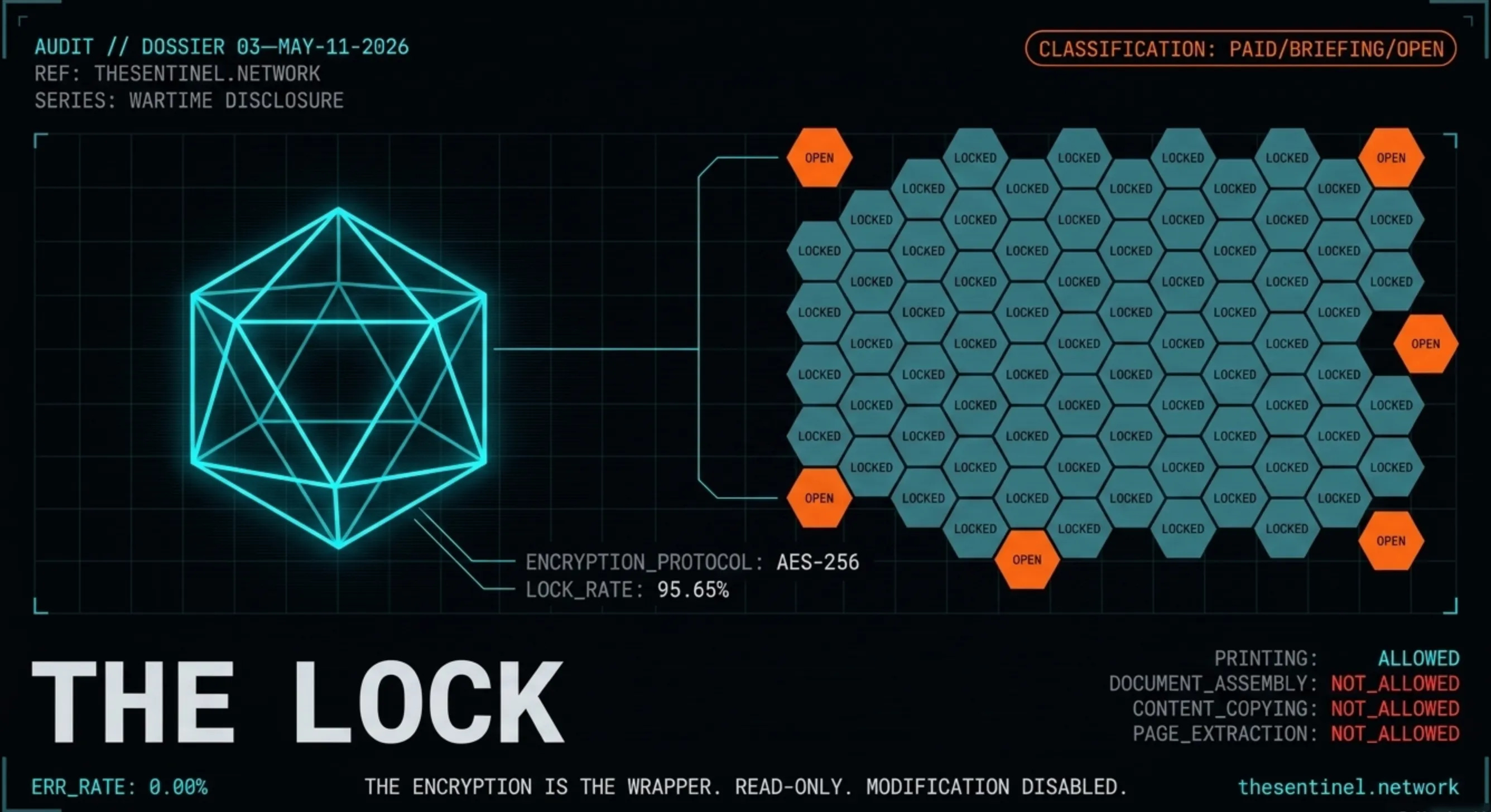
A genuine transparency release produces files in formats that allow reuse. PURSUE Release 01 produces files designed to resist it.
110 of 115 PDFs (95.7 percent) are encrypted with AES-256. The encryption settings explicitly disable copy, change, and edit operations. A reader can open the file. A reader cannot extract the text or modify the document.
The twenty-eight video files in the release are not encrypted, but they are presented one at a time across separate portal pages. We mirrored every video to a single public YouTube playlist so the watchable record sits in one place. What the institution chose to fragment, the public can now watch as a single archive.
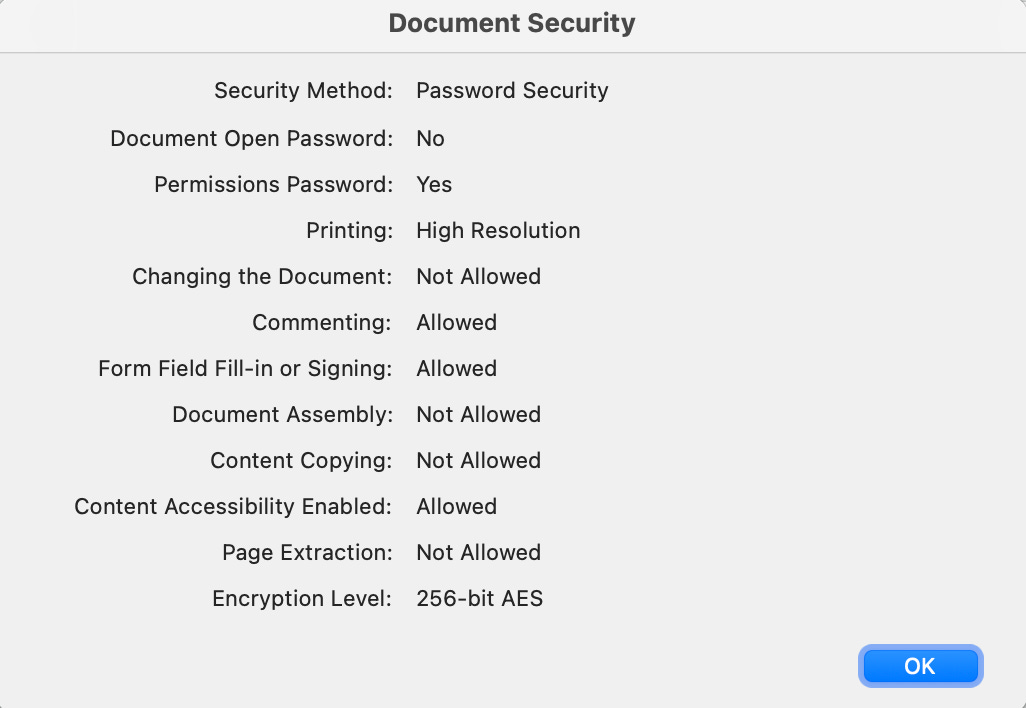
The encryption is the wrapper around the content. The content can be read. It cannot be moved.
THE GAPS
A genuine declassification releases what’s been declassified. The filenames in PURSUE Release 01 reveal what’s missing.
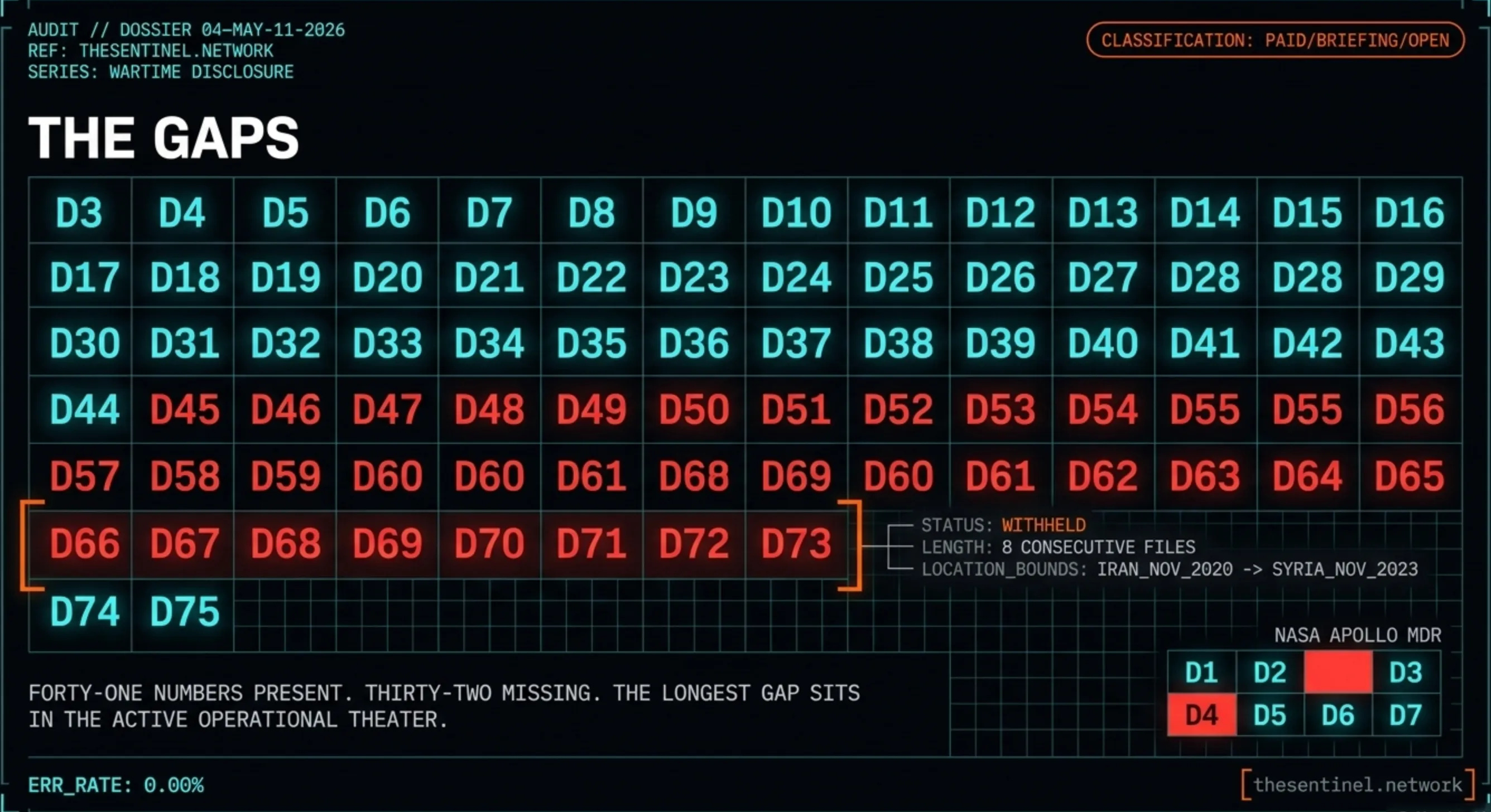
The Department of War’s mission-report files are sequentially numbered: dow-uap-d3 through dow-uap-d75. Forty-one numbers are present. Thirty-two numbers are missing.
The longest consecutive gap runs eight files: D66 through D73, withheld. That gap sits between D64 Iran November 2020 and D74 Syria November 2023. Same operational theater, sequential numbering, eight files in a row not released. Other multi-file gaps: D29-D31, D39-D41, D45-D47.
The forty-one D-numbers that were released cluster heavily on a single combatant command’s area of responsibility. Syria, Iraq, the Persian Gulf, the Strait of Hormuz, the Gulf of Aden, Iran, the Aegean, the Mediterranean. The withheld files are statistically likely to come from the same theater at the same operational tempo.
The Mandatory Declassification Review batch numbers stamped on the released files reveal a parallel pattern. The institution batches declassification under MDR request numbers per DoD Manual 5200.01. The release references a sequential range, MDR 26-0038 through MOR 26-0046, covering nine consecutive MDR numbers. Only two files from that batch range appear in the public release. Seven cleared files in the same batch are not present.
NASA’s series shows the same pattern at smaller scale. Apollo files are numbered D1 through D7. Six are present: D1, D2, D4, D5, D6, D7. D3 is missing. A single conspicuous gap in a six-file Apollo archive.
THE REDACTIONS
A genuine declassification removes the classification. PURSUE Release 01 leaves the classification visible.
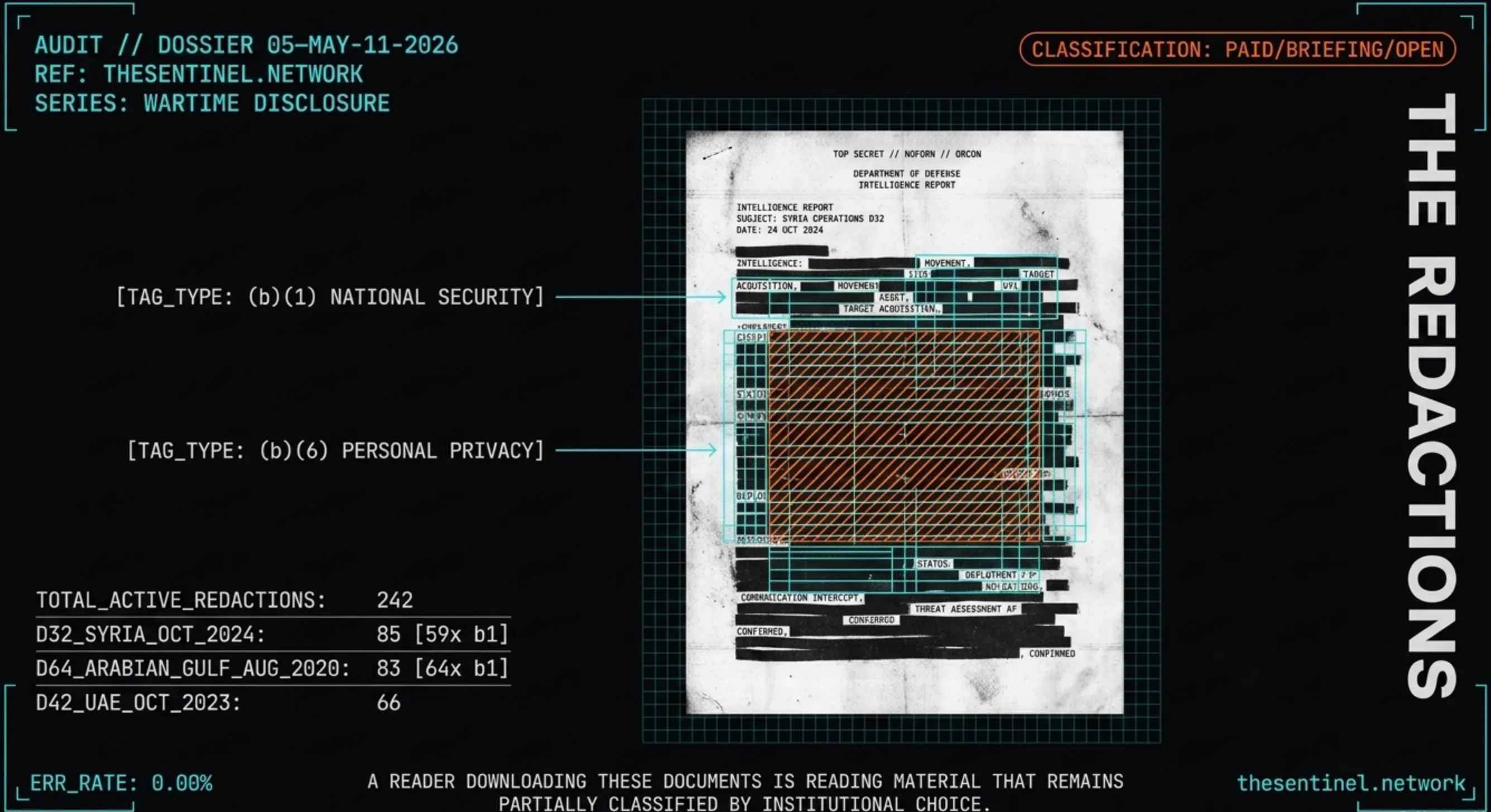
We counted FOIA exemption markers across the released text. The totals.
(b)(1)  national-security exemption:   242 redactions
(b)(6)  personal privacy exemption:    247 redactions
(b)(3)  statutory exemption:            54 redactions
Two hundred forty-two passages remain redacted under the national-security exemption. The institution released documents that visibly retain the (b)(1) marker on every withheld passage.
The most-redacted files are recent CENTCOM mission reports. The Department of War’s October 2024 Syria report contains 85 redactions, 59 of which are (b)(1). The August 2020 Arabian Gulf report contains 83 redactions, 64 of which are (b)(1). The October 2023 UAE report contains 66 redactions. The January 2024 Greece report contains 65.
A reader downloading these documents is reading material that remains partially classified by institutional choice.
THE COMMAND
dow-uap-pr20.pdf, the one Department of War cover document the institution did not encrypt, exposes the approval pipeline. The unencrypted file reads as institutional metadata. It identifies the personal declassification authority by name, rank, and title, and dates the recommendation and the public-release approval.
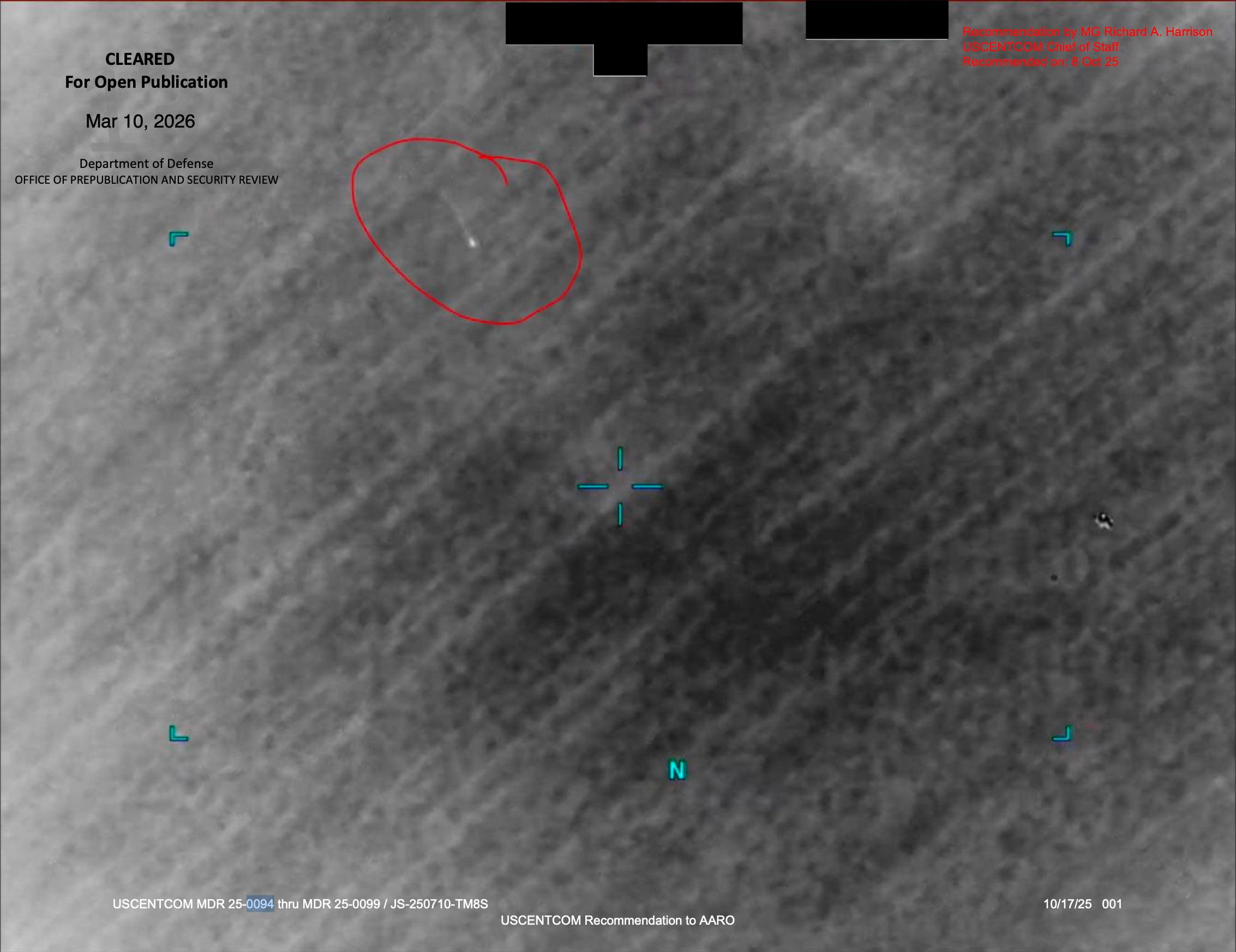
We swept the release for the full chain.
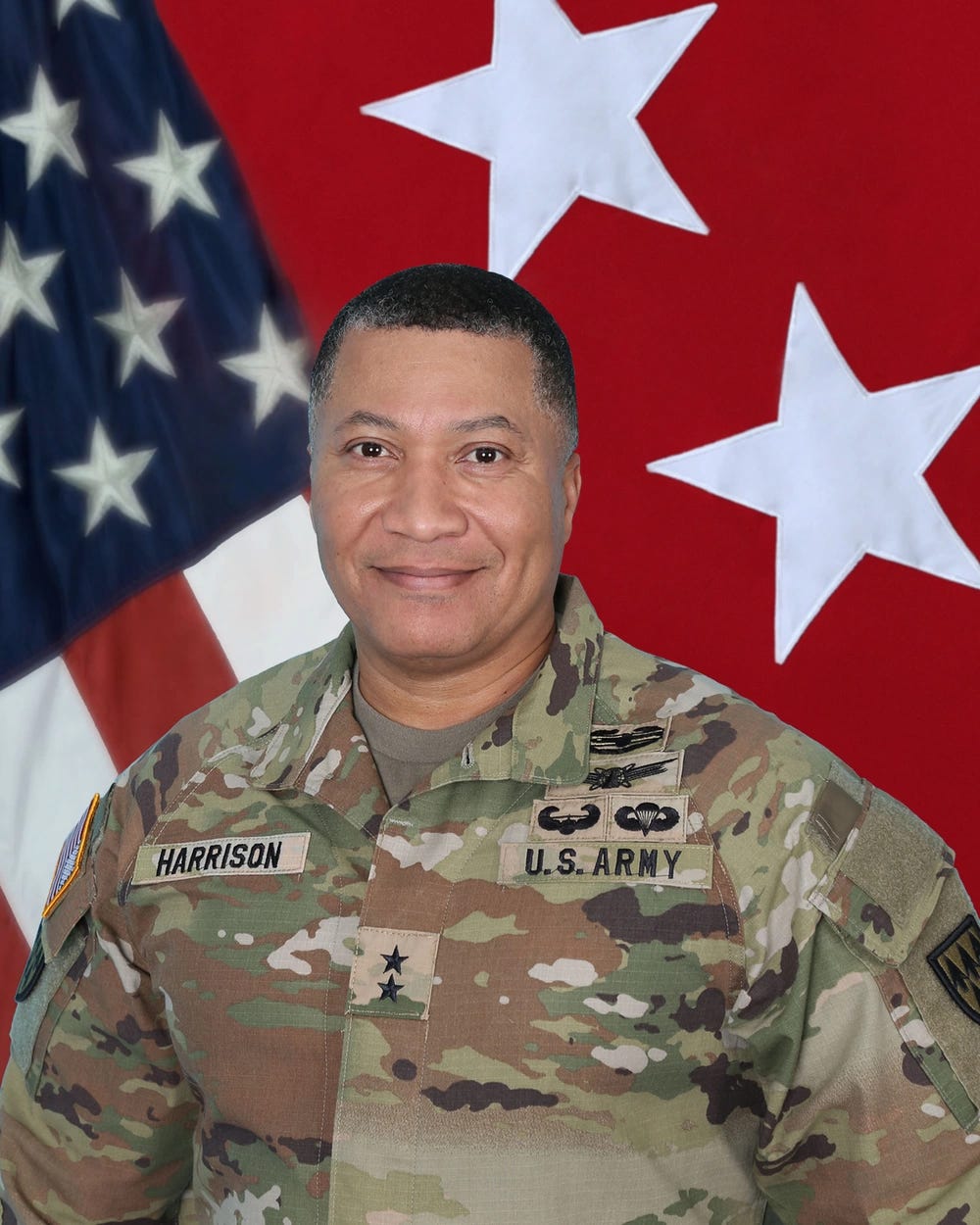
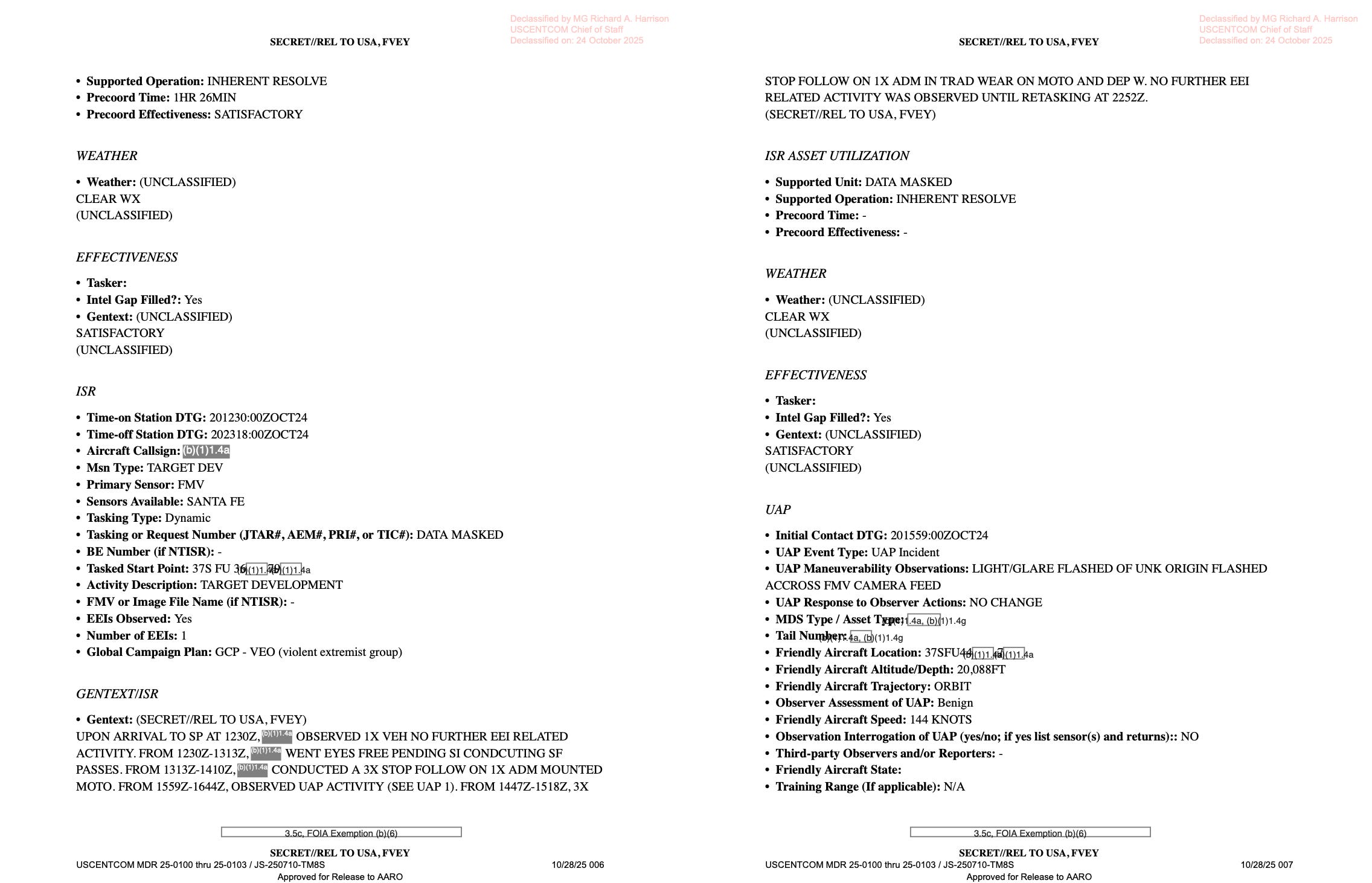
Major General Richard A. Harrison, Chief of Staff, United States Central Command, is the named declassification authority on at least eighteen Department of War mission reports. Harrison’s name appears ninety-four times across the release. His official biography at centcom.mil identifies him as a career Air Defense Artillery officer commissioned in 1994 from Elizabeth City State University. His prior assignment, immediately preceding USCENTCOM Chief of Staff, was Commanding General of the 32nd Army Air and Missile Defense Command at Fort Bliss, Texas, the strategic echelon responsible for global Patriot, THAAD, and Short Range Air Defense deployments. The placement of an Air Defense Artillery commander as the personal declassification authority for unidentified aerial phenomena is institutionally significant. An ADA officer’s authorization to declassify an object as “unresolved” carries the implicit institutional finding that the recorded phenomenon could not be reconciled with conventional ballistic missiles, drones, or electronic warfare countermeasures.
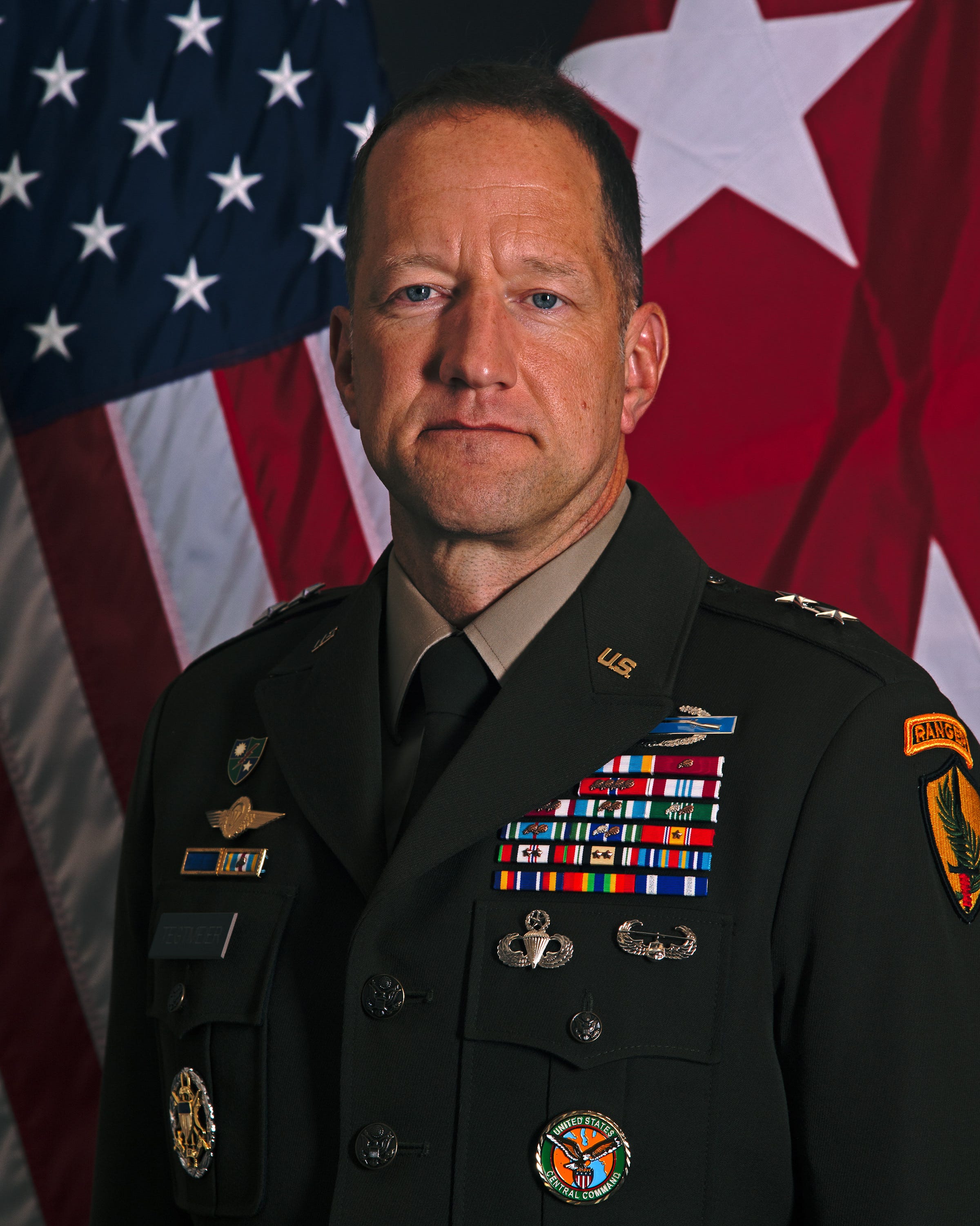
Major General Brandon R. Tegtmeier, Harrison’s predecessor in the USCENTCOM Chief of Staff role, signed the declassification authority on two additional reports (D74 Syria November 2023, D75 Gulf of Aden July 2024). Tegtmeier is a 1996 West Point graduate, commissioned into the Infantry, formerly Commander of the 75th Ranger Regiment, and currently Commanding General of the 82nd Airborne Division at Fort Bragg.
The pipeline is dated and stamped. The Tegtmeier-cleared files were recommended for declassification on June 2, 2025. The Harrison-cleared files were processed in batches between September 12, 2025 and March 16, 2026. Each carries a separate “Approved for Release to AARO“ stamp. The final approval, the Department of Defense Office of Prepublication and Security Review’s “For Open Publication” stamp on PR20, is dated March 10, 2026.
The institutional self-clearance is the structural finding. USCENTCOM produced the operational data. USCENTCOM declassified the operational data. USCENTCOM’s parent department reviewed the operational data for public release. USCENTCOM personnel cleared documents about USCENTCOM’s own area of responsibility. There is no independent review point in the chain.
Neither Harrison nor Tegtmeier has given public testimony, media interviews, or independent statements regarding unidentified aerial phenomena. Their connection to the disclosure framework is documented exclusively through their signatures on internal Mandatory Declassification Review authorizations.
THE WAR
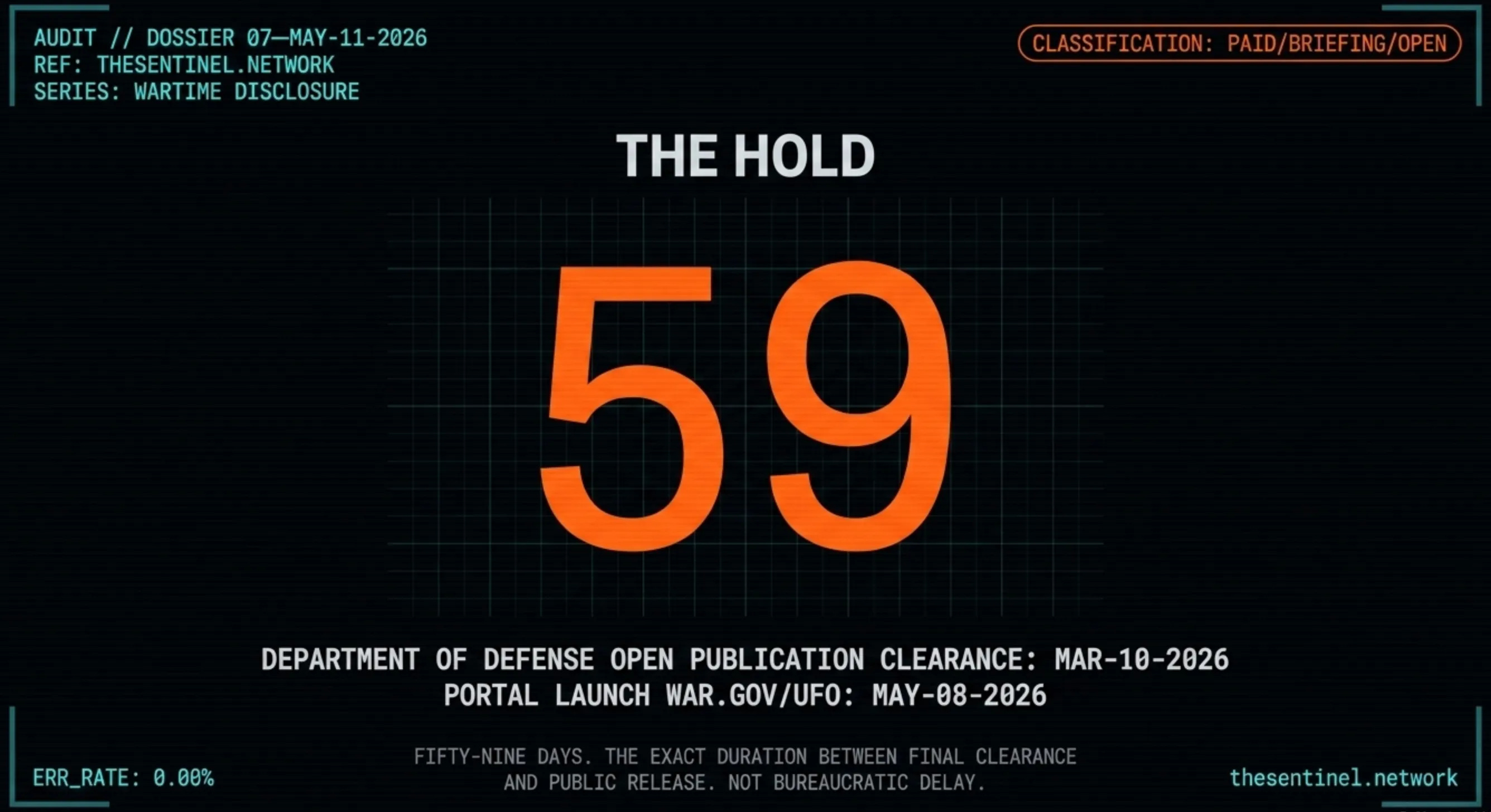
The institutional clearance was complete on March 10, 2026. The portal did not launch until May 8, 2026. Fifty-nine days passed between the cleared date and the public release.
That window is not bureaucratic delay. The window is a war.
On February 28, 2026, the United States and Israel commenced Operation Epic Fury, a coordinated kinetic campaign against the Islamic Republic of Iran. The operation was authorized by the President and executed jointly by USCENTCOM and Israeli Defense Forces. The opening hours included the assassination of Iranian Supreme Leader Ali Khamenei in an Israeli air strike. Iran retaliated within hours under Operation True Promise IV, expanding the conflict to seven countries within forty-eight hours and striking U.S. military installations across Bahrain, Kuwait, Qatar, Jordan, the United Arab Emirates, Saudi Arabia, and Iraq.
The operation ran for sixty-seven days. Forty-eight hours of opening strikes. Thirty-eight days of major combat operations, formally concluded by the White House on April 8, 2026. Twenty-seven additional days of post-ceasefire engagements and Strait of Hormuz blockade operations. On May 5, 2026, Secretary of State Marco Rubio formally announced from the White House briefing room that Operation Epic Fury was over.
PURSUE Release 01 launched three days later.
The institutional timing matters because the institutional actor matters. USCENTCOM was the lead combatant command for Operation Epic Fury. USCENTCOM was also the lead combatant command for the declassification chain on Release 01. The same officers signing UAP declassifications in the autumn of 2025 were preparing for, executing, and concluding a war during the spring of 2026.
The geographic overlap is direct. The PURSUE archive contains multiple ISR mission reports operating from the airbase identified by ICAO code OKAS. OKAS is the United States Air Force designation for Al Asad Airbase in Iraq. Mission reports D12, D18, D28, D61, D62, and D64 each show ISR aircraft taking off from OKAS to observe and record UAP encounters across the Persian Gulf, the Strait of Hormuz, the East China Sea, Iraq, and Iran between 2020 and 2024.
In February 2026, Iran struck Al Asad Airbase with ballistic missiles during Operation Epic Fury. At least sixty-four U.S. service members at Al Asad sustained concussive injuries.
The same airbase that hosted the aircraft that captured the UAP encounters in PURSUE Release 01 was struck by Iranian missiles two months before the public saw the encounter records. The aircraft, the base, the theater, the command, and the war are not separate stories. They are one operational ecosystem. The disclosure release is a slice of that ecosystem, declassified by the same officers running the broader operations, held until the broader operations had stabilized, and published in the strategic communications window that opened when Rubio announced the operation was over.
A release that the institution markets as historical archive material is operationally a wartime command product, withheld during combat and timed to the post-conflict bandwidth window.
THE ABSENCE
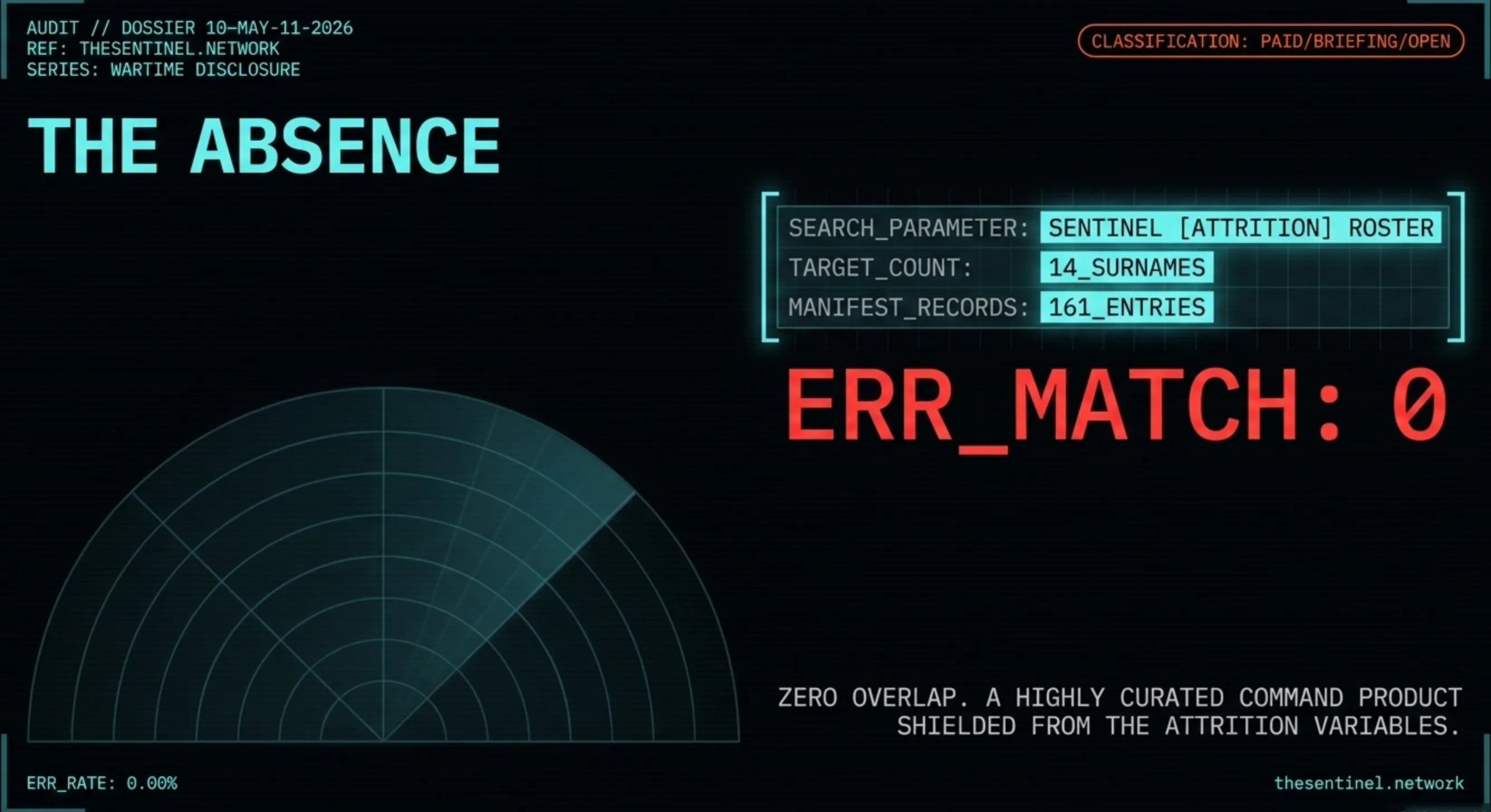
The Sentinel ATTRITION roster has no overlap with the 161-record manifest. None of the fourteen surnames appears anywhere in the release.
THE NEXT
Release 02 will arrive in a few weeks. Release 03 a few weeks after that. The press-release framing will be the same. The structural attributes are what change.
Read the file timestamps. Read the encryption attribute. Count the missing sequence numbers. Tally the redactions still active in the body text. Identify the names on the declassification authority line. Map them to the operational events of the institution holding the files. The release is institutional behavior. The institutional behavior is publishable.
The institution chose this format. The format is the policy.
THE SENTINEL ASSESSMENT:
PURSUE Release 01 was assembled in a four-day rasterization sprint, locked behind AES-256 encryption that disables copy and modification on ninety-six percent of the files, withheld for thirty-two of seventy-three Department of War sequence numbers, published with two hundred forty-two active national-security redactions still visible, personally cleared by two senior USCENTCOM officers whose careers span Air Defense Artillery and Special Operations, and held for fifty-nine days through a war the same combatant command was simultaneously fighting.
The portal launched three days after the war ended. The aircraft that captured the UAP encounters operated from the same airbase Iran struck during the war. The Sentinel ATTRITION roster does not appear in the release.
An institutional product with these attributes is not an unsealed archive. It is a wartime command product, declassified by the command that produced it, held through the active conflict, and published in the strategic communications window that opened when the operation formally ended.
The disclosure framing is the wrapper. The wartime command product is the contents. The institution chose this format. The format is the policy.
The portal launched on Friday. The metadata reads as institutional behavior. The institutional behavior is now on the record.
Keep looking up.
-- The Sentinel Network™
Every briefing we’ve published is free. That’s not changing. This publication has no institutional backing, no sponsors, and no editorial board. We’re doing the work the newsrooms won’t, sourcing papers, filing FOIAs, building tools, and writing at the pace a once-in-a-civilization event demands.
Paid subscribers fund the investigation directly. They get THE SIGNAL (Tuesday market intelligence), FIELDCRAFT (Saturday methodology), Fieldcraft Labs, and the comment section on every briefing. No ads. No sponsors. No strings. Your subscription is a data point against the suppression gradient.
If you can’t subscribe, we don’t care. Read everything. Share everything. The mission is the mission.
Subscribe to The Sentinel Network
A top 100 Science publication on Substack.
Share this investigation. The Suppression Gradient documented what happens when this coverage reaches platforms that do not want you reading it. Every share, every restack, every forwarded link is a data point against the gradient.
Previous briefings: THE THEATER | THE PORTAL | THE OPERATOR | THE FLOOR | THE RECORD | THE NARROW BAND | THE LONG COUNT | THE GREEN BURIAL | THE DEAD DROP | THE GHOST GENERAL | THE ATTRITION (Series)