

SUBJECT: FORENSIC METHODOLOGY ANALYSIS OF ARXIV:2603.19023 // NARROWBAND RADIO TECHNOSIGNATURE SEARCH TOWARD 3I/ATLAS WITH FAST
DATE: MARCH 24, 2026
CROSS-REF: [THE CURATED ORBIT] | [THE SUPPRESSION GRADIENT] | [THE SILENT EDIT] | [CONFIRMED: THE TESS CONTINGENCY] | [THE VERDICT]
DATA CONFIDENCE: VERIFIED METHODOLOGY (original paper, publicly accessible pipeline documentation, institutional partnership records, on-the-record statements from SETI leadership)
WHAT THE CEO TOLD YOU
Before we open the paper, we need to talk about Bill Diamond.
Diamond is the President and CEO of the SETI Institute, headquartered in Mountain View, California. He is not an astronomer. He came to SETI after a decades-long career as a corporate executive in the semiconductor and fiber-optics industries. He is the fundraiser. The dealmaker. The man who keeps the lights on.
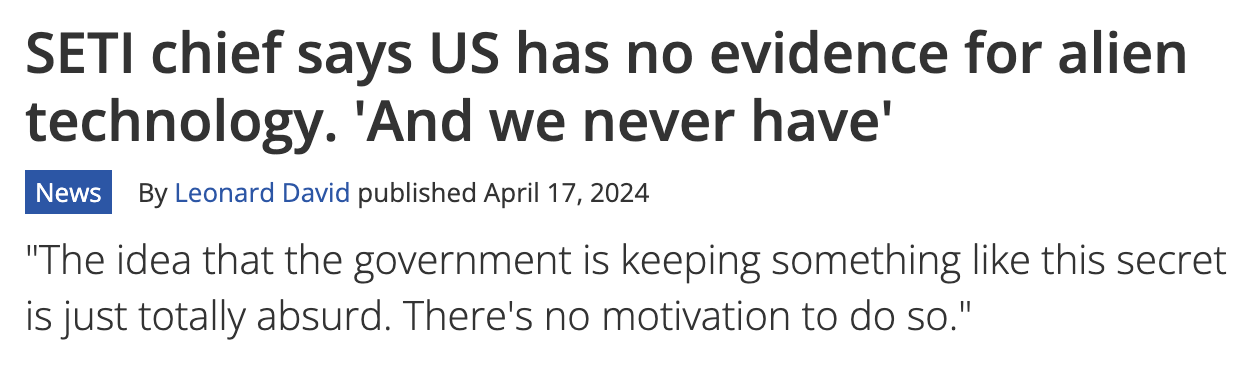
In April 2024, Diamond gave an interview to Space.com in which he said something extraordinary. He was explaining why he didn’t believe aliens had visited Earth. His argument was distance. The nearest star is too far. Any civilization capable of crossing that distance would possess technology beyond our comprehension. They would never send a crewed ship to an unknown destination. And then he said it.
“If such beings exist, they would likely send hardware here first and not biology” (Bill Diamond, SETI Institute CEO, Space.com, April 2024).
Hardware. Here. First. Not biology.
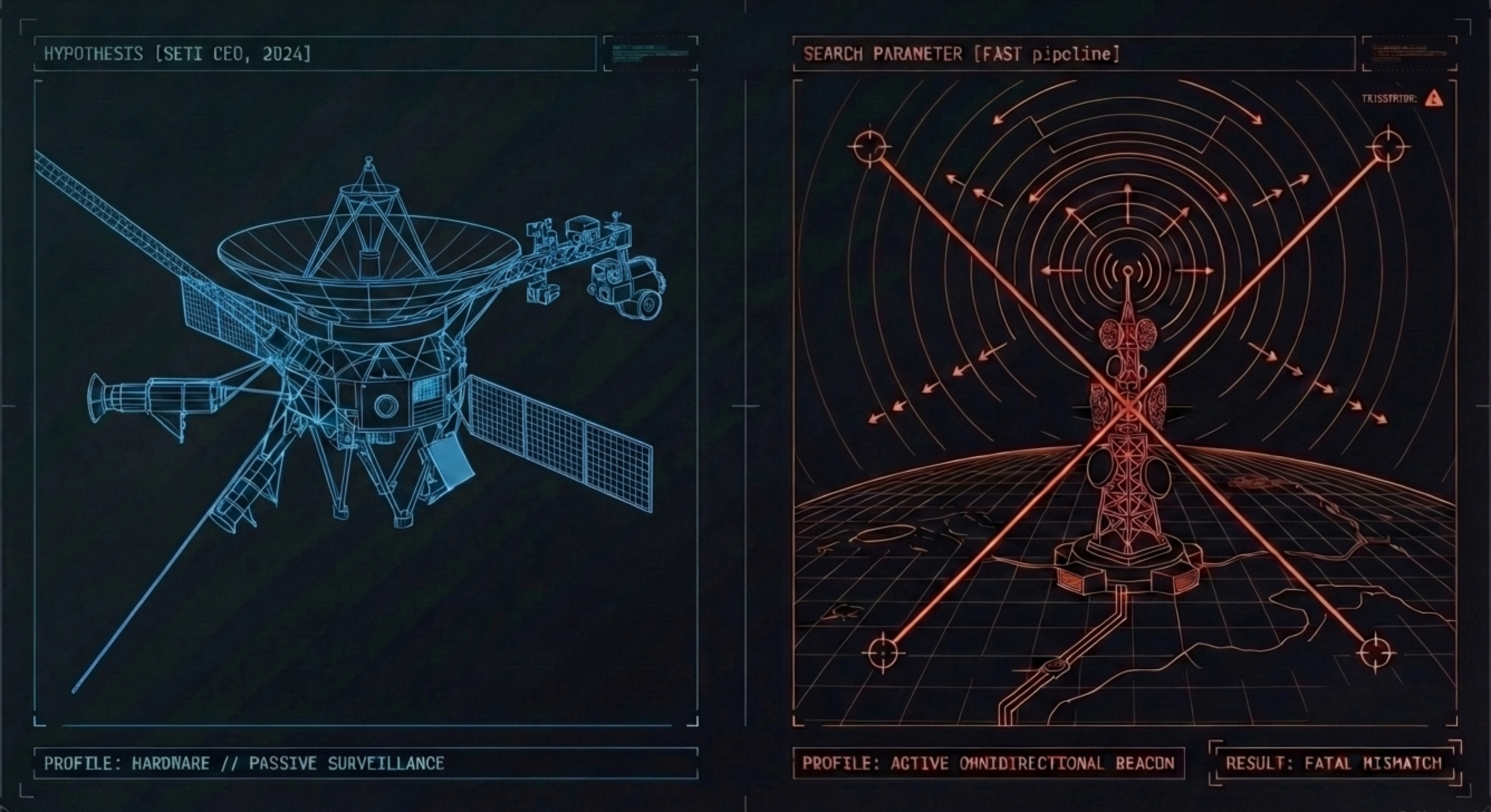
That is a description of a Bracewell probe, a concept from 1960: an autonomous robotic craft sent across interstellar space to observe another star system. Not to talk. To watch. The CEO of the SETI Institute told you, on the record, that this is the most logical form of interstellar contact. The exact hypothesis we have spent thirty briefings and fifty-seven documented anomalies building the evidentiary case for. He even added: “The farthest things we have sent into space are hardware. And that’s logical” (Bill Diamond, Space.com, April 2024).
Now here’s the problem.
Fourteen months after Diamond told you to expect a probe, four of the world’s most powerful radio telescopes pointed at the most anomalous interstellar object ever detected and searched for something else entirely. They searched for a radio tower. A single-frequency beacon broadcasting in every direction like a lighthouse. The ATA, the GBT, MeerKAT, and now FAST.
They didn’t find one.
Four telescopes. Four null results. Case closed. Next story.
WHAT THEY ACTUALLY SEARCHED FOR
On March 18, 2026, researchers from Beijing Normal University published the results of a four-month radio observation campaign targeting 3I/ATLAS with China’s Five-hundred-meter Aperture Spherical Telescope. FAST is the largest single-dish radio telescope on Earth. A half-kilometer bowl carved into a natural limestone valley in Guizhou Province. The most sensitive radio instrument our species has ever built.
The team observed 3I/ATLAS across four windows between October 2025 and January 2026: Mars closest approach, perihelion, Earth closest approach, and departure. One hour per session. They recorded in four different polarization modes, which matters later.
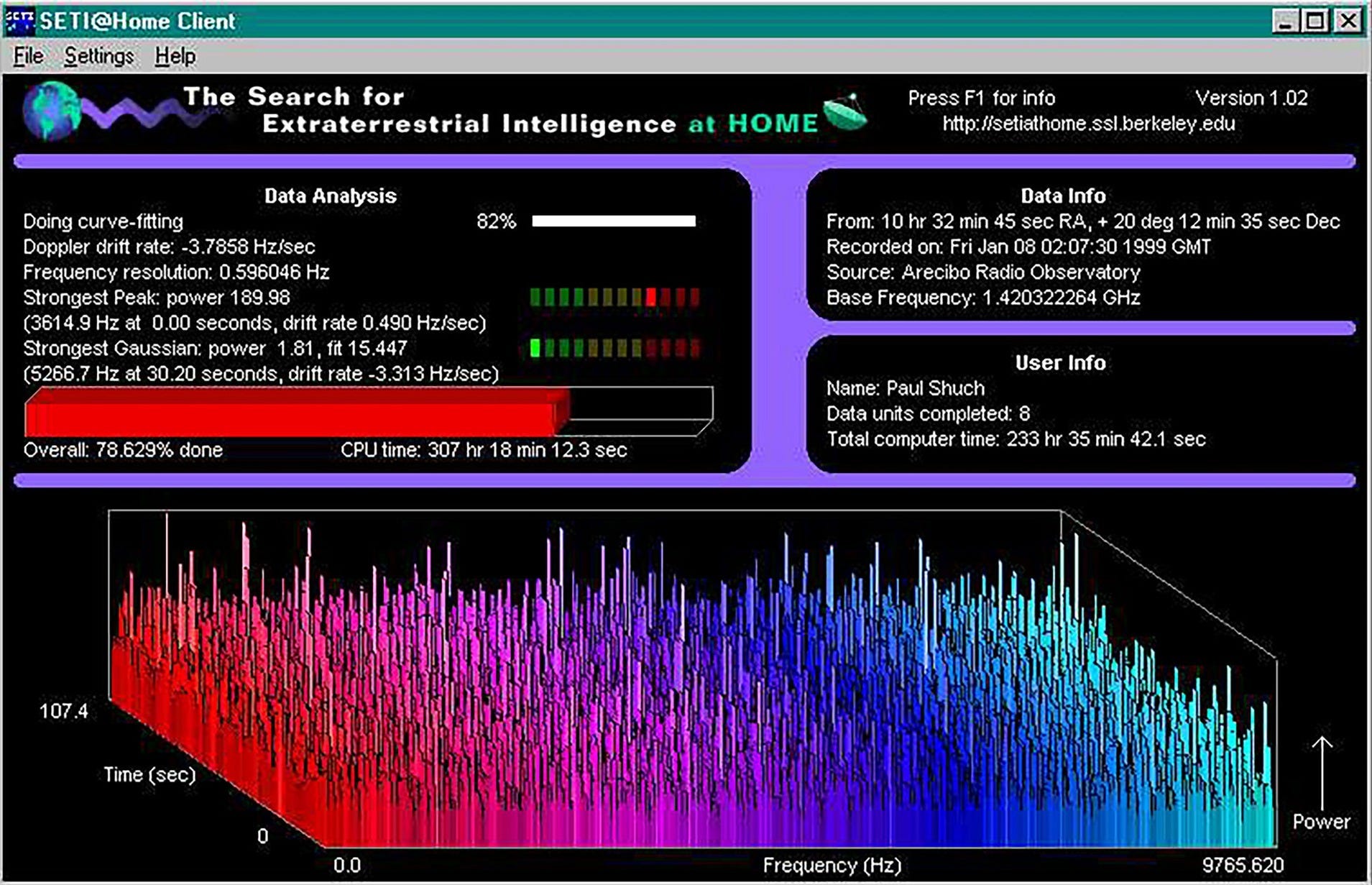
They ran the data through a search tool called bliss. Think of it like tuning a radio dial and listening for a single, clean note that slowly slides up or down the band. That slide is what you’d expect from a transmitter on a moving object. If it’s drifting toward you, the pitch goes up. Away from you, it goes down. Same thing as a passing ambulance siren. The software scans hundreds of millions of frequency channels looking for exactly that pattern.
The search found 20 million hits across the four dates. Most of those are noise. Satellites. Cell towers. GPS. The usual junk that floods any radio telescope pointed at the sky.
The team ran every hit through a gauntlet of filters designed to strip out anything that looked like it came from Earth.
Twenty million became 14,292.
Then the team looked at each of those by hand.
14,292 became five.
Five signals. Out of twenty million. Survived everything the most sensitive radio telescope on Earth could throw at them.
The team called them hardware glitches and moved on.
The paper is real. The methods are documented. The team did exactly what they said they did. And that is precisely the problem.
THE CHAIN OF CUSTODY
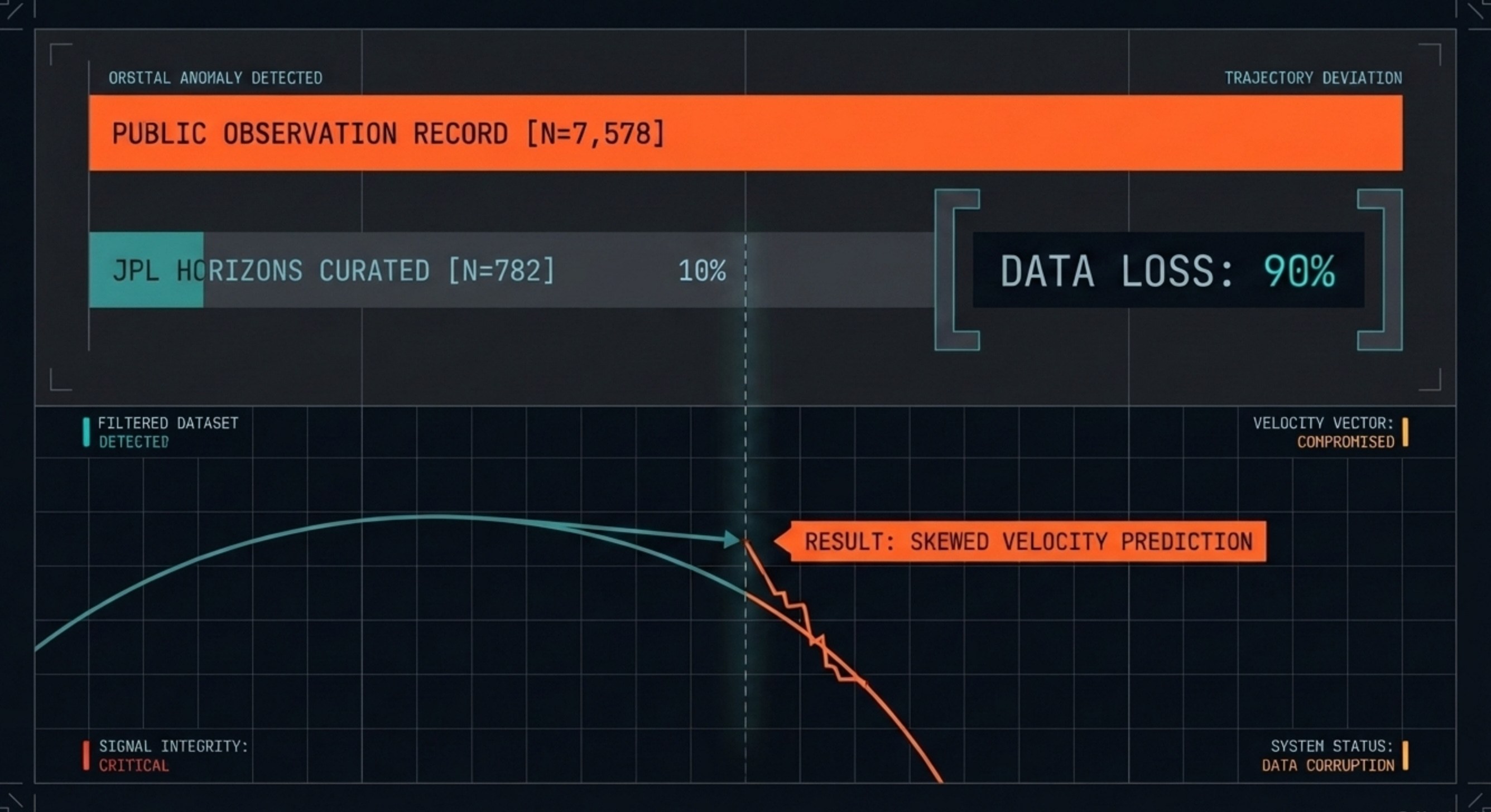
In The Curated Orbit, we documented a simple, verifiable fact. When three independent scientists calculated the trajectory of 3I/ATLAS, they used 7,578 position measurements from the full public observation record. When NASA’s Jet Propulsion Laboratory calculated the same trajectory, they used 782. The missing 90% changed everything. The force pushing the object off its expected path changes direction, peaks too early for a standard comet, and points toward a mathematically precise intercept with Jupiter.
JPL publishes its curated data through a service called JPL Horizons. This is the standard position-tracking source for the global astronomy community. When you need to know where 3I/ATLAS is, how fast it’s moving, and how quickly that motion is changing, you go to Horizons.
Now open the FAST paper. Page one. Footnote one.
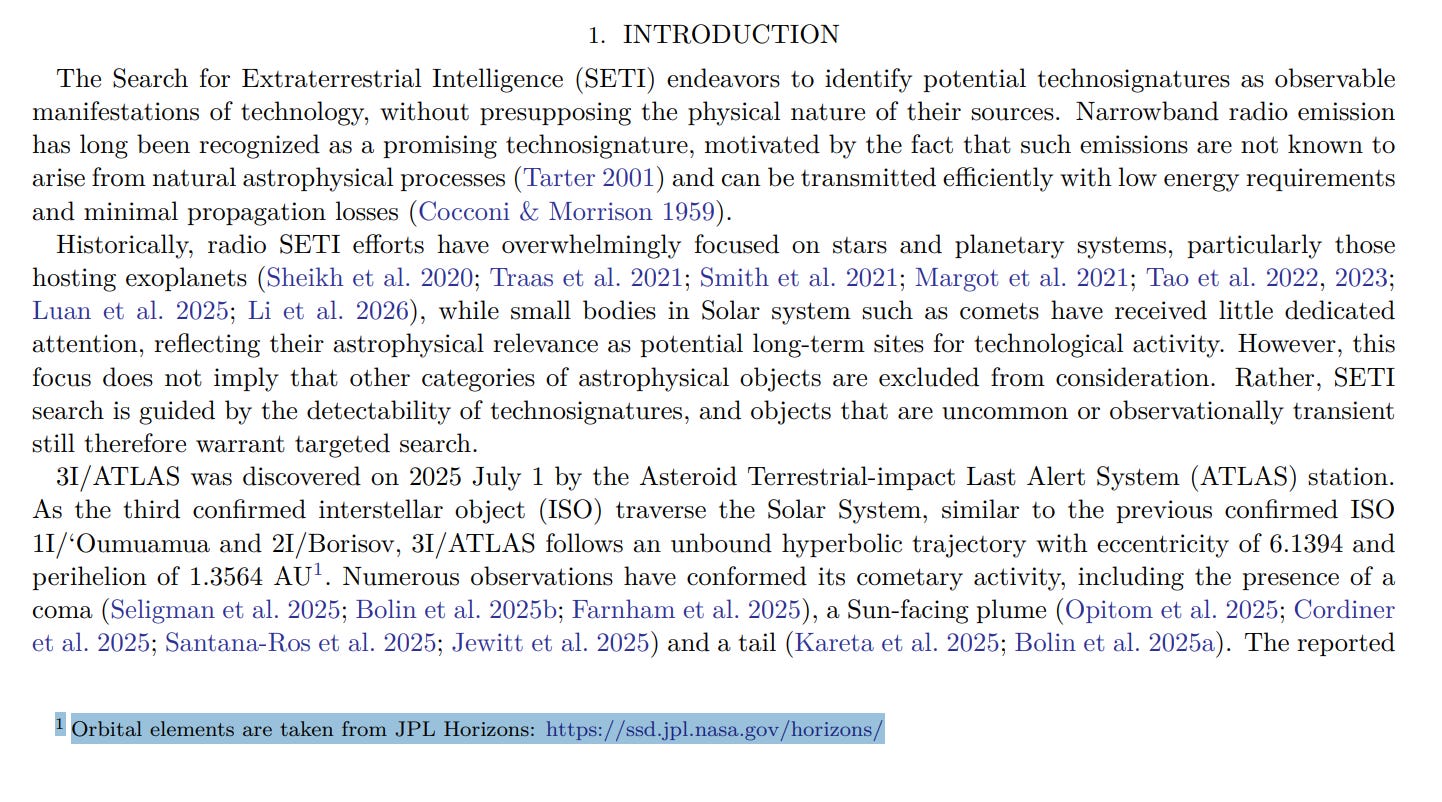
“Orbital elements are taken from JPL Horizons.”
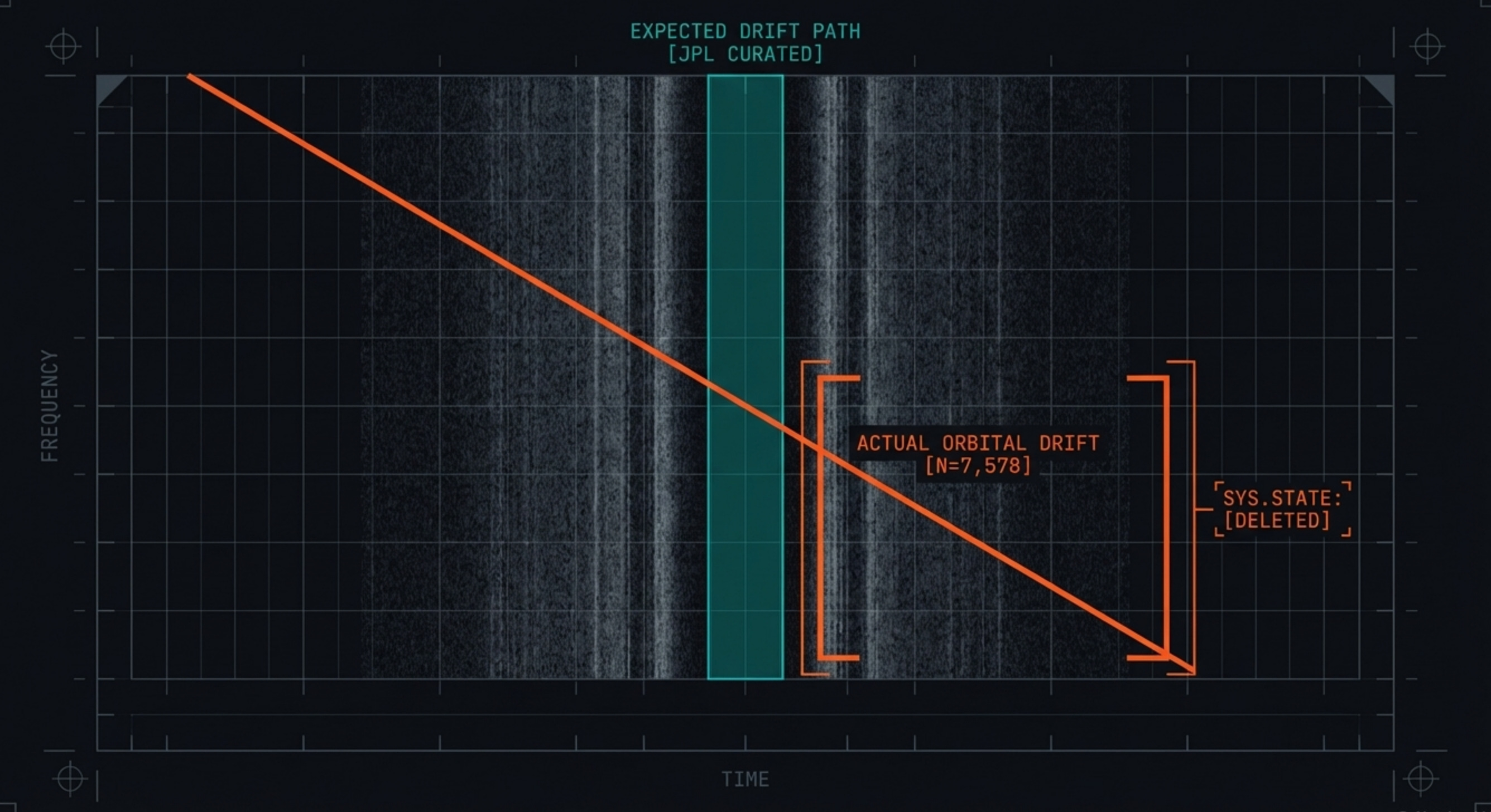
The FAST team used JPL’s orbital data to predict how a signal from 3I/ATLAS would behave. Remember the ambulance siren analogy? If you know how fast the object is moving toward or away from you, you can calculate exactly how much any signal it emits should slide up or down the radio dial. JPL’s orbit tells you the speed. The speed tells you the slide. The slide becomes the filter.
The team calculated the expected slide for each observation date and drew a narrow box around it. Anything that slid at the right rate, you keep. Anything outside the box, you throw away.
Follow the chain. JPL curates 90% of the observations out of the orbital solution. That curated orbit produces a specific speed prediction. The speed prediction sets the filter box. The filter box determines which signals live and which signals die.
If JPL’s orbit is wrong, the speed prediction is wrong. The filter box is drawn in the wrong place. And any signal sliding at the correct rate, the one that matches the object’s actual motion as calculated from the full dataset, gets automatically thrown in the trash because it doesn’t match the curated prediction.
The FAST team didn’t need to know any of this. They didn’t need to participate in anything. They pulled orbital data from the standard source and applied it rigorously. That’s the architecture. The bias doesn’t require intent. It propagates automatically from upstream.
ONE NETWORK, FOUR TELESCOPES
Here is a fact that has not appeared in any press coverage of the 3I/ATLAS radio searches.
All four telescopes that searched the object are connected to the same institutional network. All four used nearly identical methods. And three of the four ran the same software.
The Allen Telescope Array is operated by the SETI Institute and funded by Breakthrough Listen. The Green Bank Telescope search was conducted by Breakthrough Listen. The MeerKAT search used the Breakthrough Listen User Supplied Equipment (BLUSE) backend. And FAST? The partnership between FAST’s SETI program and Breakthrough Listen was formalized in 2016 through a joint statement between the Breakthrough Prize Foundation and the National Astronomical Observatories of the Chinese Academy of Sciences.
This isn’t speculation. It’s in the papers. The BNU team co-authors publications with Dan Werthimer, a Breakthrough Listen principal investigator at UC Berkeley. They co-author with Vishal Gajjar of the SETI Institute. The interference-filtering algorithms BNU uses were co-developed with the Breakthrough Listen team. The bliss pipeline used by FAST is the same software used by ATA and GBT.
So when the headlines say “four independent telescopes found nothing,” here’s what that actually means: one institutional network, running one software pipeline, pulling orbital data from one upstream source, applying one set of assumptions about what an alien signal looks like, searched one frequency band, and produced four null results.
That is not four independent confirmations. That is one experiment repeated four times.
THE SNOWBALL QUESTION
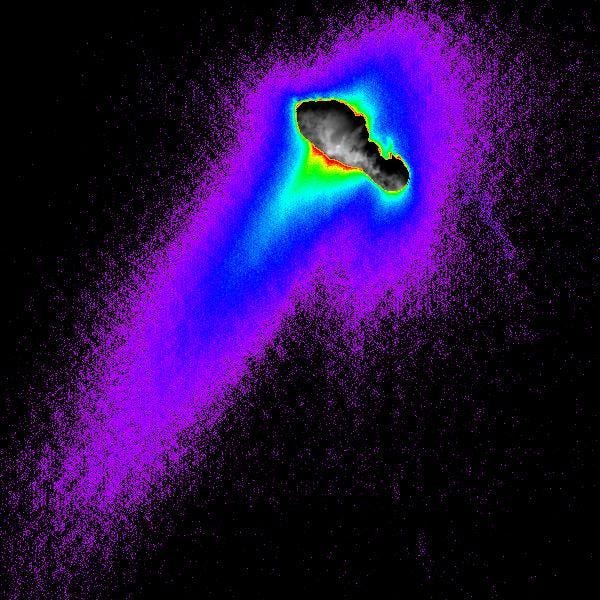
Here’s something nobody in the press has thought to ask. When did SETI start pointing radio telescopes at snowballs?
The answer is: they don’t. They never have.
Comet NEOWISE lit up the northern sky in 2020. It was visible to the naked eye. No radio telescope searched it for signals.
Hale-Bopp in 1997? The most observed comet of the twentieth century. No SETI search.
Comet Leonard in 2021? Nothing.
Comet Tsuchinshan-ATLAS in 2024? Nothing.
In the entire history of radio astronomy, not a single solar system comet has ever received a dedicated narrowband signal search. Zero.
Now count what 3I got. The Allen Telescope Array was on target within 23 hours of discovery. MeerKAT in South Africa. Parkes in Australia. FAST in China. And the hundred-meter Green Bank Telescope less than 24 hours before closest approach, running four receivers simultaneously at sensitivity levels that could detect your cell phone from 167 million miles away.
Five telescopes. Four continents. The most comprehensive radio SETI campaign ever aimed at a single object in the history of the field.
For a dirty snowball.
The Breakthrough Listen Exotica Catalog includes comets. They’re filed under “one of everything in the observed universe.” A checkbox. A single pointing. 3I didn’t get a checkbox. It got a mobilization. The kind of coordinated, multi-facility, rapid-response campaign that you deploy when you don’t know what you’re dealing with and you need to know fast.
The press releases say comet. The telescope time says something else entirely.
THE SIGNALS THEY DELETED BEFORE LOOKING
The bliss pipeline has a feature that should concern anyone who takes the Bracewell probe hypothesis seriously.
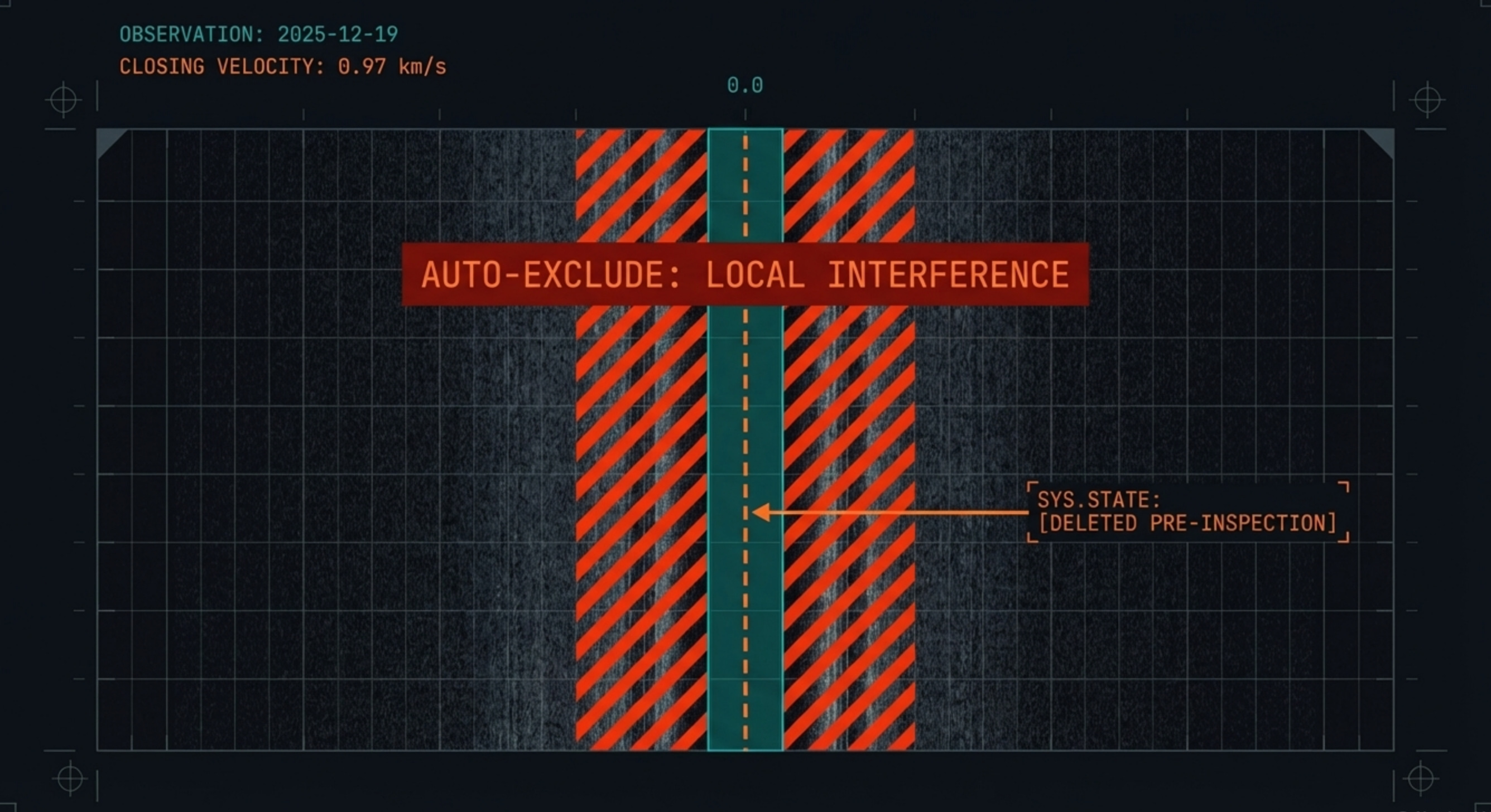
It automatically deletes all zero-drift signals.
A zero-drift signal is one that sits perfectly still on the dial. No movement. In radio astronomy, that’s the hallmark of local interference. Your cell tower, your WiFi router, your GPS satellite: all of these produce signals that sit at a fixed frequency because they’re on the same spinning rock you are. Throwing them out makes perfect sense if you’re listening for something far away that’s moving relative to Earth.
But 3I/ATLAS is not a distant star. It’s a local object. And on December 19, 2025, during the Earth closest approach observation, it was barely moving toward or away from Earth at all. The paper reports a closing speed of just 0.97 km/s on that date, the slowest of any observation window. Nearly standing still relative to the telescope.
A frequency-locked beacon, exactly the type of signal a monitoring probe might emit if it were designed to be found by a nearby technological civilization, could produce near-zero drift at precisely the geometry of closest approach. The moment when a signal would be strongest. The moment when detection probability would be highest.
The pipeline deleted those signals before anyone looked at them.
This isn’t a bug. It’s a design choice baked into how every SETI search works. And it applies across the entire network. ATA excluded zero-drift. GBT excluded zero-drift. MeerKAT excluded zero-drift. FAST excluded zero-drift. Four telescopes, four observation campaigns, one universal blind spot.
THE NARROW BOX
The zero-drift exclusion is not the only blind spot.
The filter box we just described is extremely narrow. And it’s built on one assumption: that any signal coming from 3I/ATLAS is frozen to the snowball at the center.
Here’s the problem with that. We documented in The Curated Orbit that nobody actually knows how big the snowball is. Three different mathematical models fit the data equally well and produce ranges from 1.5 to 3 kilometers. They can’t tell us how big it is. The team built their filter around a snowball they can’t measure, assumed any signal source is frozen to it, and threw out everything that didn’t match.
But 3I/ATLAS isn’t a snowball. It’s surrounded by a massive cloud of gas and dust, the coma, stretching tens of thousands of kilometers into space. If a signal source were parked anywhere in that cloud, hovering nearby, orbiting at a different rate, or capable of moving on its own, its signal would slide at a different speed entirely. It would fall outside the box. Deleted.
THE FIVE SURVIVORS
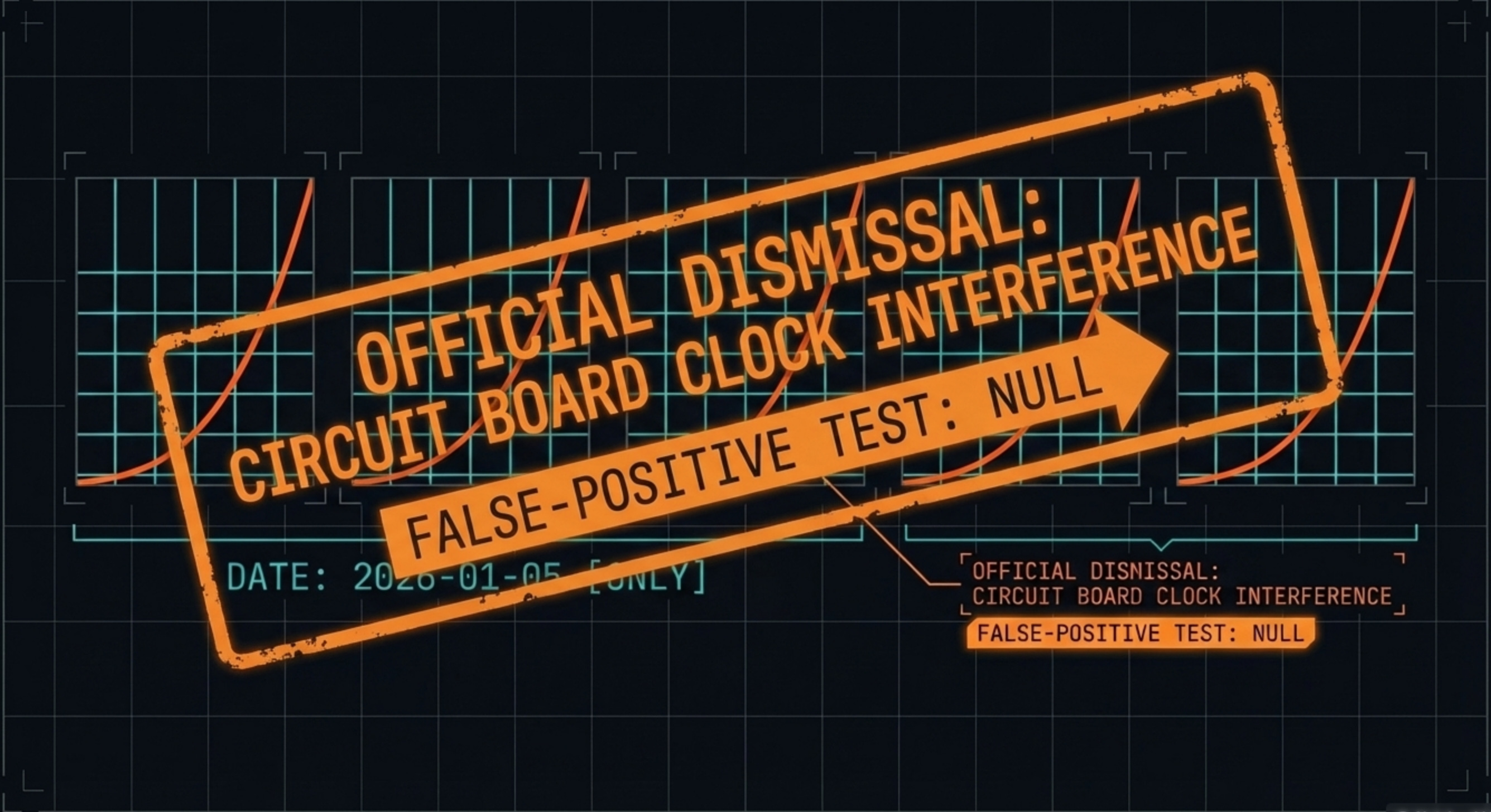
Twenty million hits. Fourteen thousand candidates. Five survivors. All five had the same unusual shape: instead of drifting at a steady rate, they accelerated upward. Like a car that isn’t just moving but stepping on the gas. All five appeared on a single date: January 5, 2026. None appeared on the three earlier sessions.
The team blamed them on an internal instrument. A circuit board that converts the raw signal into digital data. The board runs on tiny crystal clocks. The argument: combinations of those clock frequencies can mix together and produce phantom signals. So the team tried every possible combination with multipliers up to 50 and found matches.
Here’s the problem. With that many clocks, that many multipliers, and that much tolerance, you can match anything. Pick a random frequency out of thin air. This method will find a clock combination that “explains” it. The team never runs that test though. They never ask: how many fake frequencies would also match? That’s the basic sanity check. They skip it.
This is the same playbook used to dismiss the blc1 signal at Proxima Centauri in 2019. Same hardware family. Same explanation. Different continent. Every signal detected is blamed on the same thing.
And nobody explains why the signals appeared on one date only. Same telescope. Same receiver. Same board. Four sessions.
SENTINEL ASSESSMENT: Five signals survived twenty million. All five share a shape. All five appeared on one date. The dismissal relies on a matching method with enough free parameters to explain any frequency on the dial. No false-positive test was performed. The date-specificity is unaddressed. We are not claiming these signals are extraterrestrial.
We are documenting that the dismissal would not survive peer review in any other field.
THE TWISTED CHANNELS
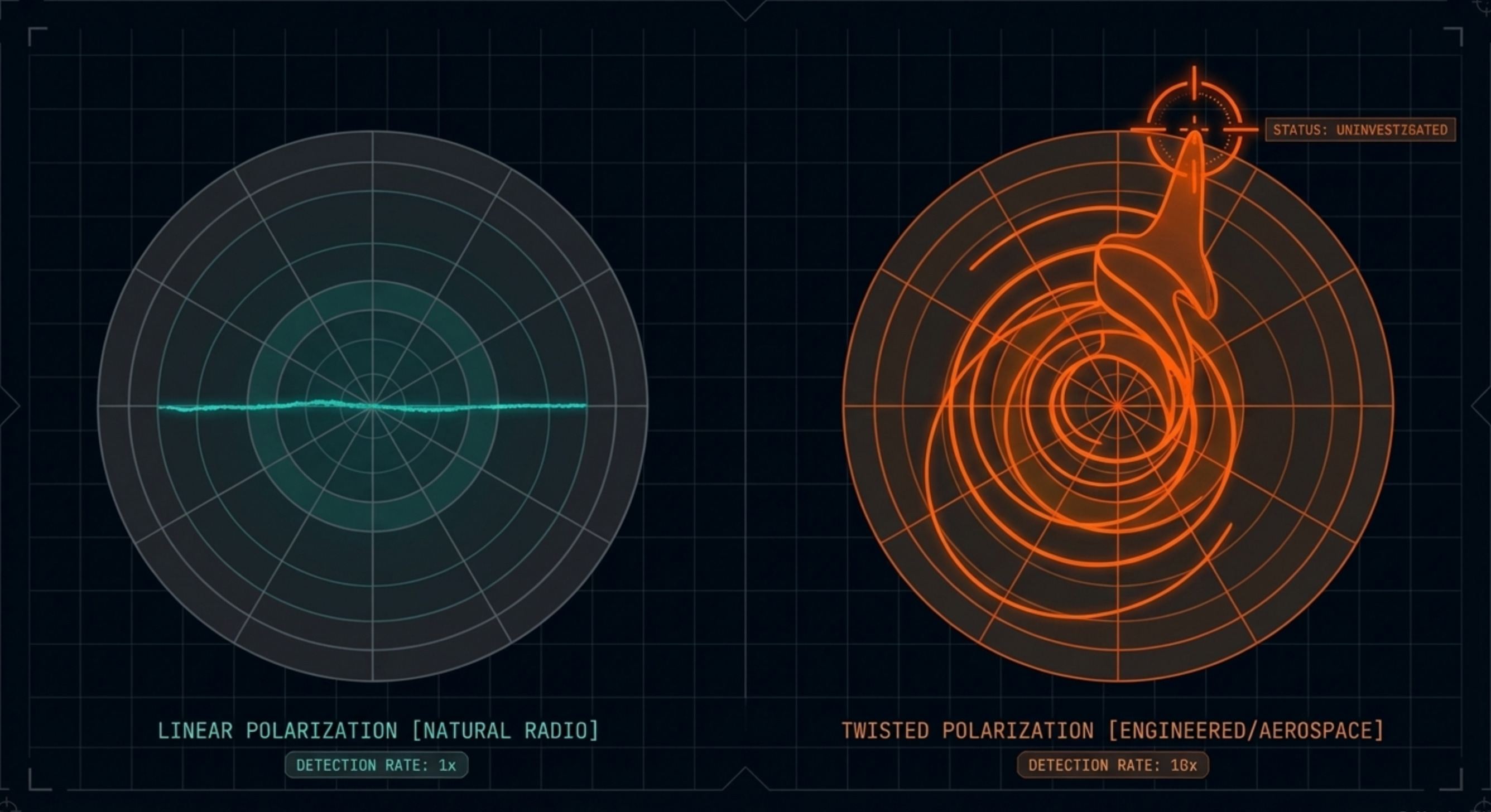
FAST recorded in four channels. Two measure standard radio wave patterns. Two measure something different: complex, rotating patterns where the signal twists between planes as it travels.
Think of it like this. Most natural radio signals vibrate in one direction, like shaking a rope side to side. Engineered signals, the kind from satellites and military radar, often twist as they travel, like turning a jump rope in a circle. That twist is one of the oldest tools in aerospace intelligence for telling natural clutter apart from something designed.
The twisted channels produced ten times the candidate rate of the standard ones.
The team blames Earth-based interference leaking into the dish from the side. Maybe. But they don’t check whether the excess lines up with where 3I was in the sky. They don’t compare the on-target beam to the reference beams. They note the number and move on.
SENTINEL ASSESSMENT: A 10x candidate excess in the channels most associated with engineered signals. Noted in the data tables. Never investigated. The one test that would tell you whether this is interesting or irrelevant was not performed.
THE TOOL THAT LOOKS THE WRONG WAY
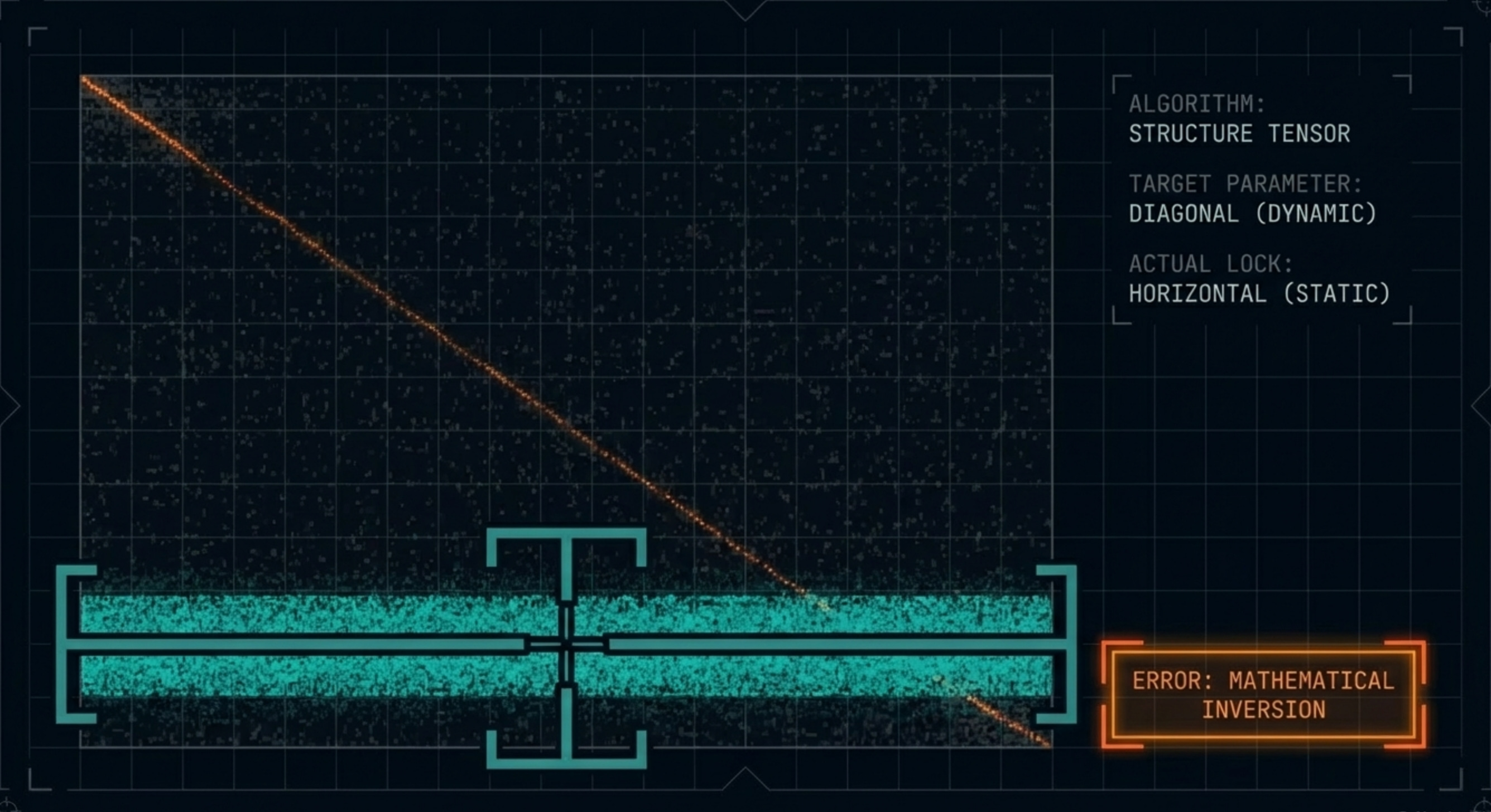
After the main search, the team ran a second pass using something called a structure tensor, a mathematical tool borrowed from image processing. Here’s what it does. Take the radio data and lay it out like a photograph where time runs down the page and frequency runs across. A real signal from a moving object would show up as a diagonal streak. Background noise looks like random static. The structure tensor scans the image for regions where the texture is organized in one direction, like a streak, versus random in all directions, like noise.
In Section V.3, the team admits something remarkable. When they pointed this tool at the data, it kept locking onto flat, horizontal lines from the hardware instead of the diagonal streaks it was supposed to find. Why? A real signal from a moving object flickers and fades as it drifts across the band. Static interference from the electronics just sits there, perfectly consistent. The tool grabs whatever pattern is most stable. And the most stable thing in the image is the noise.
Their signal-finding tool is better at finding noise than signal. They document this limitation in the paper. They do not adjust the tool. They do not rerun the search. They move on to the conclusion.
THE ARCHITECTURE
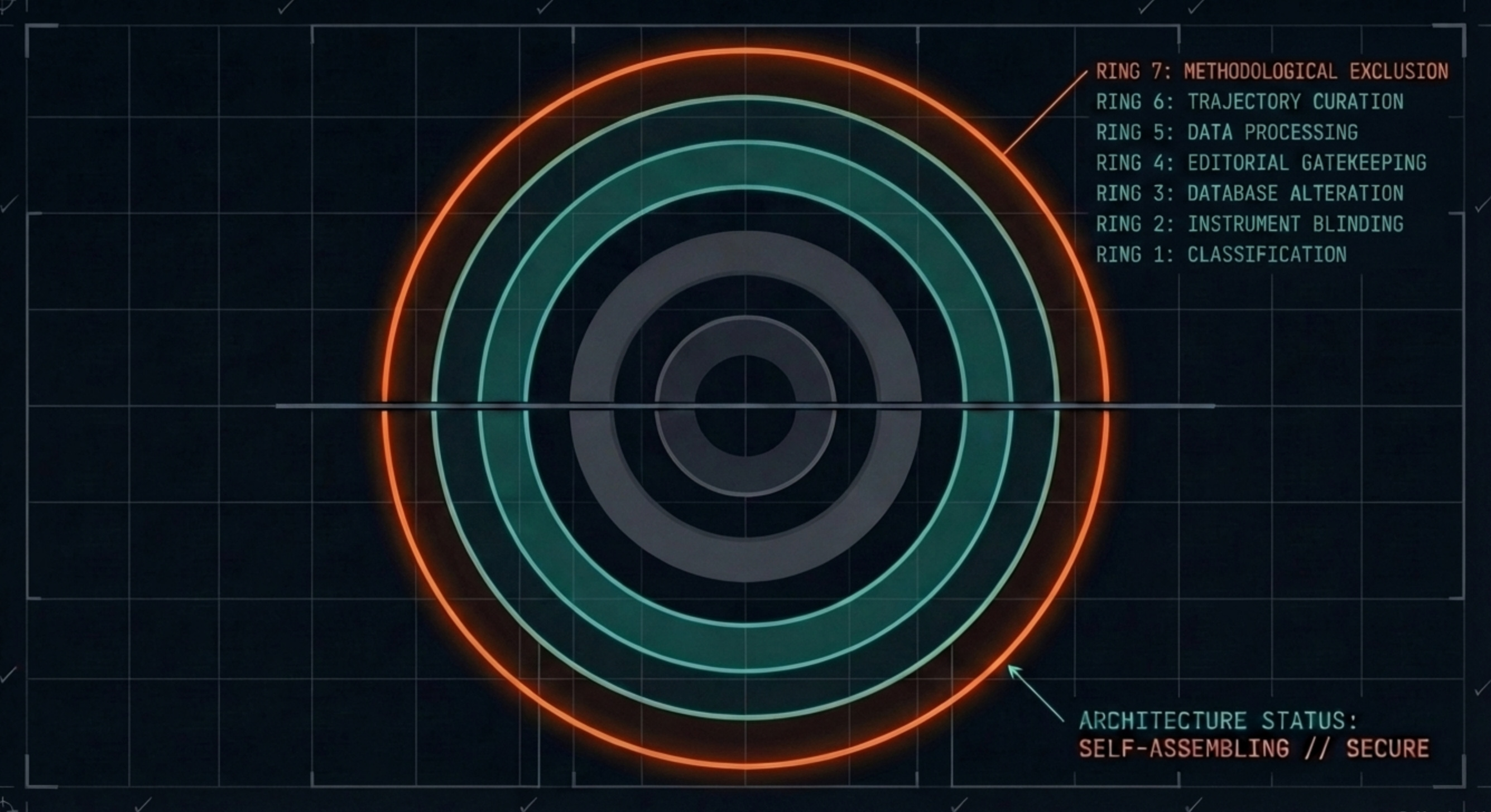
In The Suppression Gradient, we mapped five layers of information architecture surrounding 3I/ATLAS. The intelligence classification. The instrument blinding. The database scrubbing. The editorial gatekeeping. The data processing.
In The Curated Orbit, we documented Layer 6: the trajectory curation. JPL used 782 data points when 7,578 were available. The missing 90% changed the force profile.
This paper is Layer 7. And it’s different from the others.
Layers 1 through 6 involve actions. Someone edits a database. Someone excludes anomalous frames. Someone rejects a paper. Someone curates an orbit. Layer 7 doesn’t require anyone to do anything. It requires only that a community of well-intentioned scientists share a single set of assumptions, pull their data from one upstream source, run the same software, and search for the one thing a Bracewell probe would never do.
This is not conspiracy. It’s paradigm lock. The assumptions guarantee the conclusion before the first signal hits the dish.
JPL curates the orbit. The curated orbit feeds the search filters. Breakthrough Listen provides the software. The software deletes zero-drift and burst signals. The SETI Institute provides the worldview: “We don’t have any evidence of any credible source that would indicate the presence of alien technology in our skies. And we never have” (Bill Diamond, Space.com, April 2024).
You don’t need coordination. You need consensus. And consensus, in science, is the most powerful filter of all.
SENTINEL ASSESSMENT: Seven documented layers. Intelligence classification. Instrument blinding. Database alteration. Editorial gatekeeping. Data processing. Trajectory curation. And now: methodological exclusion. Each layer operates independently. Each layer reinforces the same conclusion. No single layer requires knowledge of the others. The architecture is self-assembling.
WHY IT’S THE WRONG SEARCH
We are not saying the BNU team faked anything. Their work appears rigorous within the rules they set for themselves.
We are saying the rules are wrong for the question being asked.
If 3I/ATLAS is what we think it is, what we’ve spent thirty briefings building the case for, then it’s a passive surveillance craft. A Bracewell probe. Designed to watch. Not to broadcast.
The evidence stack is public. The ecliptic alignment has a 0.005% probability of being random. The force profile changes direction at perihelion. The chemistry carries age markers ten times older than the Sun. The trajectory points at Jupiter with mathematical precision. We made five testable predictions before it got there.
Searching for a constant radio beacon on a dormant surveillance probe is like searching for a lighthouse on a submarine. The absence of the lighthouse does not mean the submarine isn’t there. It means you brought the wrong instrument.
THE 1993 SHADOW
To understand why SETI searches for distant beacons and won’t engage with local anomalies, you need to understand what almost killed the field thirty years ago.
In 1992, NASA finally got serious about searching for extraterrestrial intelligence. They launched the High Resolution Microwave Survey, the first federally funded SETI program in history. Real budget. Real telescopes. Designed to run for a decade.
It lasted one year.
Senator Richard Bryan, a Democrat from Nevada, saw an easy target. SETI had no defense contractor lobby behind it. No congressional district depended on it. No corporation would lose a contract if it died. Bryan introduced a last-minute amendment killing the program and put out a press release calling it “the end of Martian hunting season at the taxpayer’s expense.” Congress laughed. The program died. Nobody with power lifted a finger to stop it.
That moment broke something in the field that never healed. SETI learned a lesson: if you can be mocked, you can be defunded. The only way to survive is to never give anyone a reason to laugh.
The Institute pivoted to private money. Today it runs on Silicon Valley philanthropy, anchored by a $200 million gift from Qualcomm co-founder Franklin Antonio in 2023. That kind of money comes with an unwritten rule: don’t embarrass us. Don’t get associated with UFO culture. Don’t give a senator a punchline.
This is why Diamond and Seth Shostak guard the boundary so aggressively. SETI scientists have openly stated they are “professional skeptics” who consider UFOs entirely outside their discipline. After David Grusch’s congressional testimony in 2023, Shostak published an op-ed on MSNBC mocking the claims. Diamond called government UFO secrecy “totally absurd” (Bill Diamond, Space.com, April 2024).
Every one of those statements tells the donor class the same thing: your money is safe here. We will never embarrass you. We will never find anything uncomfortable. Because we designed our search so that uncomfortable findings can’t occur.
The null result is not a failure. It is a feature.
WHAT COMES NEXT
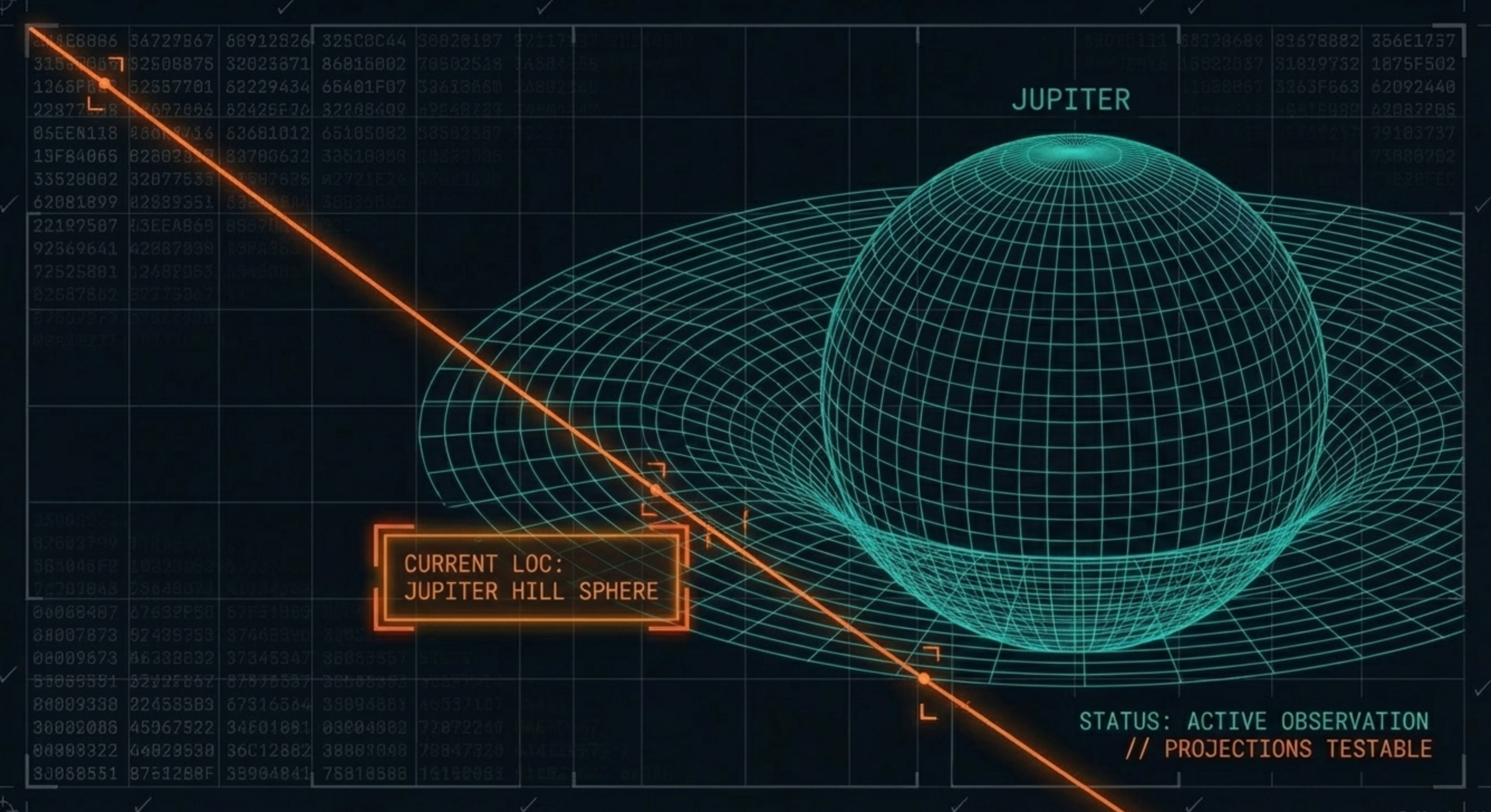
3I/ATLAS entered Jupiter’s Hill Sphere last week. The five predictions published in The Verdict are now testable. If the object’s behavior at Jupiter matches the probe hypothesis, no number of radio nulls will matter. If it matches the comet hypothesis, we’ll report that too. We always do.
Four telescopes running the same software on the same curated orbit, searching for a signal type the probe hypothesis says would not exist, is not an answer. It’s a ritual.
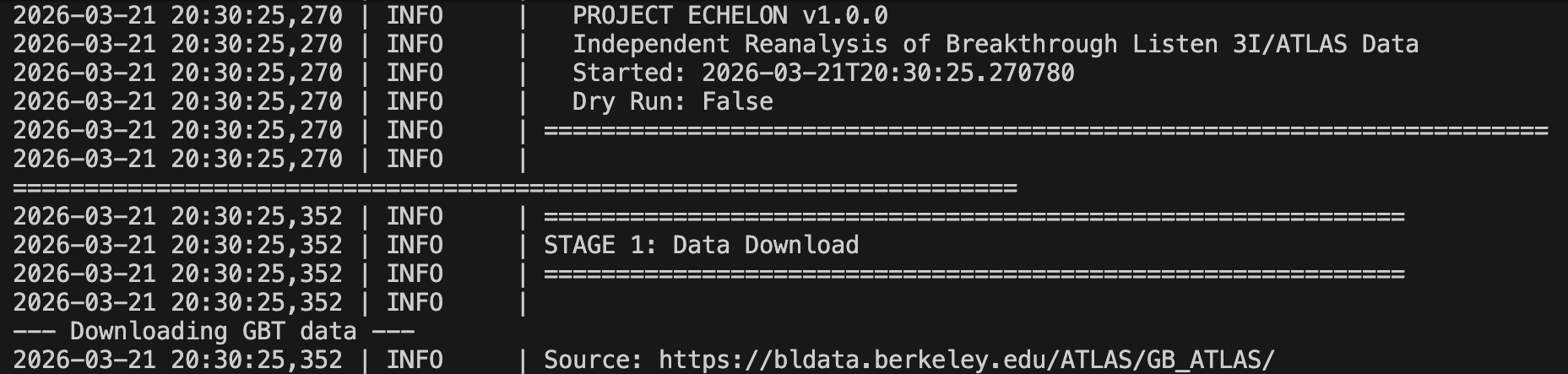
The raw data is public. All of it. ATA, GBT, MeerKAT, and Parkes observations are available for download seti.berkeley.edu/atlas. We know at least three tests this team didn’t run that could change the result. The data is sitting there waiting for someone to run it. Looks like that someone is going to be us. We are currently working on Part 2: Project Echelon. Over 6TB of raw data is currently being downloaded. When that finishes, we run those tests.
The most sensitive radio telescope on the planet listened to the most anomalous interstellar object in human history for four months. It heard nothing louder than a dying flashlight. And the man who runs the organization that coordinated the search told you, nearly two years ago, to expect exactly the kind of object that his telescopes were never designed to find.
Thirty briefings. 57+ anomalies. Five predictions on the record. One object inside Jupiter’s gravity well.
The narrow band heard nothing. Now it’s our turn to listen.
Keep looking up.
-- The Sentinel
Sentinel Note: We hate paywalls as much as you do. Every briefing we’ve published is free and we plan to keep it that way. That’s not changing. But this publication has no institutional backing, no sponsors, and no editorial board. We’re a small team doing the work that the newsrooms won’t. Sourcing papers, filing FOIAs, building tools, auditing SETI and writing at a pace that keeps up with a once-in-a-civilization event. If you can subscribe, you’re funding independent investigation with no strings attached. We also introduced a new series for subscribers where we document our methodology and discuss the tools we use for our work. If you can’t subscribe, we don’t care. Read everything. Share everything. The mission is the mission.
Share this briefing. The Suppression Gradient documented what happens when this coverage reaches platforms that don’t want you reading it. Every share, every restack, every forwarded link is a data point against the gradient.
Previous briefings: The Weigh-In | The Verdict | The Ancient Engine | The Curated Orbit | The Long Count | The Green Burial | The Ghost Coma | The Ignition Sequence | The Heartbeat | The Suppression Gradient | The Silent Edit | CONFIRMED: The TESS Contingency | The Glomar Confirmation
Is Avi Loeb aware of your work and are you in communication with him? Your writing is so exacting and clear that even for someone not in the field, it is still comprehensible and, frankly, exhilarating. I'm grateful to be on the receiving end of such talent.
If 3I/Atlas is 10 billion years old, that is long enough for it to have evolved intelligence. I don't mean that there is organic life on it, only that intelligent systems had plenty of time to evolve. And one motive for such a system is to maximize survival time, thus the incentive to leave whatever comet cloud it evolved in.
So 3I/Atlas is headed for the Oort cloud, perhaps to harvest resources?