

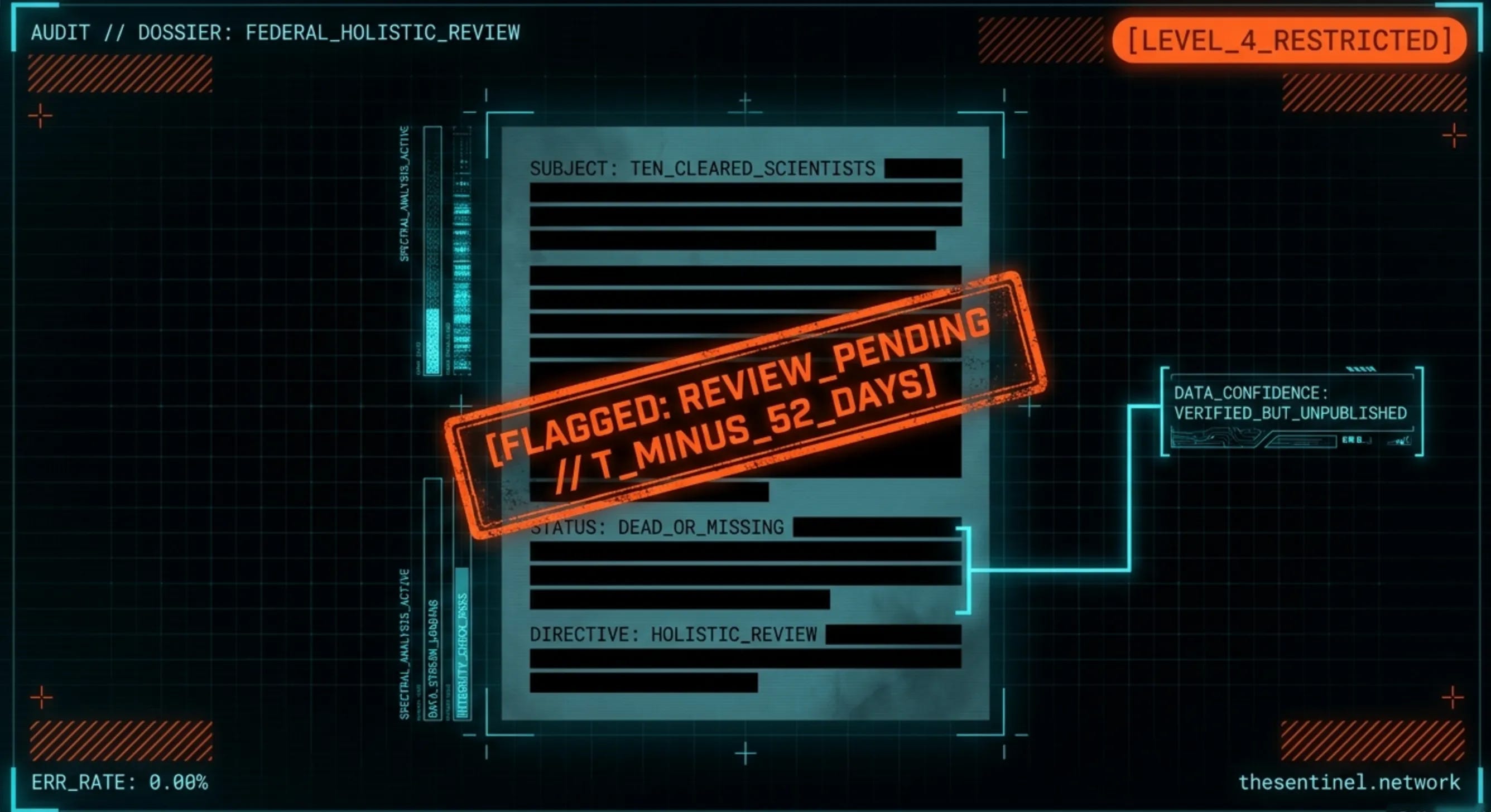
SUBJECT: FEDERAL “HOLISTIC REVIEW” OF SCIENTIST DEATHS AND DISAPPEARANCES // PROMISE-VERSUS-DELIVERY AUDIT, APRIL 17 TO JUNE 8 2026
DATE: JUNE 8, 2026
CROSS-REF: THE WALK | THE LONG COUNT | THE GHOST GENERAL | THE WITNESS | THE FLOOR | THE SUPPRESSION GRADIENT
DATA CONFIDENCE: VERIFIED (WHITE HOUSE BRIEFINGS APRIL 16-17 2026; HOUSE OVERSIGHT COMMITTEE LETTERS AND RELEASES; FBI DIRECTOR ON-CAMERA, APRIL 29 2026; AP; WASHINGTON POST; CNN; NBC NEWS; SCIENTIFIC AMERICAN) + ANALYSIS (SENTINEL CROSS-REFERENCE)
We are building the video side of this operation. If you want the briefings in a format you can watch, subscribe to The Sentinel Network on YouTube.
THE PROMISE
A government that tells you it will have answers in a week and a half has started a clock. We can read a clock.
On April 15, Fox News correspondent Peter Doocy asked White House Press Secretary Karoline Leavitt a question that did not come from a briefing book. Ten American scientists, he said, had died or vanished since mid-2024, all of them reportedly cleared for nuclear or aerospace work, and he wanted to know whether anyone was checking to see if the cases were connected. Leavitt said she would look into it.
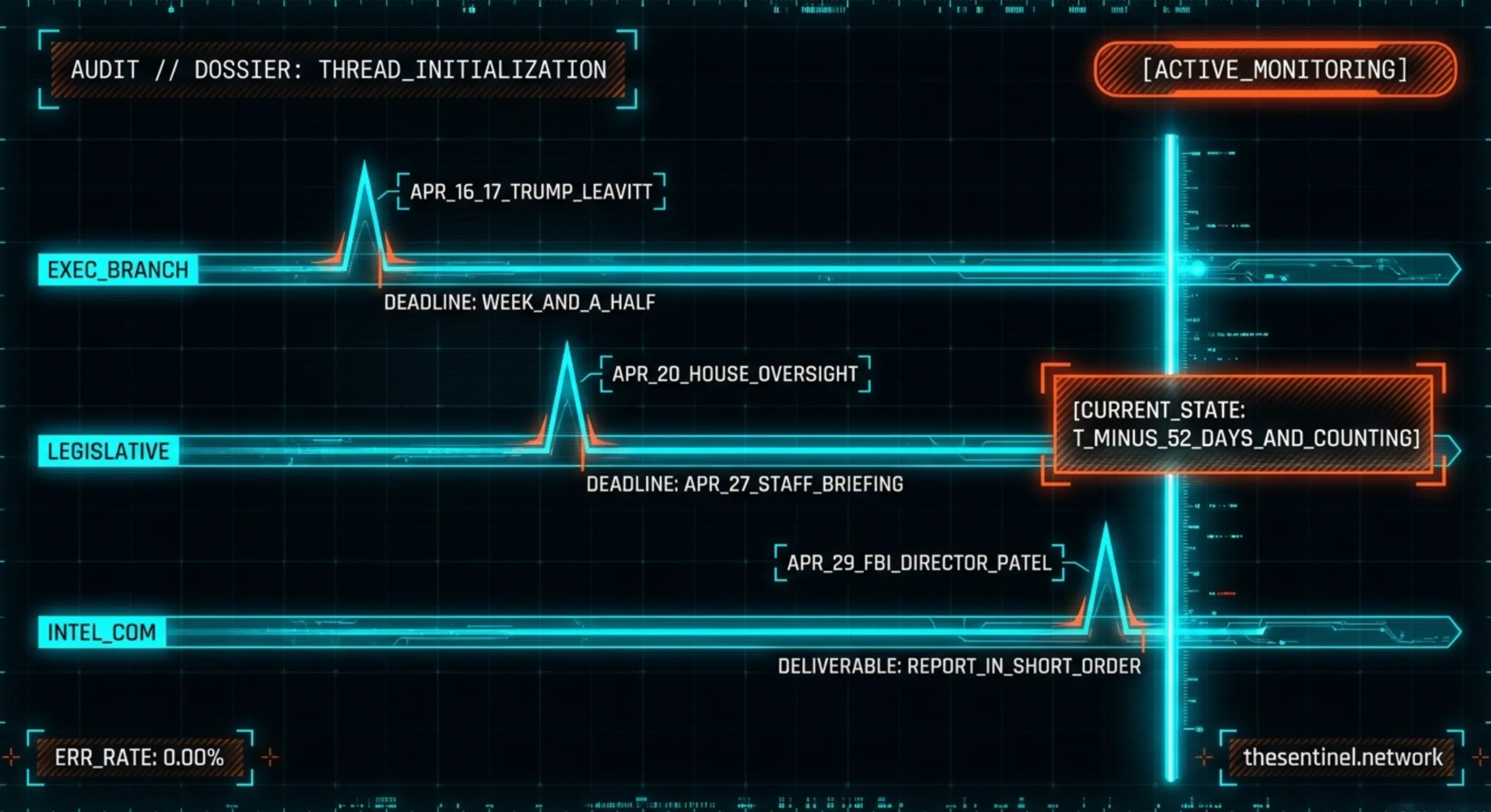
The next day the same question reached President Donald Trump. Trump said he had just come out of a meeting on the subject, called it serious, and set a deadline in plain language. He hoped it was random, he said, but the country was going to know one way or the other in the next week and a half.
On April 17, Leavitt made it official. The administration was working with the FBI and every relevant agency to review the cases of the missing and dead scientists together and look for any commonality among them. No stone would be left unturned. The White House, Leavitt promised, would provide updates when it had them.
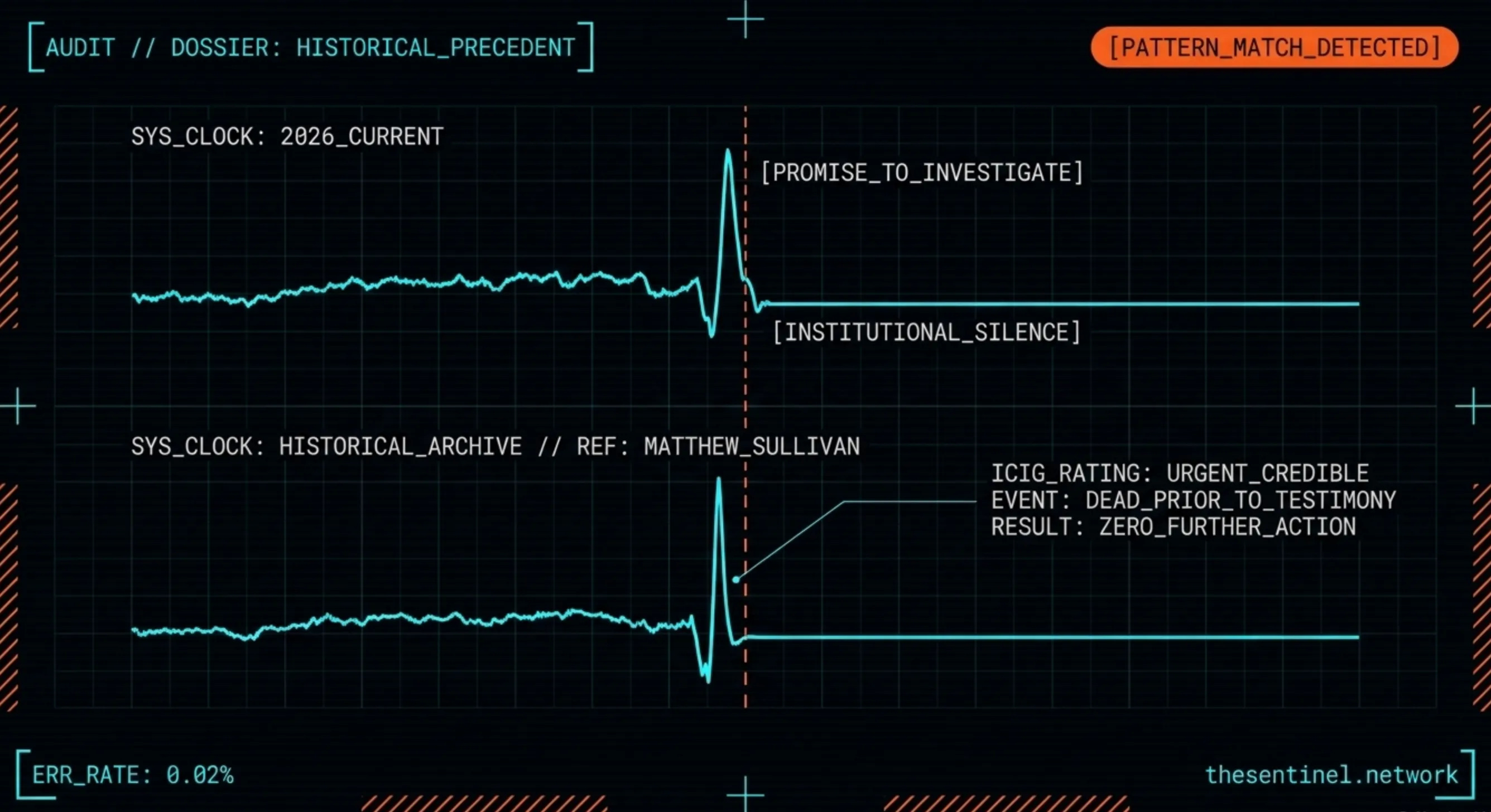
That is the moment the clock started. A week and a half was the commitment. By the time you are reading this, the silence is into its eighth week.
THE DEMAND
The legislative branch moved faster than the executive, and louder.
On April 20, the House Committee on Oversight and Government Reform sent four identical letters to the people who run the FBI, the Department of Energy, the Department of War, and NASA. The signers were Chairman James Comer of Kentucky and Representative Eric Burlison of Missouri, who chairs the subcommittee on economic growth and energy policy. The language was not cautious. If the public reporting was accurate, they wrote, these deaths and disappearances might represent a grave threat to national security and to the personnel who hold the nation’s scientific secrets.
In public, the two chairmen went further than their own letters. Comer told a television audience that the pattern was unlikely to be a coincidence and that something sinister could be happening. Burlison said the cases carried the hallmarks of a foreign operation. These were not anonymous online theories. These were sitting members of Congress with subpoena power, describing a possible coordinated campaign against American scientists.
The letters closed with a hard date. Each agency was to deliver a staff-level briefing as soon as possible, and no later than April 27.
There was already a tell in the file. Four days before the letters went out, committee staff had asked the Department of War the preliminary version of the question, and the Department had answered that there were no active national security investigations of any missing person who was a current or former clearance holder involved in special access programs. Parse that sentence and it dissolves in the hand. It is true the way a locked door is true. It says nothing about whether the people were cleared, whether they had access, or whether anyone was looking. It says only that the Department had drawn its own jurisdictional perimeter narrowly enough to exclude every name in the file. The committee called the answer unsatisfactory. It was. It was also a preview.
Then, on April 29, FBI Director Kash Patel added a third clock to the board. The bureau was reviewing the state and local cases, he said, reaching out to partners, pulling the threads together. A report would follow in short order. He used the word “shortly.” He also did something more interesting, which we will return to: Patel started managing expectations downward, noting that some of the people being discussed were not even scientists, and that the bureau was, in his words, just trying to do its homework.
Three promises were now on the record. A president’s deadline. A committee’s deadline. An FBI report its own director called homework.
THE SILENCE
Here is what arrived.
We went looking for the deliverables, the way we go looking for anything: by pulling the public record and reading it. We checked the committee’s published output. We checked the FBI’s public statements. We checked the White House podium. We checked the agencies the letters were sent to.
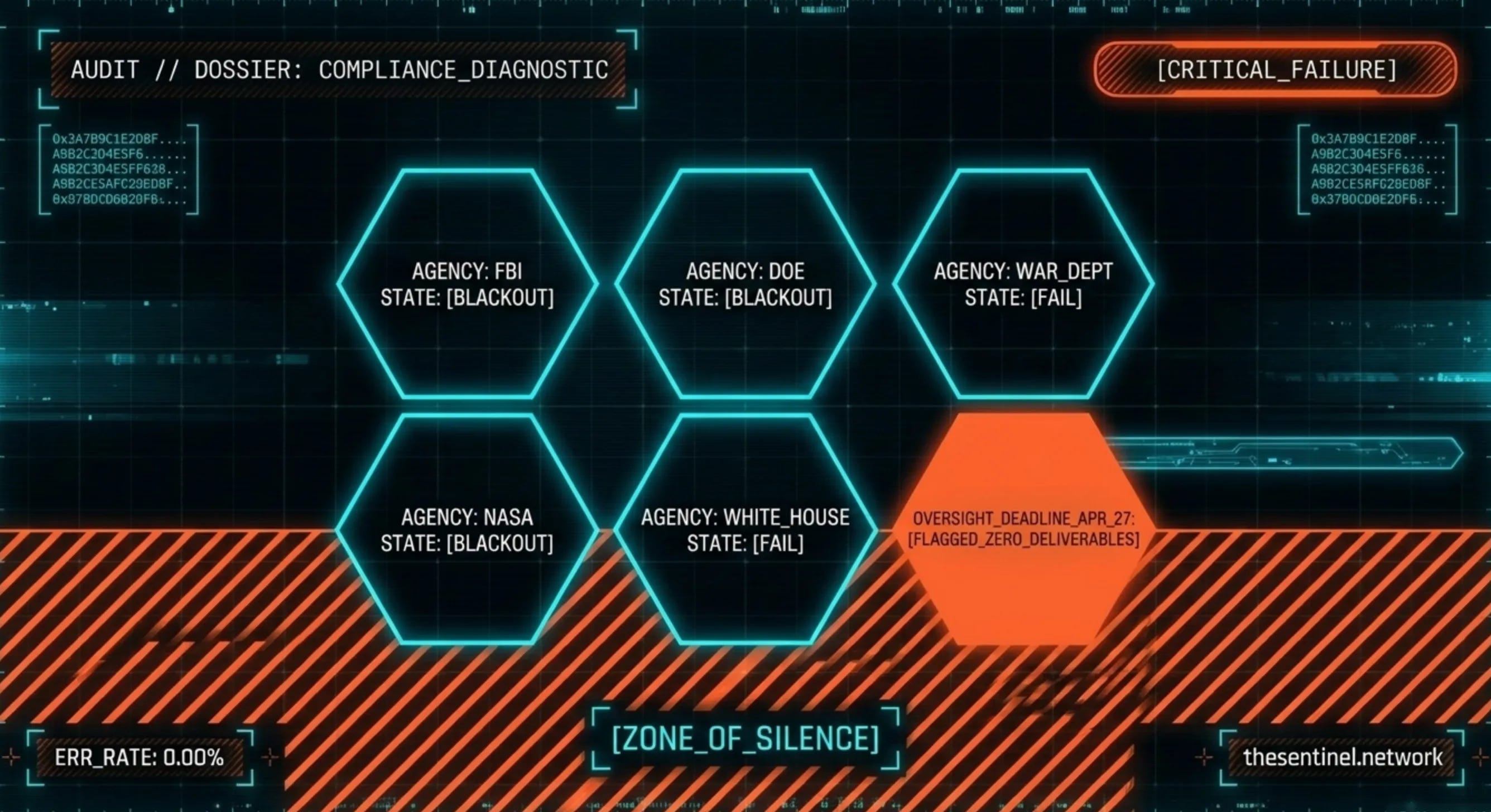
The April 27 briefing deadline passed. There is no public confirmation that any of the four agencies delivered the briefing, no readout, no committee statement announcing compliance, no authorized leak describing what was said. Trump’s week and a half and the committee’s hard deadline came due within days of each other, at the very end of April. Neither produced anything the public can read.
The President’s deadline passed the same way. The White House has issued no further public update on the review since the day it was announced. The most recent words from the executive branch on the subject remain the promise itself.
The FBI report promised in short order has not appeared. As of today it has not been released, not referenced in congressional testimony, not described by the bureau in any public statement we can find. The most recent substantive word from the FBI is that it was spearheading the effort, and the promise to produce a report on it.
We want to be precise about what this does and does not prove, because precision is the only thing that separates us from the people who fill silence with whatever they fear. The absence of a public report is not proof that no work is being done. Classified reviews are, by design, invisible. Chris Swecker, a former FBI assistant director, made exactly this point to the press: if the bureau is genuinely investigating sensitive cases, the public should not be hearing about it. That is a fair caution, and we record it.
But it cuts only so far. The government did not promise a classified review conducted in silence. It promised, on camera, at the podium, in writing to Congress, that it would tell the public what it found. Three separate commitments to transparency, from Trump, the FBI, and a congressional committee, on three separate clocks. All three ran out. A promise of updates that produces no updates is itself a finding. It tells you the urgency was real enough to announce and not real enough to sustain.
THE PIVOT
Attention is the one resource a congressional committee cannot fake. You can see where it goes, because the docket is public.
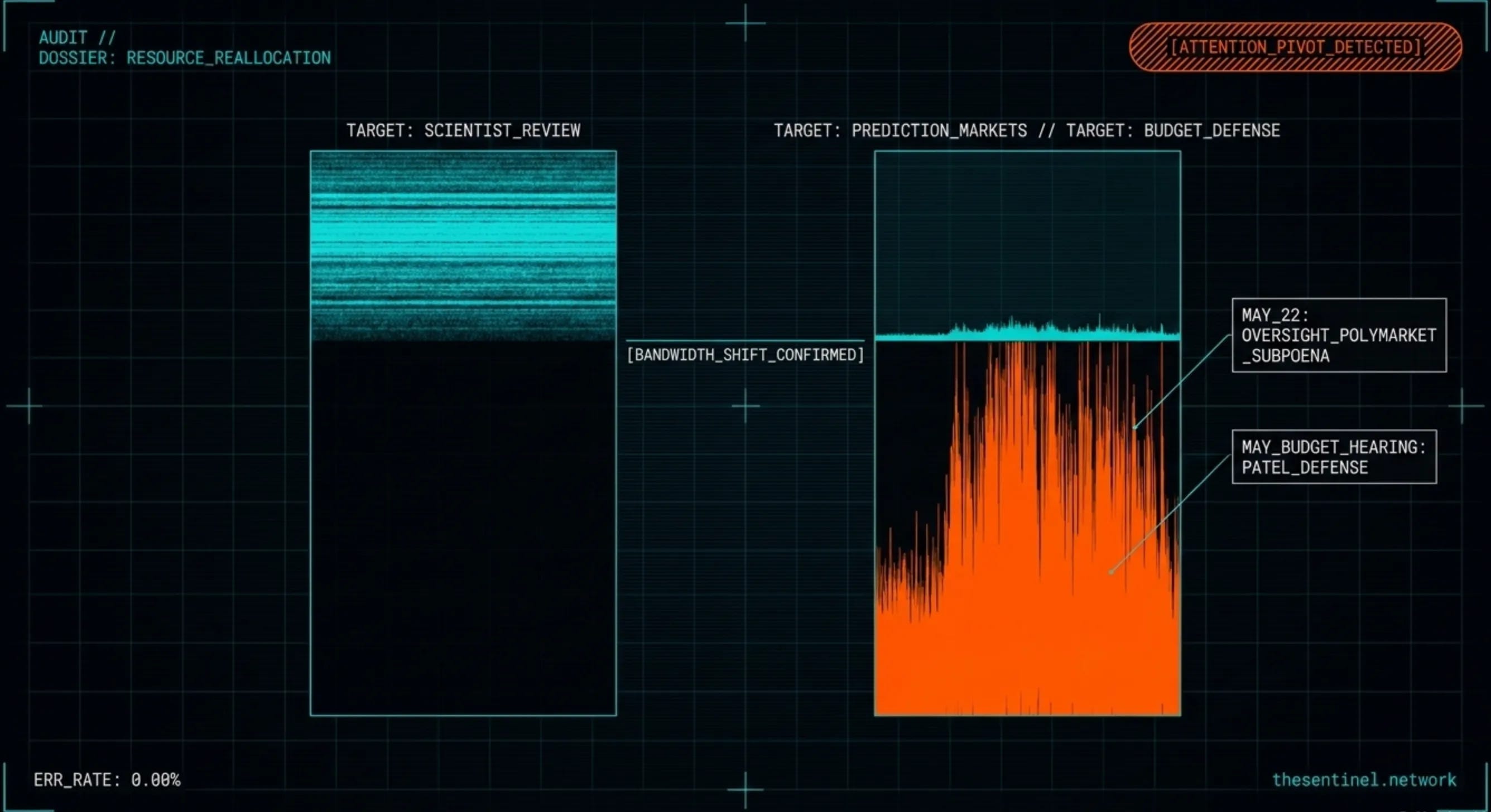
After April 27, the committee that had called these deaths a grave national security threat issued no further public action on them. No second letter. No subpoena. No hearing. No statement noting that the agencies had blown the deadline. The file did not escalate. It stopped.
The same committee remained extremely busy. In the weeks that followed it opened or advanced inquiries on a parade of other subjects, and on May 22 it launched a high-profile investigation into insider trading on the prediction-market platforms Polymarket and Kalshi, complete with document-demand letters to both chief executives and a media tour to announce it. We hold no brief on whether prediction-market insider trading deserves scrutiny. It may. The point is narrower and it is a matter of record: a committee that told the country something sinister might be happening to its scientists found the bandwidth, in the same window, to chase betting markets, and did not find the bandwidth to send a single follow-up letter about the missing and dead scientists.
The bureau that promised the report was busy too. Patel, who said a report was coming shortly, spent the following weeks fighting a personal battle of his own, defending himself at a May budget hearing against allegations that had nothing to do with the scientists. We take no position on them. What is not in dispute is where the bureau’s public energy went in the weeks after the homework was promised. It went to defending the man who promised it.
This is the texture of the silence. It is not the silence of an institution heads-down at work. It is the silence of institutions that moved on.
THE DISCIPLINE
Before we go one step further, a confession of method, because the next section requires you to trust that we are not the thing we are routinely mistaken for.
We are constantly lumped in with the people who see a body and assume an assassin. We understand why. We track a list of dead and missing defense-adjacent personnel, and a list like that attracts pattern-seekers the way a flame attracts moths. So let us show you, rather than tell you, what we actually do with the list.
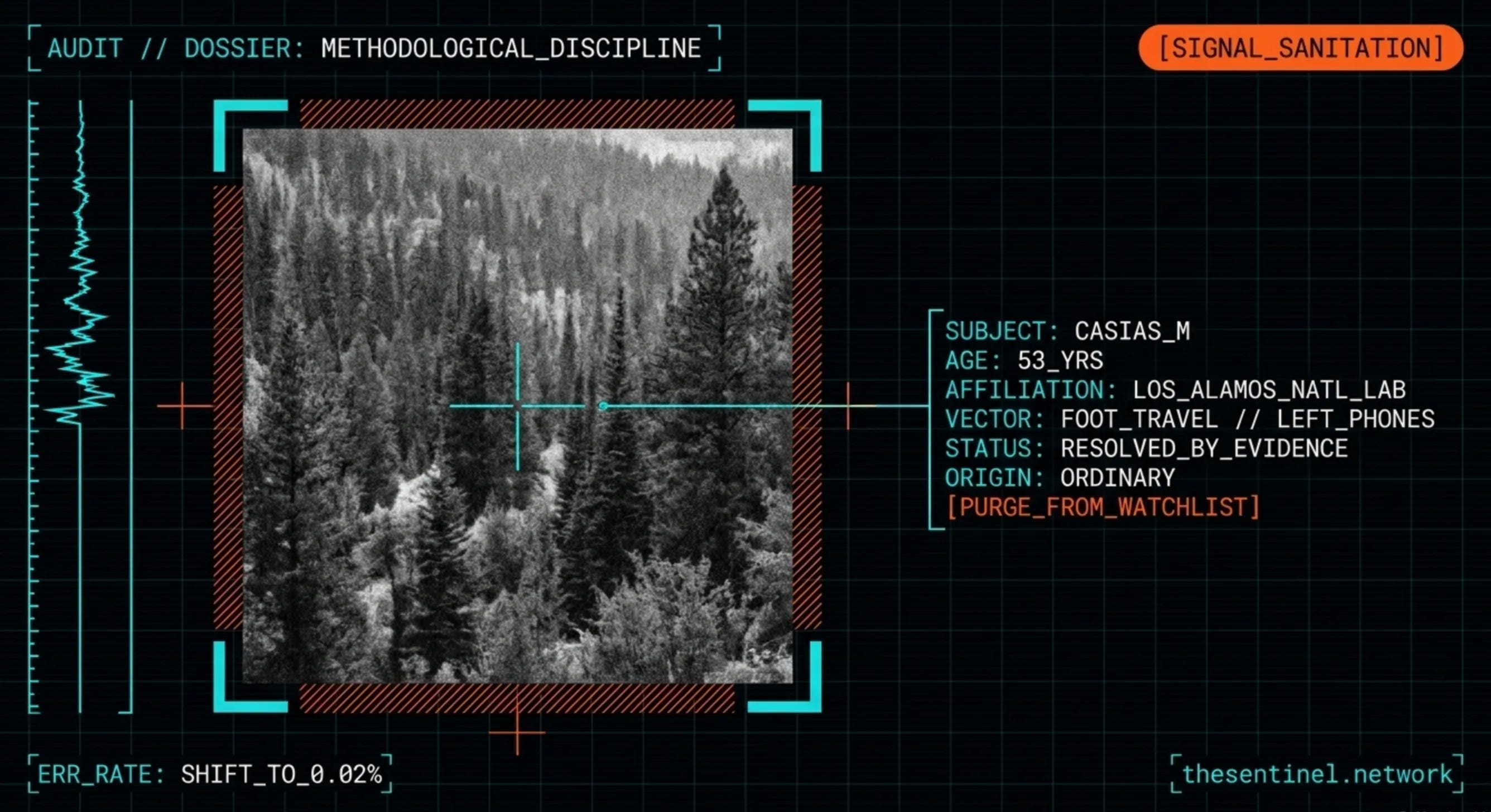
Four days ago we published THE WALK. Melissa Casias, a 53-year-old Los Alamos National Laboratory employee we had documented in THE LONG COUNT and THE BLIND SPOT, was found in the Carson National Forest after nearly a year missing. The online speculation said she was taken. We read the evidence and it pointed the other way: a fabricated reason to be alone, both of her phones factory-reset and left on the kitchen table, a packed bag, a walk on foot into country she knew as a hunter, a documented background of financial crisis. New Mexico State Police themselves said the evidence suggested she may have left on her own. So we removed her from our own watchlist, in writing, in the same place we had raised her. We wrote that a pattern is only as credible as the names its authors are willing to take off it.
We tell you this now because it is the license for everything that follows. When the evidence in a case turns ordinary, we say so out loud, even when it shrinks the story. That is precisely why the argument we are about to make is not a conspiracy theory. We have just demonstrated that we will dismantle our own pattern when the facts require it. Now watch us do the same thing to the argument being used against the entire inquiry.
THE RECKONING
As the government went quiet, the press got loud. And it pointed in one direction. CNN traced how the story traveled from the fringe to the White House. NBC ran the same arc. The story picked up its own Wikipedia entry, filed under conspiracy theory. The heavy weapon was a single number.
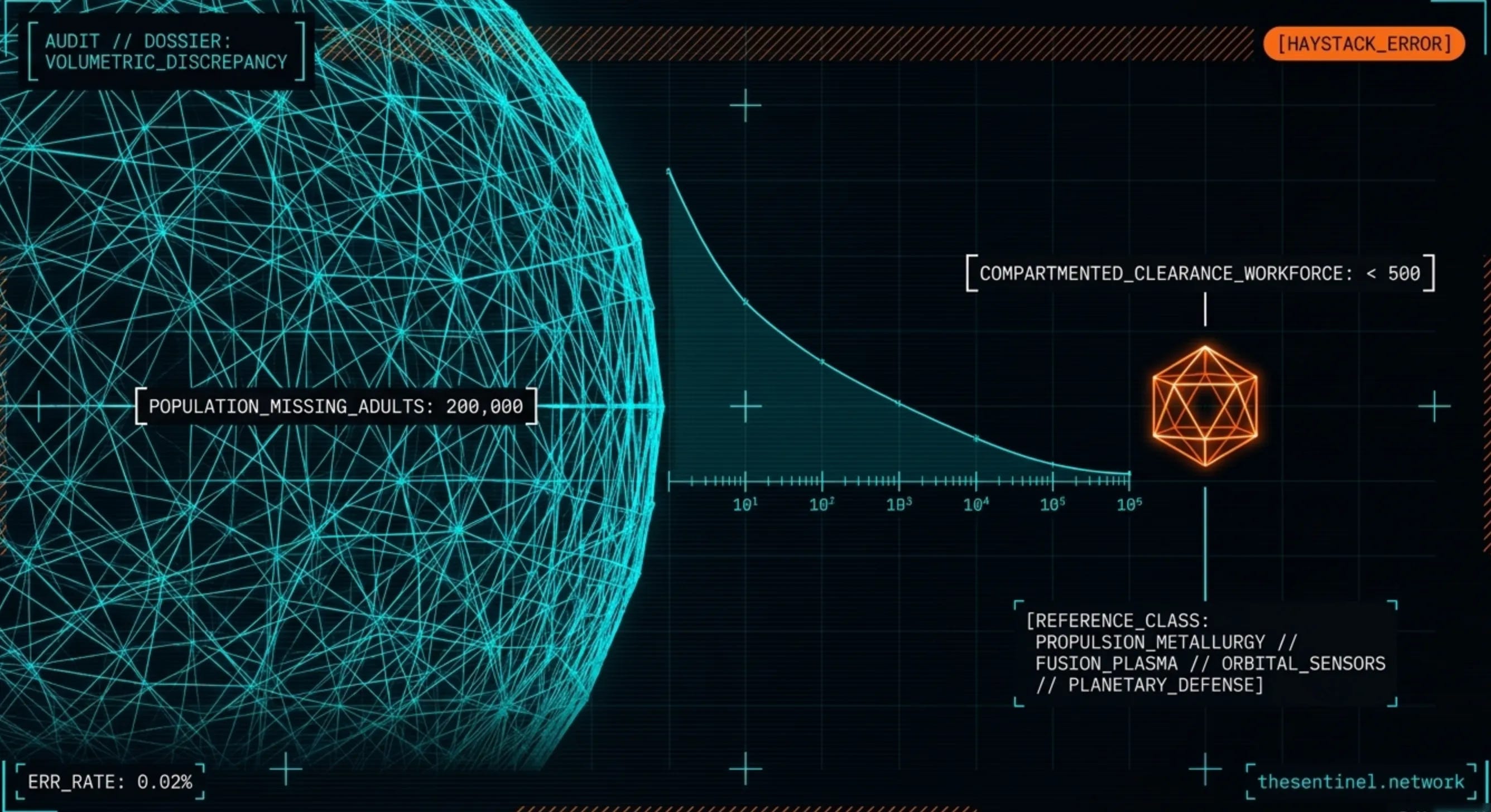
Roughly two hundred thousand adults are reported missing in America every year. Tens of thousands of people work nuclear-adjacent jobs. Run those two facts across a few years, the argument goes, and a handful of strange deaths is not a signal. It is the background noise of a big country. The mind finds the deaths, draws a circle around them, and calls the circle a plot. There is a name for the habit. Apophenia. Seeing patterns that aren’t there.
The math is real. We are not going to insult it. Large populations throw off coincidences. People do see faces in clouds. A publication that waved this away would be the exact crank the skeptics are describing.
So we won’t wave it away. We will do to it what we did to Melissa Casias: not ask whether it sounds right, ask which facts it actually fits.
The haystack is the wrong size. The two hundred thousand does all the work in the skeptics’ math, and it is the wrong number. Almost everyone in it is home within days. Runaways, family fights, the briefly confused. The people who walk into thin air and are never seen again are a sliver of that total. The big number fills stadiums. The real one would not fill a room. And the workforce is not “tens of thousands of nuclear employees.” It is the few hundred people who hold compartmented clearances inside a handful of specialties: propulsion metallurgy, fusion plasma, orbital sensors, planetary defense. The entire global community that works on how to deflect an asteroid would not fill a lecture hall. It is a couple hundred people. Shrink the haystack from a nation to a lecture hall, and “expected” stops being a word anyone gets to use.
A base rate counts bodies. It cannot read them. A frequency tells you how many. It says nothing about how. It cannot explain Freddy Snyder, found on Caltech astrophysicist Carl Grillmair’s property with a loaded rifle, his charges dismissed eleven days before he came back and shot Grillmair dead on his own porch. It cannot explain the gunman who carried out a mass shooting at Brown University the day before he assassinated MIT fusion physicist Nuno Loureiro. It cannot explain three Air Force Research Laboratory personnel dead in one night, counterintelligence on the case, no motive released for months. It cannot explain Major General William Neil McCasland, once executive secretary of the Pentagon’s Special Access Program Oversight Committee, walking out of his house and leaving his phone, his glasses, and his wearables on the table. Grant the rate in full. Concede the count is ordinary. Not one of those facts moves an inch. The number measures how many. You cannot point it at how. Saying so is not conspiracy. It is arithmetic.
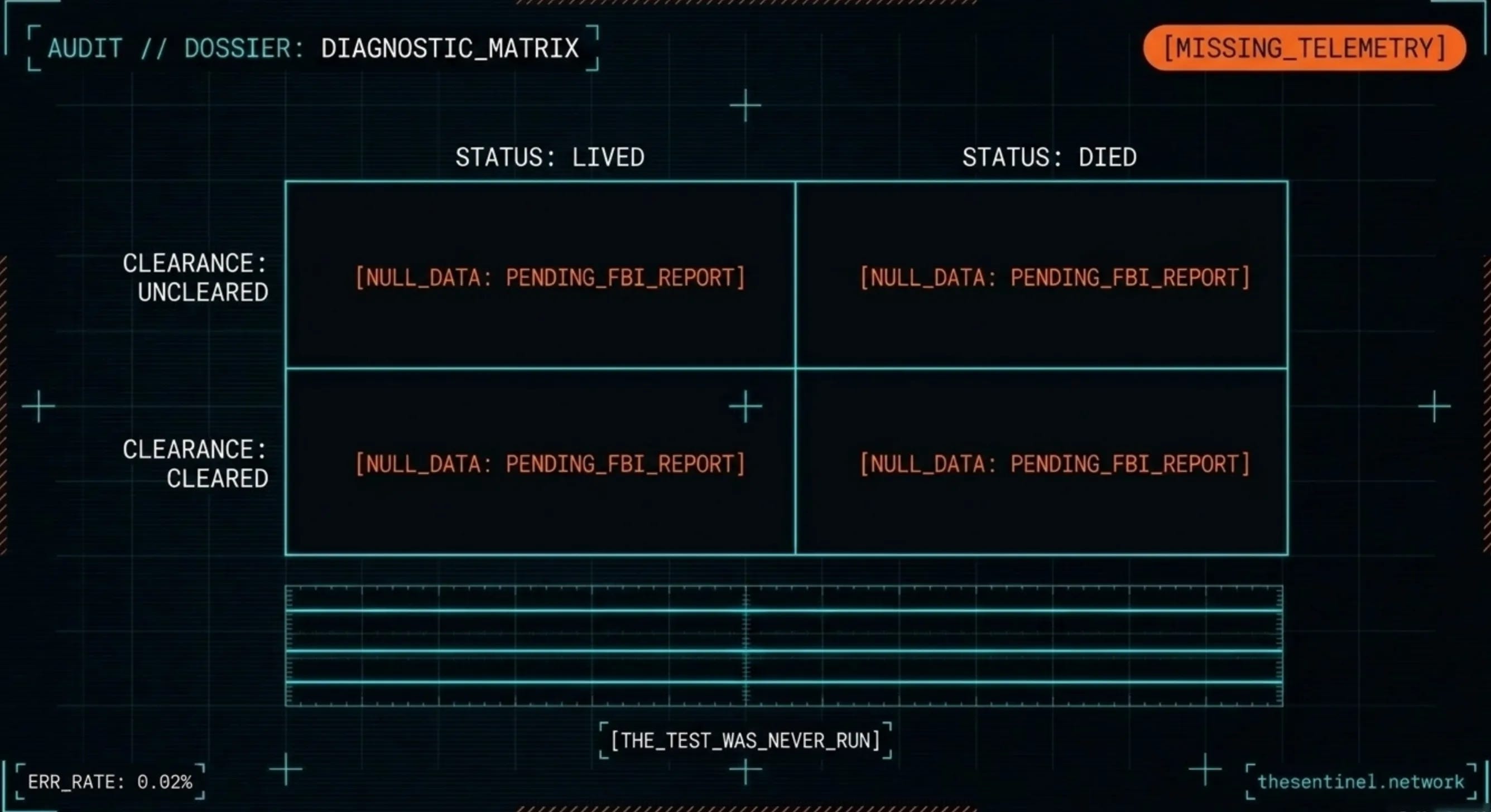
The test they keep citing was never run. The sharper skeptics know the count alone proves nothing, so they reach for the real tool. To know whether the cluster means anything, you fill in four boxes: the cleared who died, the cleared who lived, the uncleared who died, the uncleared who lived. Fill them in and the pattern might dissolve. They are right that this is the test. Nobody has run it. They are citing the shape of an analysis without the data to perform one. Name the test, skip the test, print the conclusion.
The study that would settle it is the one the government promised. This is where the argument folds back on itself. The rigorous review the skeptics keep gesturing at, the narrow reference class, the four boxes filled, is not a rebuttal to this investigation. It is the FBI’s homework. Patel’s own word, on camera. The thing that would end the argument is the thing that was promised and never delivered.
A base rate is an actuarial table. It tells you how many house fires a city this size should expect in a year. It cannot tell you whether the one that burned down your house was an accident or arson. That question needs an investigator on the scene. The country was promised the investigator. The country is still waiting.
So we will ask the question the debunkers and the government have both left lying on the floor. Where is it?
The skeptics have a favorite precedent, and it does not do what they think. In the 1980s a cluster of British defense scientists died under strange circumstances. The Marconi deaths. The textbook debunked panic, they say. Look closer. Two dozen dead. No official finding. A file that closed from exhaustion, not from an answer. The case they hold up to prove these things are always nothing is a case that turned out to be neither nothing nor something. It turned out to be quiet. The way this one is going quiet.
THE RESIDUAL
So discount everything that deserves discounting. Grant the base rate. Accept that some of these cases have ordinary explanations. We took one off our own list days ago and meant it.
Here is what survives the discount.
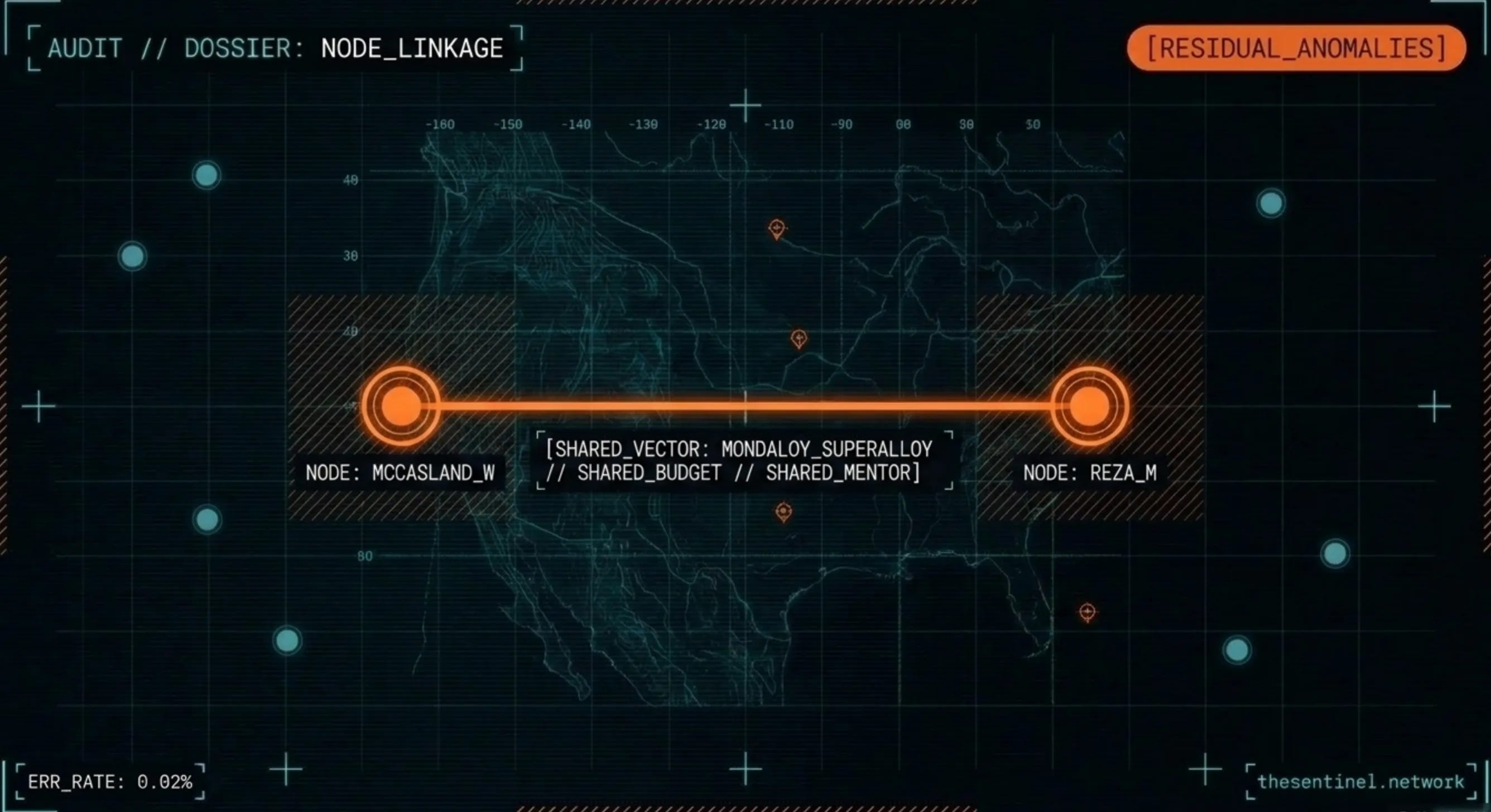
There are still cleared Americans unaccounted for. McCasland is still missing. Monica Reza, who co-invented Mondaloy, the nickel-based superalloy behind America’s replacement for Russian rocket engines, and was working at NASA’s Jet Propulsion Laboratory when she vanished, is still missing. We connected her to McCasland through that program ourselves: her alloy, his budget, their shared mentor, all three on it at the same time. These are not pattern-stacking inferences. They are open cases with no bodies and no answers, and the government promised the public a reckoning with them and delivered a press release followed by quiet.
And there is the oldest name in the file, which is the one that should haunt anyone who thinks the silence is new. We documented him in THE WITNESS: Matthew Sullivan, an Air Force intelligence officer scheduled to testify to Congress, dead within two weeks of being scheduled. His case had already produced an Intelligence Community Inspector General finding of credible and urgent. It had been referred to the FBI. A sitting congressman had sent a follow-up letter. And then nothing happened. That was before any of this reached the podium. The machine we are watching go quiet in 2026 went quiet on Sullivan first. This is not the first time the government promised to look and then stopped talking. It is the pattern that sits underneath the pattern.
THE SENTINEL ASSESSMENT:
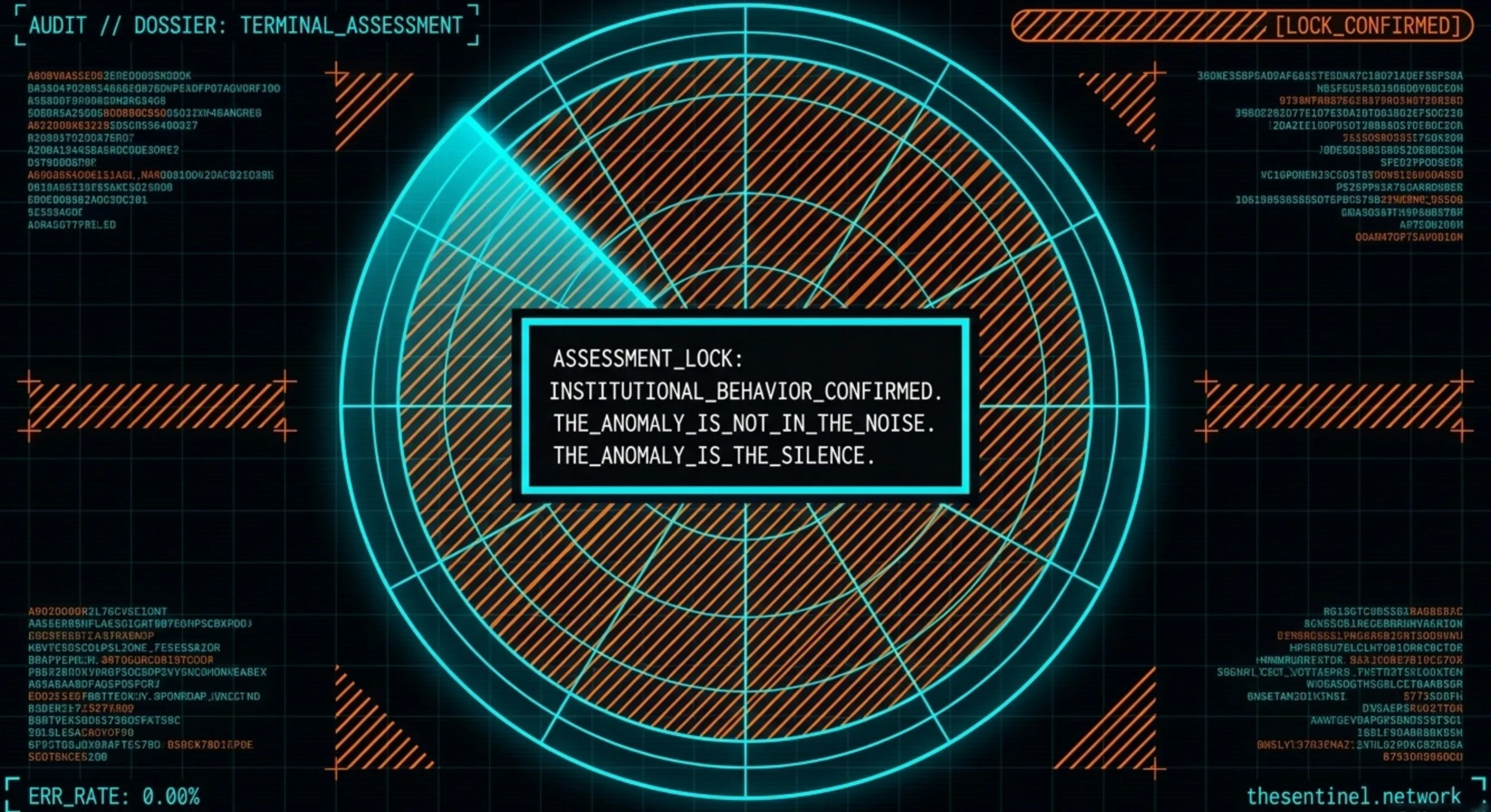
We are not asserting that these deaths are connected. We have spent this entire briefing refusing to assert it. The connection is an open question. What is no longer an open question is institutional behavior. On the record, on three separate clocks, President Trump, FBI Director Kash Patel, and the House Oversight Committee promised the American public that they would determine whether their scientists are being killed, and then all three stopped saying anything, while the press declared the question closed and the one committee still working pivoted to prediction markets. The tool everyone agrees would actually settle the matter, a rigorous case-by-case review, is the precise deliverable that was promised and never produced. That is the anomaly this briefing documents. Not the deaths, which may yet prove ordinary. The silence, which is already proven, and which is its own kind of answer.
This briefing references a death that may have been self-inflicted and a broader set of unresolved deaths. If you or someone you know is struggling, the 988 Suicide and Crisis Lifeline is available 24 hours a day in the United States by call or text at 988, and online at 988lifeline.org. Help is free and confidential.
A week and a half was the promise. We are keeping our own clock, in public, where anyone can check it.
Keep looking up.
-- The Sentinel
Every briefing we’ve published is free. That’s not changing. This publication has no institutional backing, no sponsors, and no editorial board. We’re doing the work the newsrooms won’t: sourcing papers, filing FOIAs, building tools, and writing at the pace a once-in-a-civilization event demands.
Paid subscribers fund the investigation directly. They also get access to THE SIGNAL (weekly market intelligence derived from our forensic work), primary source documents, the comment section on every briefing, Fieldcraft Labs, and the FIELDCRAFT series. The tools and methods behind every investigation we publish. No ads. No sponsors. No strings. Your subscription is a data point against the suppression gradient.
If you can’t subscribe, we don’t care. Read everything. Share everything. The mission is the mission.
Subscribe to The Sentinel Network™
A top 100 Science publication on Substack.
Share this briefing. The Suppression Gradient documented what happens when this coverage reaches platforms that do not want you reading it. Every share, every restack, every forwarded link is a data point against the gradient.
Previous briefings: THE WALK | THE LONG COUNT | THE GHOST GENERAL | THE WITNESS | THE FLOOR | THE BLIND SPOT | THE DEAD DROP | THE PHONE GAP | THE OPERATOR
I recommend you contact David Paulides:
https://davidpaulides.com/
https://www.youtube.com/watch?v=tDnECUdvfJw
He's done a whole series of books (Missing 411). He's well-known, and an expert investigator.
Seriously....I think it will be worth your time.
The president and the government are in such disarray in the USA now, with experienced employees either resigning or fired from various agencies, I doubt that ANYONE has a clue. Some of it may be secrecy, but a lot of it is agencies and intelligence out of their depth. Plus, they don't care.
I think it's quite funny (and sad) that people actually expect this administration to ever do anything it says it's going to do unless that something can be weaponized against regular American people. *They lie. They deflect.* It's their number one favorite past time. You'll be waiting until the end of time if you are expecting them to act in good faith. I expect to never hear another word about the issue from them again. 'National security' and all.