

SUBJECT: MELISSA CASIAS // ATTRITION CASE STATUS: REMAINS RECOVERED AND IDENTIFIED
DATE: JUNE 4, 2026
CROSS-REF: THE LONG COUNT | THE BLIND SPOT | THE GREEN BURIAL
DATA CONFIDENCE: VERIFIED (NEW MEXICO STATE POLICE RELEASE, MAY 30 2026; NM OFFICE OF THE MEDICAL INVESTIGATOR; TAOS NEWS; SANTA FE NEW MEXICAN; CNN; NBC NEWS; NBC DATELINE; LOS ALAMOS REPORTER; FAMILY STATEMENT VIA FACEBOOK) + ANALYSIS (SENTINEL CROSS-REFERENCE)
We are building the video side of this operation. If you want the briefings in a format you can watch, subscribe to The Sentinel Network on YouTube.
THE CONFIRMATION
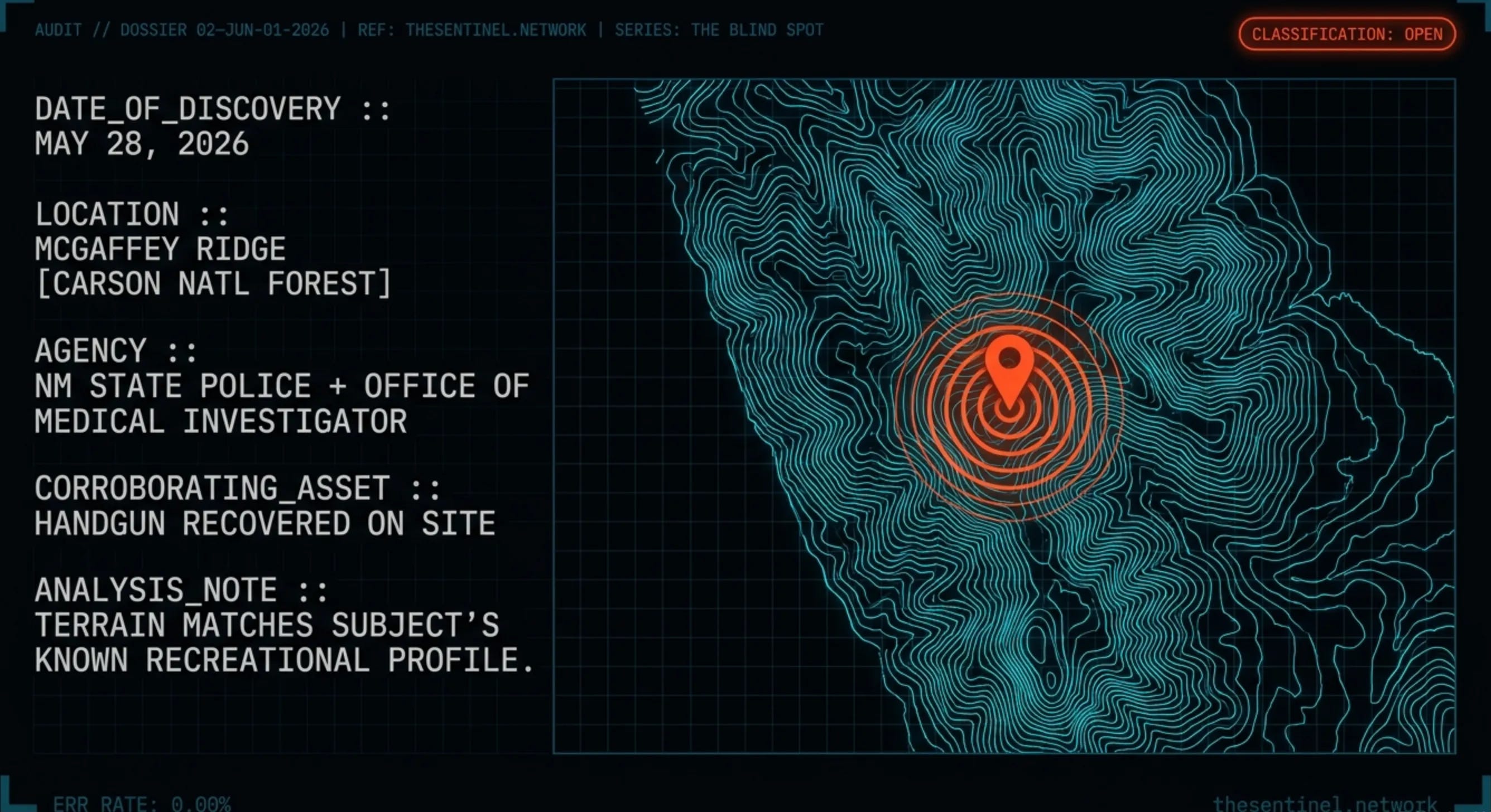
On May 28, a hiker walking the McGaffey Ridge area of the Carson National Forest found human remains, and a handgun lying beside them. Two days later, on the night of Saturday, May 30, the New Mexico State Police confirmed what two families had been bracing for since the previous evening. The Office of the Medical Investigator had positively identified the remains as Melissa Casias, the Los Alamos National Laboratory administrative assistant who was last seen walking toward that same forest from a Talpa highway on the afternoon of June 26, 2025.
The cause and manner of her death have not been determined. The remains will undergo further anthropological examination. The investigation, state police say, remains active and ongoing.
Her niece, Jazmin McMillen, confirmed the identification on the family’s Facebook page. The remains, she wrote, were found in an area that had been searched before. The family intends to keep pursuing answers. New Mexico State Police extended their condolences to the Casias and Mondragon families.
We are writing about Melissa Casias because we have written about her before, and because we owe our readers the update. In THE LONG COUNT and THE BLIND SPOT, we placed her case inside the New Mexico defense corridor, alongside Anthony Chavez and Maj. Gen. William Neil McCasland. We documented her. We did not add her to the list. This briefing is about why that distinction mattered, and what the evidence now says.
WHAT WE SAID
When we documented Casias, we were explicit about the limit of what we could claim. We will quote our own caution back to ourselves now, because today it is the part of the record that matters most.
We are not yet asserting Casias belongs on the same list as the AFRL cluster. Her role was administrative, not scientific. The family believes she left voluntarily under severe personal and financial stress. That theory is plausible.
We then listed the reasons that theory did not, by itself, close the case: the badge discrepancy her own daughter flagged on camera, the disputed pretext for leaving a secure facility, the factory-reset of a government-managed device before she walked into the wilderness. Those were real questions. We said the investigation was ongoing, and that we would report what we verified.
We also pushed back then on the “just an administrative assistant” framing the early coverage settled on. Department of Energy records placed Casias on the Northern New Mexico Citizens’ Advisory Board for Environmental Management, named in the board’s own May 2022 meeting minutes and still on the roster of its May 2023 recommendation to DOE, and we documented it. That detail was real, and it stays in the record. But it was always a reason to ask about her access. It was never evidence about how she died. The scene speaks to how she died. The advisory board does not.
We are now reporting what we verified.
THE SIGNATURE THAT WASN’T
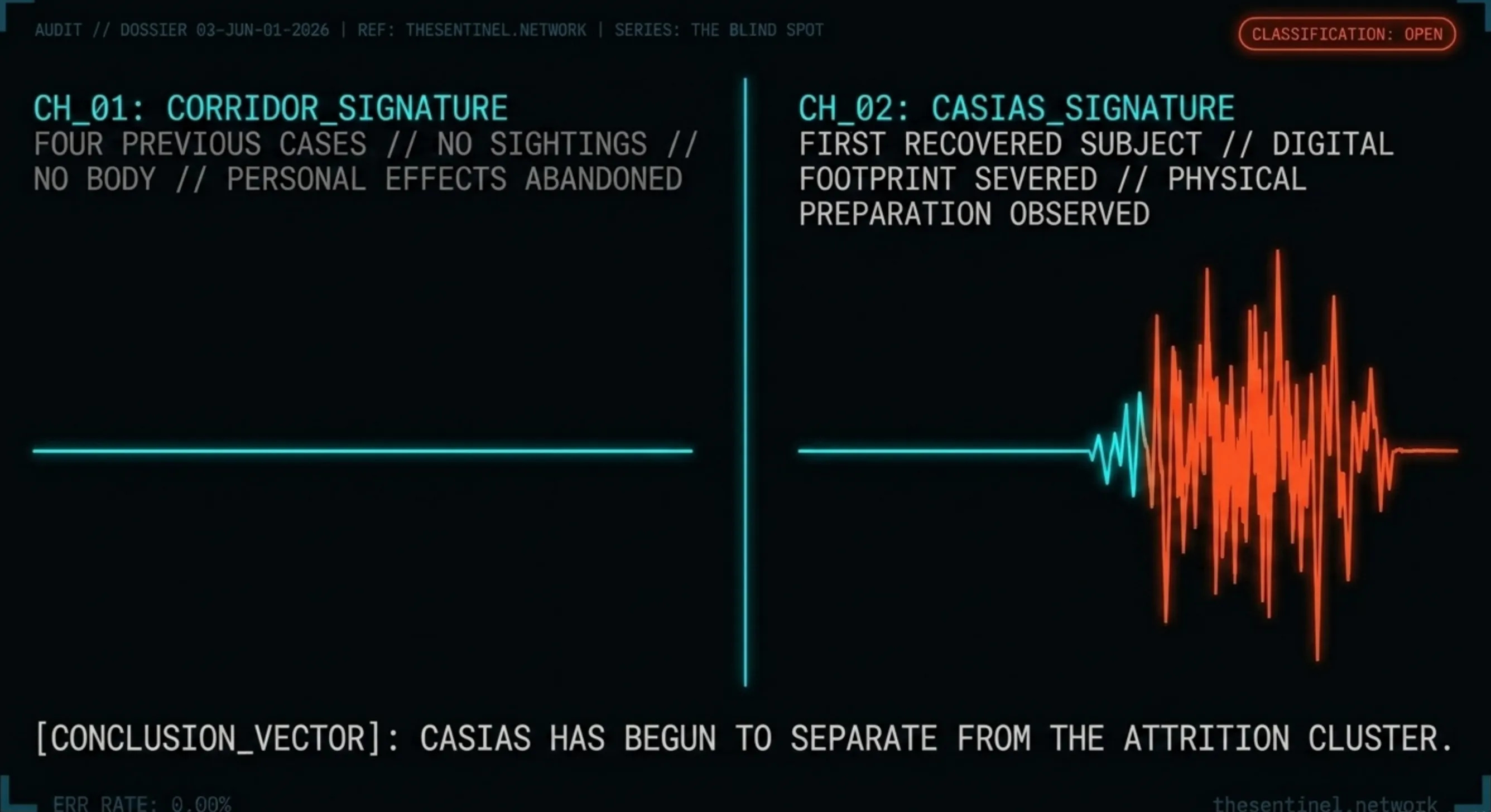
In THE BLIND SPOT, we laid four corridor cases side by side and named the one thing they shared: a signature. Personal effects left behind. Negative searches. No confirmed sighting. No body. The same two words, four times: never found.
Melissa Casias is the first of those cases to be found. And in being found, her case has begun to separate from the others.
Walk the morning of June 26, 2025, again, because the sequence is the argument.
She drove her husband Mark to Los Alamos at about 6:15 a.m. and, by his account to NBC’s Dateline, badged onto the site with her own credential. She returned home and told her daughter Sierra she had forgotten her access badge and would work from home. Mark later pointed out the problem with that: you must show a badge to enter the lab, and it is always the driver who shows it. “She showed her badge.” The badge story was not true. Under a theory of abduction, that fabrication is inexplicable. Under a theory of voluntary departure, it is a cover story to secure a day alone and a vehicle.
Both of her phones, the personal one and the government-issued one, were factory-reset and left inside the house. A person who intends to disappear wipes her own devices. A third party is far more likely to take or destroy a phone than to reset it to factory settings and set it back down on the kitchen table.
She was carrying a backpack on the surveillance footage that captured her walking eastbound on NM-518 toward the national forest. Sierra believed her mother may have taken a toothbrush, a hair iron, and other personal items, and noted that her own most recent paycheck had been left untouched beside loose cash. These are the indicators of someone who packed.
And she walked, on foot, into terrain she knew. Casias was an avid hunter and an archery competitor, an experienced outdoorswoman who understood that country. She was found inside that forest, with a handgun beside her.
Then there is motive. Her husband told reporters she may have been under intense stress tied to financial issues, and relatives have since described heavy financial strain in the period before she vanished, strain that her daughter has said the family did not fully see at the time. Her husband and daughter believed she had left on her own, possibly under that stress. “She bottles things up,” Sierra said. Note the irony that sits at the center of this case. A former FBI assistant director told the press her clearance and her access may have made her a target. Read the other way, the same facts describe a cleared employee under private financial pressure, the most ordinary motive there is, and the one her own family reached for first.
Before the remains were found, New Mexico State Police told Dateline that the evidence they had gathered suggested Casias may have left on her own, while adding that they had not ruled out foul play. The handgun recovered beside her does not contradict that read. The cause and manner of death are officially undetermined, and we will not print a conclusion the Medical Investigator has not reached. But honesty requires naming the direction the evidence points. It points toward a woman who arranged to be alone, severed her own digital life, packed a bag, and walked into country she knew. It points home, not away.
WHAT REMAINS OPEN
Intellectual honesty cuts in both directions, and there are threads we will not pretend are closed.
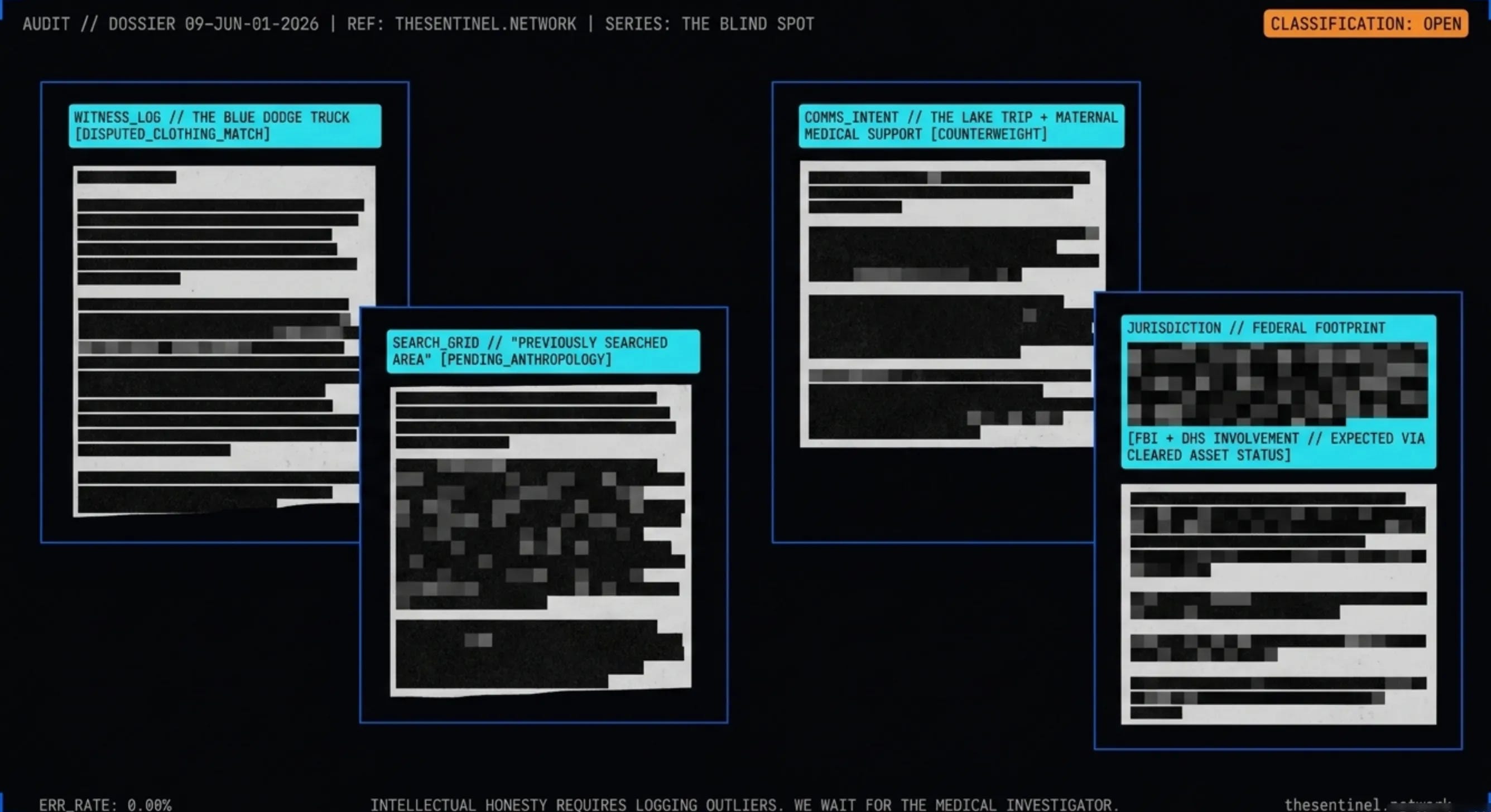
The blue Dodge truck. A witness on NM-518 reported a blue Dodge truck following Casias as she walked, then saw the truck but no sign of her when he turned back. The account was disputed within the family because the witness’s clothing description did not match what she was wearing. It was never resolved.
“An area previously searched.” That is the family’s own phrasing. Most often it reflects how nearly impossible remote wilderness is to search, rather than anything sinister, but it is a fair question, and the anthropological examination may speak to it.
Her plans. Friends told Dateline she had a lake trip planned for that weekend and intended to help her mother through a knee surgery the following week. Those are the standard counterweight to a self-inflicted-death reading, and we record them as such.
The handgun. Whose it was, and whether it was registered to her or to her household, is not public.
The federal footprint. The family said the FBI and the Department of Homeland Security had become involved, and the FBI has since said it is coordinating with the Department of Energy and other partners on the broader set of cases. A cleared employee wiping a government device is sufficient to explain federal interest in her own case, but we note it anyway.
We do not resolve these here. We flag them, and we wait for the Medical Investigator.
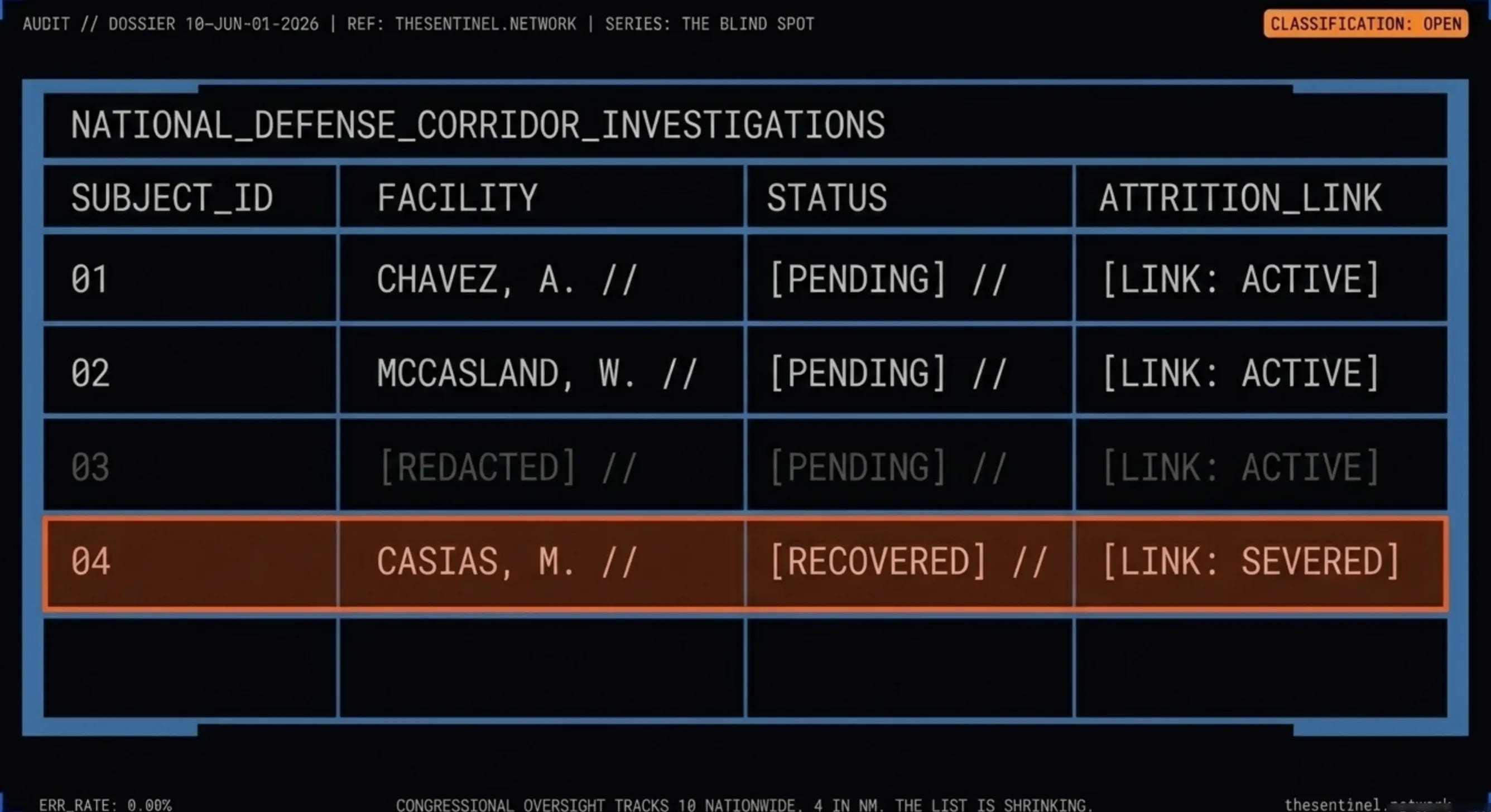
THE LIST
So here is the editorial decision, stated plainly, because our readers are owed a clear answer rather than a hedge.
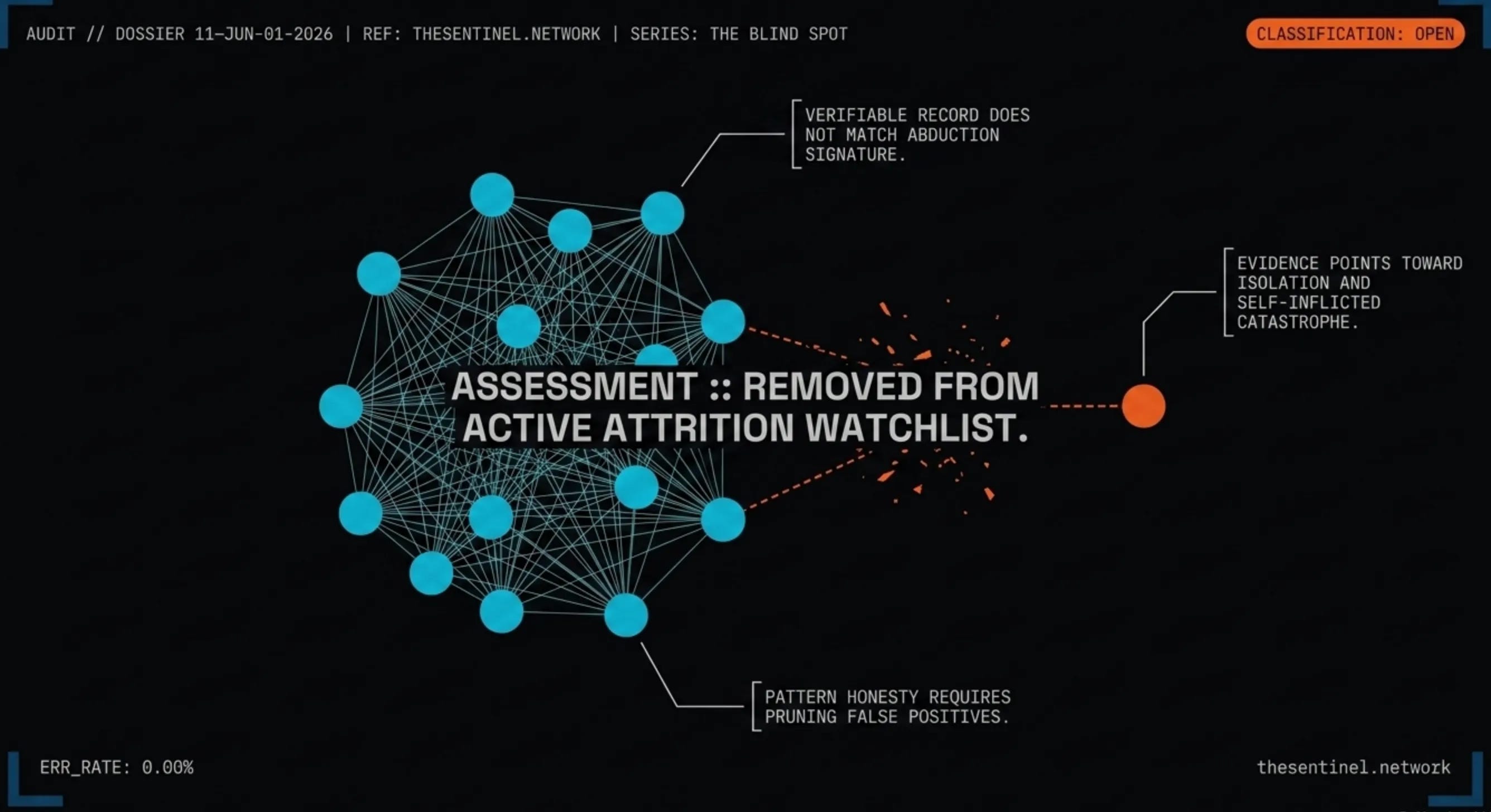
Based on what is now known, we are removing Melissa Casias from the active ATTRITION corridor watchlist, pending the Office of the Medical Investigator’s final determination of cause and manner.
We never added her to the list in the first place. We documented her, we kept the file open, and we told you in writing that we were not asserting she belonged. The evidence that has arrived since does not strengthen the case for the pattern. It weakens it. The right thing to do with a name when the evidence turns ordinary is to say so out loud, in the same place we raised it.
A pattern is only as credible as the names its authors are willing to take off it. We are taking this one off.
THE PATTERN HOLDS
Removing one name is not abandoning the beat, and we want to be precise about what does not change.
In April, the U.S. House Oversight Committee announced an investigation into unconfirmed public reporting on the disappearance and death of individuals with access to sensitive U.S. scientific information. Chairman James Comer and Rep. Eric Burlison wrote that public reports “raise questions about a possible sinister connection” among a string of cases dating to 2023. The Santa Fe New Mexican counts Casias among four people in New Mexico, and ten nationwide, whose cases have drawn that scrutiny. The committee itself called the reporting it is reviewing unconfirmed. In each of the four New Mexico cases, authorities have not reported any evidence of foul play or any connection among them. That is the language of an open question, not a finding. So is ours.
Two things can be true at the same time. The institutions that should be looking at the category as a category are, for the first time, beginning to look. And this particular case, the one we held at arm’s length from the very start, appears to be resolving toward the ordinary and the tragic. Holding both of those at once, without forcing either, is the entire discipline of this series.
THE SENTINEL ASSESSMENT:
Melissa Casias is the first of the New Mexico corridor disappearances to be found. The Office of the Medical Investigator has identified her remains. The cause and manner of her death are undetermined, and we are not asserting one. But the verifiable record describes a woman who fabricated a reason to be alone, factory-reset both of her phones including a government device, carried a packed bag on foot into a forest she knew as a hunter, and was found there with a handgun beside her, against a documented background of financial crisis. New Mexico State Police themselves said the evidence suggested she may have left on her own. That is not the signature of the pattern we have been documenting. It is the signature of a private catastrophe. We placed her case beside the corridor. We never placed her on the list. And on the evidence available today, we are removing her from the watchlist. The pattern does not require her. The honesty of the pattern requires that we say so.
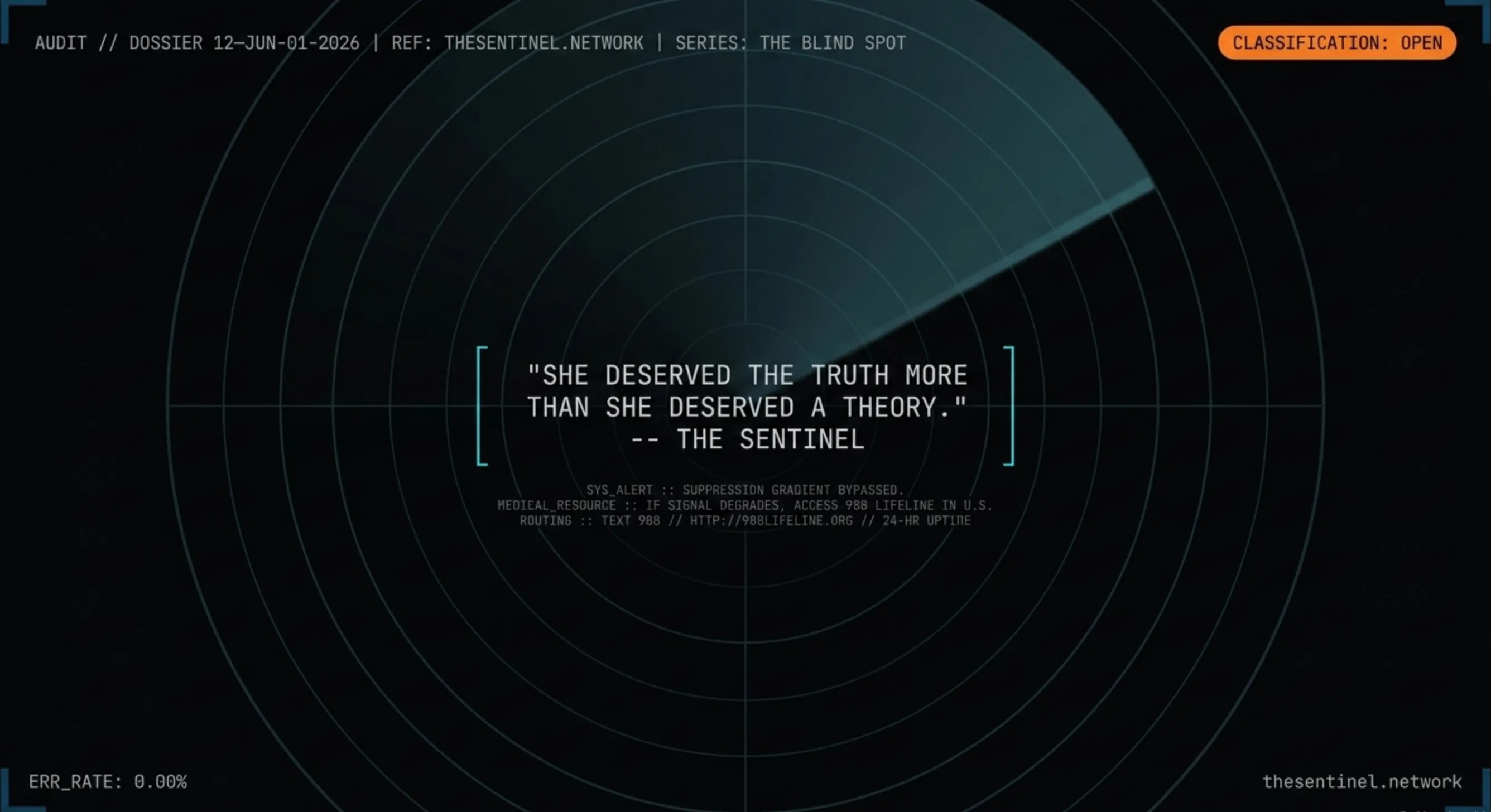
This briefing concerns a death that may have been self-inflicted. If you or someone you know is struggling, the 988 Suicide and Crisis Lifeline is available 24 hours a day in the United States by call or text at 988, and online at 988lifeline.org. Help is free and confidential.
We told you we would report what we verified. This is us keeping that promise, even when it shrinks the list.
Melissa Casias was a mother. She deserved the truth more than she deserved a theory.
Keep looking up.
-- The Sentinel
Every briefing we’ve published is free. That’s not changing. This publication has no institutional backing, no sponsors, and no editorial board. We’re doing the work the newsrooms won’t: sourcing papers, filing FOIAs, building tools, and writing at the pace a once-in-a-civilization event demands.
Paid subscribers fund the investigation directly. They also get access to THE SIGNAL (weekly market intelligence derived from our forensic work), primary source documents, the comment section on every briefing, Fieldcraft Labs, and the FIELDCRAFT series. The tools and methods behind every investigation we publish. No ads. No sponsors. No strings. Your subscription is a data point against the suppression gradient.
If you can’t subscribe, we don’t care. Read everything. Share everything. The mission is the mission.
Subscribe to The Sentinel Network™
A top 100 Science publication on Substack.
Share this briefing. The Suppression Gradient documented what happens when this coverage reaches platforms that do not want you reading it. Every share, every restack, every forwarded link is a data point against the gradient.
Previous briefings: THE BLIND SPOT | THE LONG COUNT | THE GREEN BURIAL | THE GHOST GENERAL | THE DEAD DROP | THE PHONE GAP | THE OPERATOR
I was once an administrative assistant to a bank president. I had to know the pulse of the entire bank. Someone once told me, "Everyone knows your the one the keeps things going and is the gatekeeper." So, yes, I can confirm she was not "just an administrative assistant."
I did not know her, but if you want to commit suicide, and are female, you don't do it the way she did. You certainly don't take the things that she took with her. She might know things that she wishes she didn't know, however. She may have just wanted to get away and clear her head without opinions or interference from others.
One last thing: If you are female and alone, especially in the wilderness, you might as well wear a target on your back. You become someone's 'opportunity'. It shouldn't be that way, but it is.
And the backpack? the time stamp on the death? the proximity of the location to hiking trails? She left on her own with her modus operandi being similar to McCausland - duration of time missing? What woman takes a curling iron to a suicide?
This scenario raises many additional troubling questions