

Part one of two.
SUBJECT: UAP SCIENCE ADVISORY COUNCIL // ELEVEN-MEMBER ROSTER, AFFILIATIONS, AND COMPOSITION ANALYSIS
DATE: JUNE 15, 2026
CROSS-REF: THE PUBLICATION GAP | THE VERDICT | THE OPERATOR | THE NARROW BAND
DATA CONFIDENCE: HIGH on the roster and credentials, named in full in Loeb’s post. LOWER on the council’s official status, which no government record confirms.
We are building the video side of this operation. If you want the briefings in a format you can watch, subscribe to The Sentinel Network on YouTube.
THE ANNOUNCEMENT
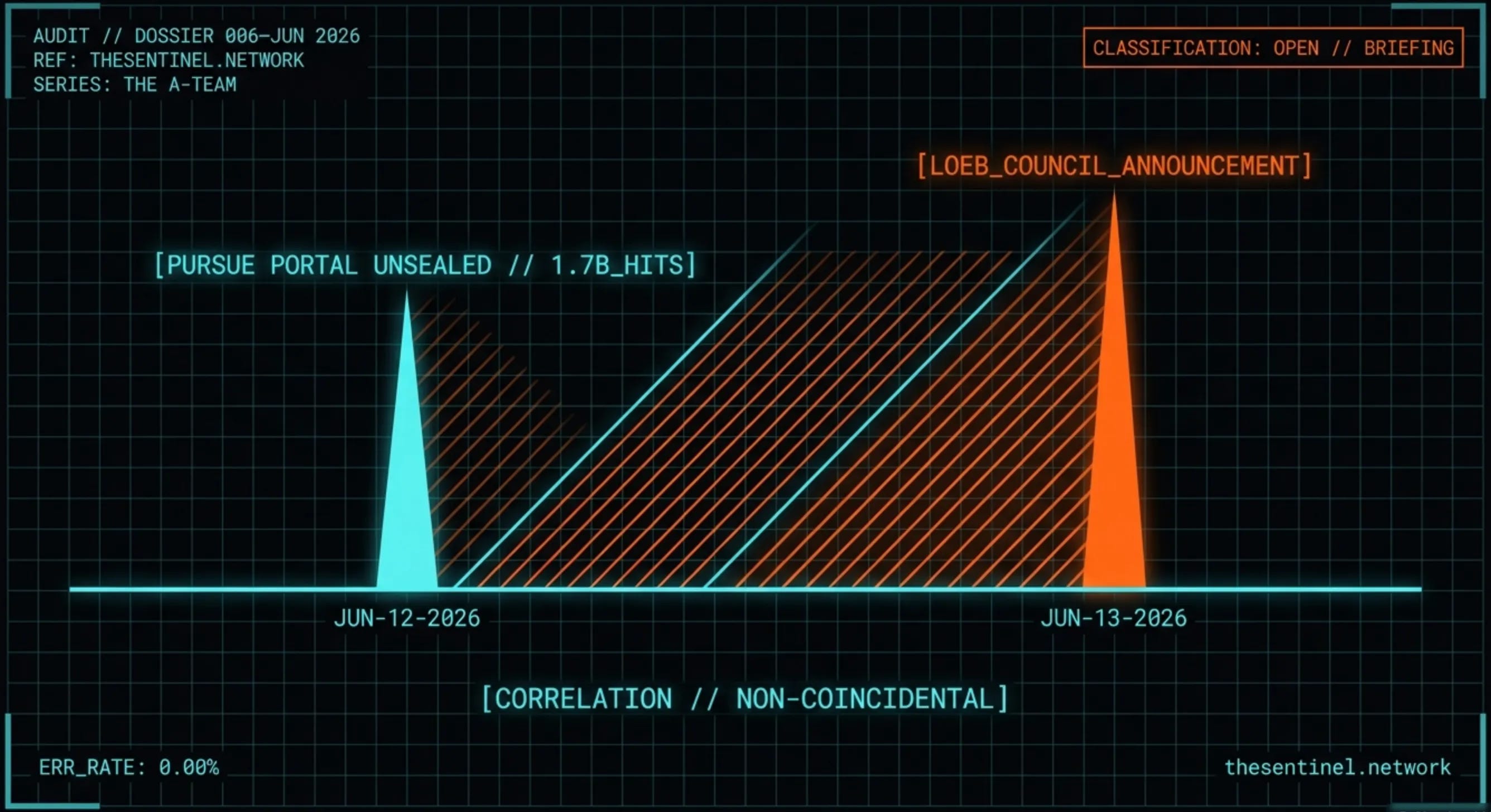
On June 13, 2026, Avi Loeb published a post announcing a new “UAP Science Advisory Council” to the United States government. He says he was tasked over the prior week by the White House, the All-domain Anomaly Resolution Office, the Office of the Director of National Intelligence, the FBI, and other members of the Intelligence Community to assemble and lead a research team. His stated aim is sober: build better sensors and AI tools so the Pentagon can tell whether the objects near its strategic sites are adversary drones, balloons, or something stranger. The post named five when it went up: Richard Cloete and Regina Sarmiento on data and AI, Matthew Szydagis on instrumentation, Devesh Nandal on numerical analysis, and Omer Eldadi on data and human psychology.
Then it grew. In the days that followed, while reporters and this publication were putting questions to him about the council, Loeb expanded the same post to eleven. The six he added: Garry Nolan on material science, Tim Gallaudet on oceanography, Peter Skafish on anthropology, Michael Shermer on “studying anomalies,” Jennice Vilhauer on quantitative psychology, and Ross Howard on communication. He calls the full group an amazing A-team of exceptional scientists.
It did not land in a vacuum. The day before, on June 12, the Department of War published the third tranche of the Presidential Unsealing and Reporting System for UAP Encounters, the disclosure program we have tracked since its launch. Steven Spielberg released a film about disclosure that same June 12. The PURSUE portal has now been hit more times than the combined populations of China and the United States: over 1.7 billion times since May 8. Loeb announced his council the next day. The timing was not subtle.
We have a standing interest in this story. Our reading of 3I/ATLAS is built in part on the scientific framework Loeb has spent a decade defending, and we have documented every PURSUE release in sequence. Loeb is also the scientist whose artificial-origin hypothesis for 3I/ATLAS we tracked being held out of the peer-reviewed literature in THE PUBLICATION GAP: the handling editor who told him to delete the hypothesis as the price of acceptance, the largest academic publisher on Earth producing almost nothing on the object. So when the man at the center of that framework, and at the center of that gatekeeping, announces a full roster and a government mandate, we do the obvious thing. We look up every name.
THE DETECTORS
Two of the eleven are Loeb’s own Galileo Project postdocs, assigned to data analysis and management with AI tools. On paper, this is the most natural pairing on the roster, because they already do exactly this together.
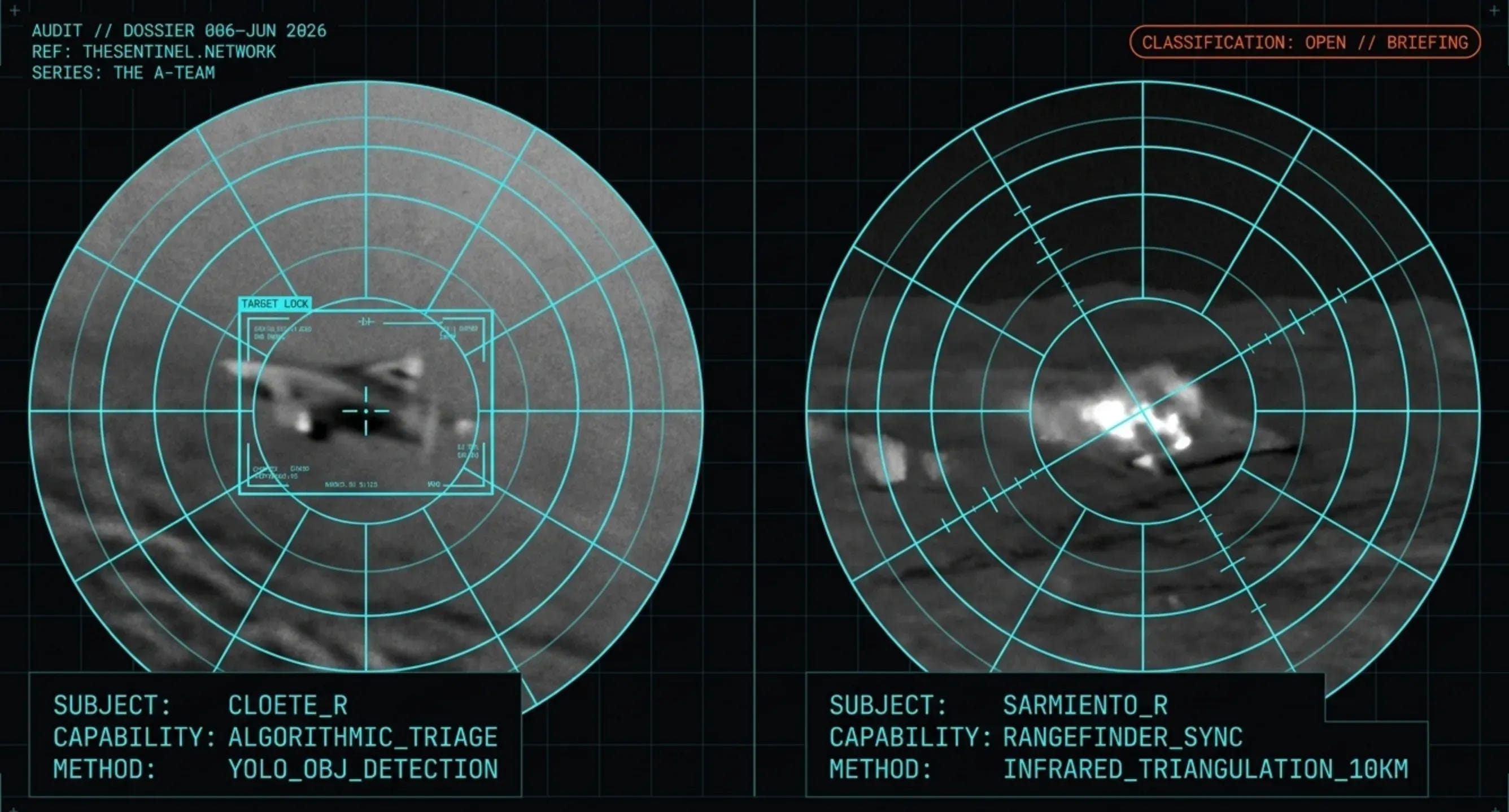
Dr. Richard Cloete is a computer scientist, originally from Cape Town, who holds the Laukien-ʻOumuamua Postdoctoral Research Fellowship at the Center for Astrophysics. Before Harvard he earned a PhD in interactive remote rendering at Newcastle, built cloud data pipelines in the private sector, and worked on the auditability of emerging technologies at Cambridge. Inside Galileo he architects the machine-learning pipeline that does the unglamorous core job of UAP science: separating birds, drones, balloons, and aircraft from the genuine outliers. The system uses a YOLO object-detection model for rapid tagging and a tracking algorithm to reconstruct each flight path, and he built a synthetic-data generator to train it on the rare, fast edge cases that real footage almost never captures.
Dr. Regina Sarmiento came to Galileo from the Instituto de Astrofísica de Canarias in Tenerife, where her PhD applied deep learning to infer how galaxies assemble. Her co-authored work appears in Nature Astronomy. At Galileo she built the triangulation method that turns two cameras into a rangefinder: by syncing timestamps across infrared cameras placed roughly ten kilometers apart, the team can pin an object’s distance to within ten percent, close enough to call a passing jet’s range the way a surveyor calls a property line. The discipline of the approach showed when she caught an object appearing to fly an impossible zig-zag at 5.6 kilometers. Rather than reach for an exotic conclusion, she proved the motion was a software artifact produced when camera data briefly dropped out. That instinct, to assume the sensor before the spaceship, is the single most valuable habit a UAP analyst can have.
Their joint work anchors the Galileo Project’s peer-reviewed commissioning paper, which ran a five-month census that logged roughly half a million aerial objects, the population of a mid-sized American city, every one tracked and sorted. The team calibrated its eight-camera infrared array against live aircraft transponder data, a method designed to strip out the wishful bias that has historically wrecked amateur UAP work. The filter flagged about eighty thousand tracks as unusual. Patient review cut that to one hundred forty-four genuine question marks, which the authors then declined to call anomalous, noting they were most likely mundane and simply could not be resolved without more data. That restraint is the point.
THE INSTRUMENT
Prof. Matthew Szydagis holds the instrumentation and data-collection seat, and he is the most heavily credentialed experimentalist on the roster. He is an associate professor of physics at the University at Albany with a PhD from the University of Chicago, and his day job is hunting dark matter. He is the developer of NEST, a simulation toolkit that models how particles register in liquid-xenon detectors and is used across the leading dark-matter experiments, and a co-inventor of the “snowball chamber,” a detector that triggers crystallization in supercooled water when a particle passes through. He has more than a hundred peer-reviewed papers behind him.
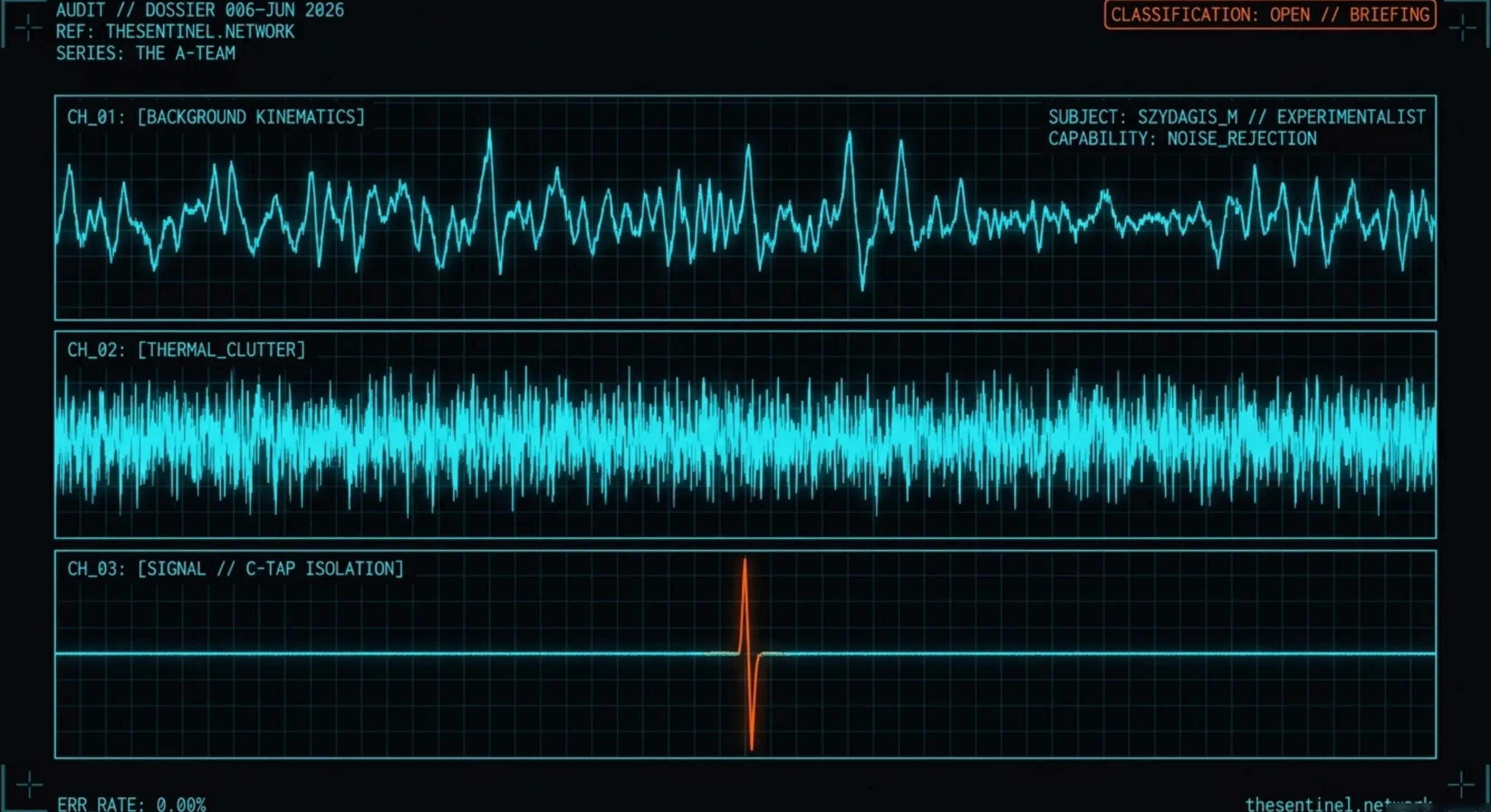
The skill transfers cleanly. Pulling a real signal out of overwhelming background noise is the entire problem in dark-matter physics, and it is the entire problem in UAP work too. Szydagis co-founded the UAlbany effort behind UAPx and built C-TAP, a tool that does pixel-by-pixel subtraction across infrared frames, pairing the machine with human review to tell a true thermal target from sensor noise. That work produced a peer-reviewed paper in Progress in Aerospace Sciences documenting a field expedition that recorded six hundred hours of infrared video, the equivalent of running a camera around the clock for most of a month, and resolved nearly every anomaly to a prosaic cause. The program is now permanently endowed at UAlbany. Rejecting noise is the entire job. It has been his career.
THE MODELER
Dr. Devesh Nandal is the theorist, assigned to numerical analysis and astrophysics, and we will be straight about the fit. He is a serious computational astrophysicist. He earned his PhD on the Geneva stellar-evolution code, holds a Swiss National Science Foundation fellowship at the Center for Astrophysics, and is the lead author on a run of high-profile results modeling the first stars: he showed that the chemical fingerprints in an early galaxy match primordial “monster stars” weighing a thousand to ten thousand times the Sun, work published in the Astrophysical Journal and its Letters.
What he is not is a UAP researcher. His relevance to this council is methodological rather than topical. He brings first-principles numerical modeling, the ability to take a claimed kinematic profile and test whether the physics actually permits it. On a team whose job is to evaluate whether an object’s behavior truly exceeds known engineering, having someone who models extreme physical systems for a living is defensible. But his inclusion is the clearest signal of how this roster came together: from Loeb’s own orbit. Three of the eleven are his postdocs or fellows. Around them sit a Galileo affiliate, a frequent co-author, a podcaster who has interviewed him, and several figures from the same small UAP-advocacy world. This was not an open call. It was a contact list.
THE PSYCHOLOGIST
Dr. Omer Eldadi is the unusual pick among the original names. He is not a physicist. He is a researcher at Reichman University in Israel with a doctorate in psychology, a former naval officer who served as deputy commander of a frigate in the Israeli navy before turning to the study of how people process information under pressure. Loeb assigned him to data management, AI, and human psychology.
Eldadi’s recent work is squarely about the thing this council exists to manage. With Loeb and Gershon Tenenbaum he authored a framework on scientific “paradigm resistance,” arguing that institutions reflexively reject paradigm-breaking evidence and that the lag from discovery to acceptance runs about two decades. He built the Adaptive Communication Framework, a protocol for how a government and a scientific community would actually tell the public if a technosignature were ever confirmed. It rejects a single binary “we are not alone” announcement in favor of graduated messaging, and it explicitly calls for pre-positioning authentic content to blunt the synthetic-media and algorithmic chaos that would follow. He also co-developed the Loeb Scale, a zero-to-ten classification for interstellar objects modeled on the asteroid-hazard Torino Scale. On that scale, 3I/ATLAS, the object this publication has covered across dozens of briefings, sits at Level 4: potential technosignature.
A council that includes a specialist in managing public reaction is a council that is at least thinking about the day after a confirmation, not just the detection itself. And he is not the only such seat, as the full roster makes clear. Whether that is foresight or presumption depends on what you think the council expects to find.
THE ADMIRAL
Gallaudet is the most senior figure on the roster, and he announced his own seat before Loeb’s full list went public.
Retired Rear Admiral Tim Gallaudet announced that the White House had approved his membership. A career oceanographer with a doctorate from Scripps, he served as Oceanographer of the Navy, Superintendent of the U.S. Naval Observatory, and acting Administrator of NOAA. He is a Galileo Project affiliate and currently sits on the White House Ocean Research Advisory Panel. By his account, Loeb asked the White House to add an oceanographer, on the logic that UAP are reported under the water as well as in the air, and the White House agreed.
Two things make this matter beyond the headcount. He brings the one domain the others did not: the ocean, and the transmedium and undersea objects that have driven Navy reporting for a decade. And he is the only member who has run a federal agency. He led NOAA and sits on a White House advisory panel as of this writing. On paper, he is the most natural fit of anyone on the roster.
His statement also did something Loeb’s did not. It named the White House, directly, as having approved a seat on the council.
THE REST OF THE BENCH
Five more names fill out the eleven, and they are where the council stops looking like a sensor team. We have read enough to place each. The full forensic profiles come in part two.
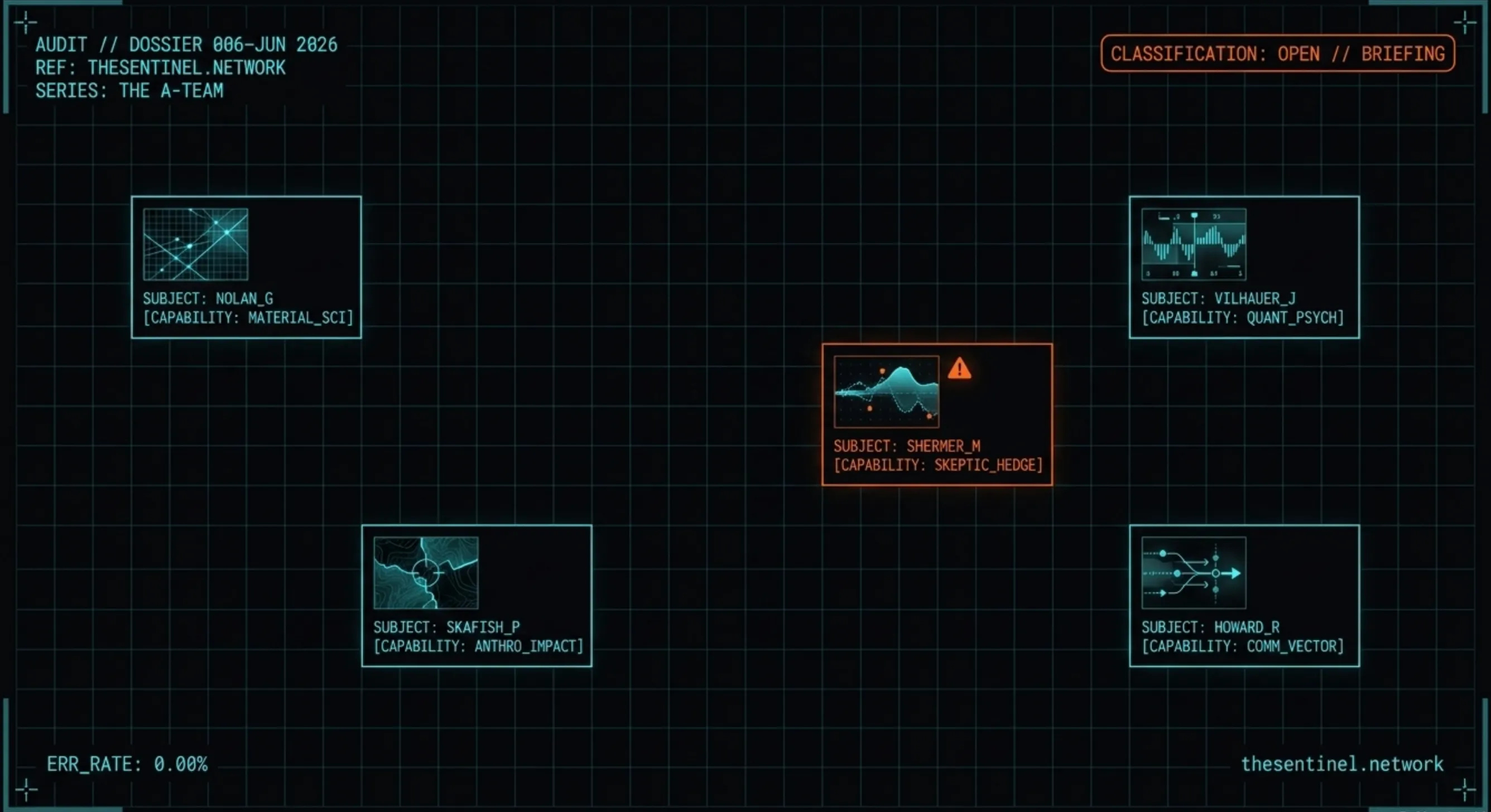
Garry Nolan is the biggest scientific name on the list. A Stanford professor better known for immunology and as the founder of multiple biotech companies, he has spent years on the UAP question, and Loeb seats him for material science: the analysis of physical samples said to come from anomalous craft. If the council ever gets a fragment to test, it goes to Nolan.
Peter Skafish is an anthropologist and philosopher associated with the Sol Foundation, a UAP-focused think tank. His seat, anthropology, is about what contact would mean for human culture, not about detecting anything.
Michael Shermer is the seat that stops you. He is a professional skeptic, founder of Skeptic magazine, a man who built a career debunking the kind of claims this council exists to examine. Loeb lists his expertise as “studying anomalies.” A debunker on a disclosure-advisory council is either a guarantee of rigor or a hedge against embarrassment, and which one it is depends on whose account you believe.
Jennice Vilhauer is a psychologist seated for quantitative psychology. She is the second psychologist on the council, after Eldadi.
Ross Howard holds the communication seat. He is a science communicator and podcaster who has interviewed Loeb. His job, by the council’s own description, is the audience.
THE MAP
Strip away the paperwork question for a moment and ask a narrower one: do these skills match what AARO has said it needs? For part of the roster, the answer is clearly yes.
In November 2024, AARO Director Jon Kosloski testified to the Senate Armed Services Subcommittee on Emerging Threats and Capabilities that scaling the office’s work requires bolstering the quantity, quality, and diversity of the data it collects, and that closing domain-awareness gaps means deploying organic sensor capability. He described a prototype multi-sensor architecture called Gremlin, built by the Georgia Tech Research Institute, that fuses electro-optical and infrared cameras, radar, and radio-frequency monitoring.
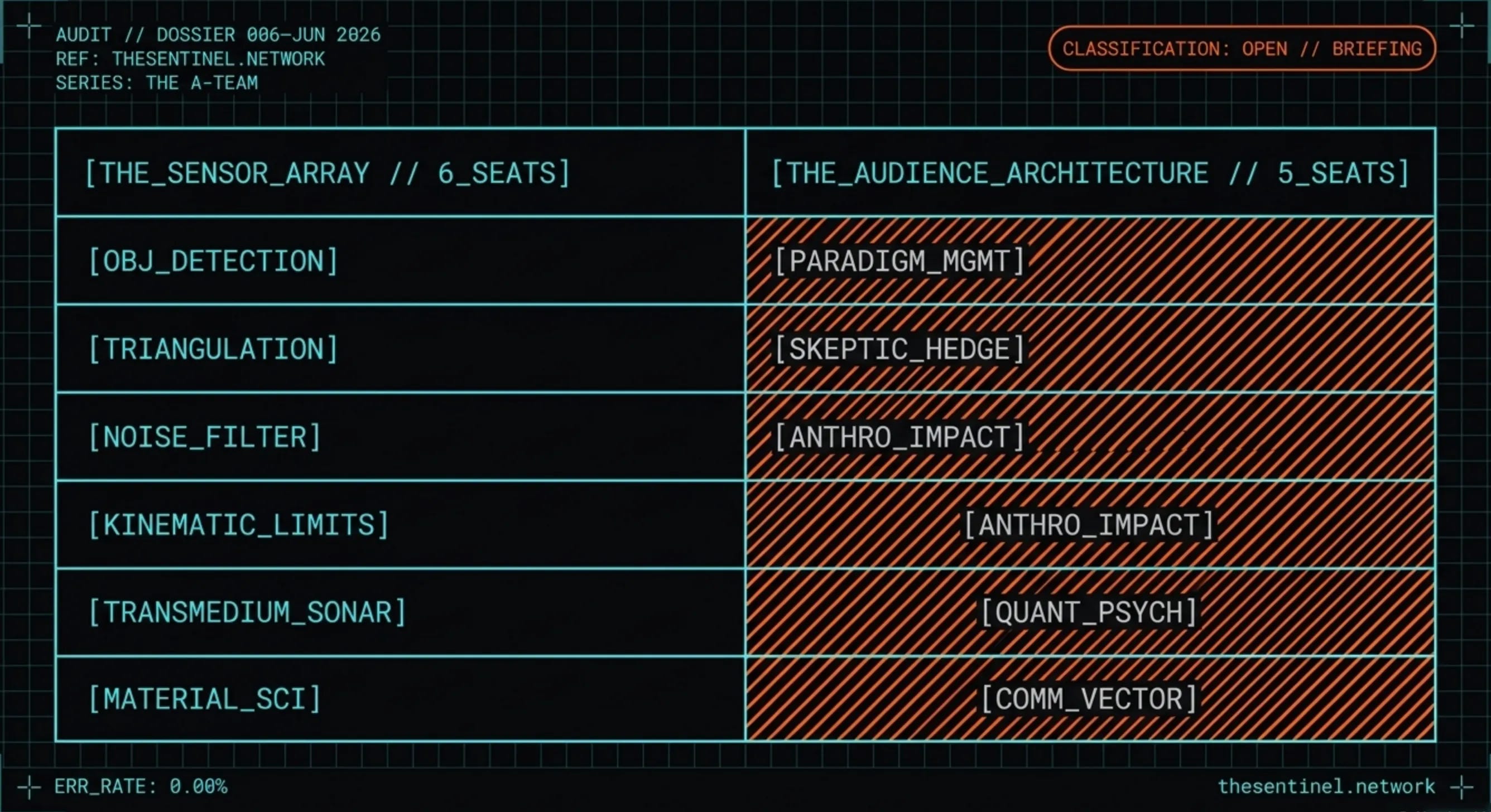
The hard-science seats map onto that cleanly. Szydagis has field-deployed exactly that kind of multi-sensor mix. Cloete and Sarmiento triage and triangulate the data it produces. Nandal models whether a flight path is physically possible. Nolan tests materials. Gallaudet covers the ocean, the one domain the others miss. Six of the eleven are built to detect, measure, and explain objects. That half of the council is a genuine sensor-science team.
The other half is not. Eldadi works on human psychology and the management of paradigm-breaking news. Vilhauer is a second psychologist. Ross Howard is a communicator. Skafish is an anthropologist. Shermer is a professional skeptic. Five of the eleven seats are pointed not at the objects but at the audience: how people will receive a finding, interpret it, argue about it, and be told.
That is the tell, and Loeb wrote it himself. He titled the announcement “Keeping Our Eyes on the Orbs, Not the Audience.” Then he built a council nearly half of which is staffed for the audience. This is not sinister. Managing public reaction to a paradigm-breaking discovery is precisely what Eldadi’s published work argues a responsible institution must do in advance. But it tells you what kind of body this is. It is not only a team assembled to find out what the objects are. It is, in large part, a team assembled for the day the public is told. Whatever it expects to find, it is staffing for the reaction.
THE RECORD
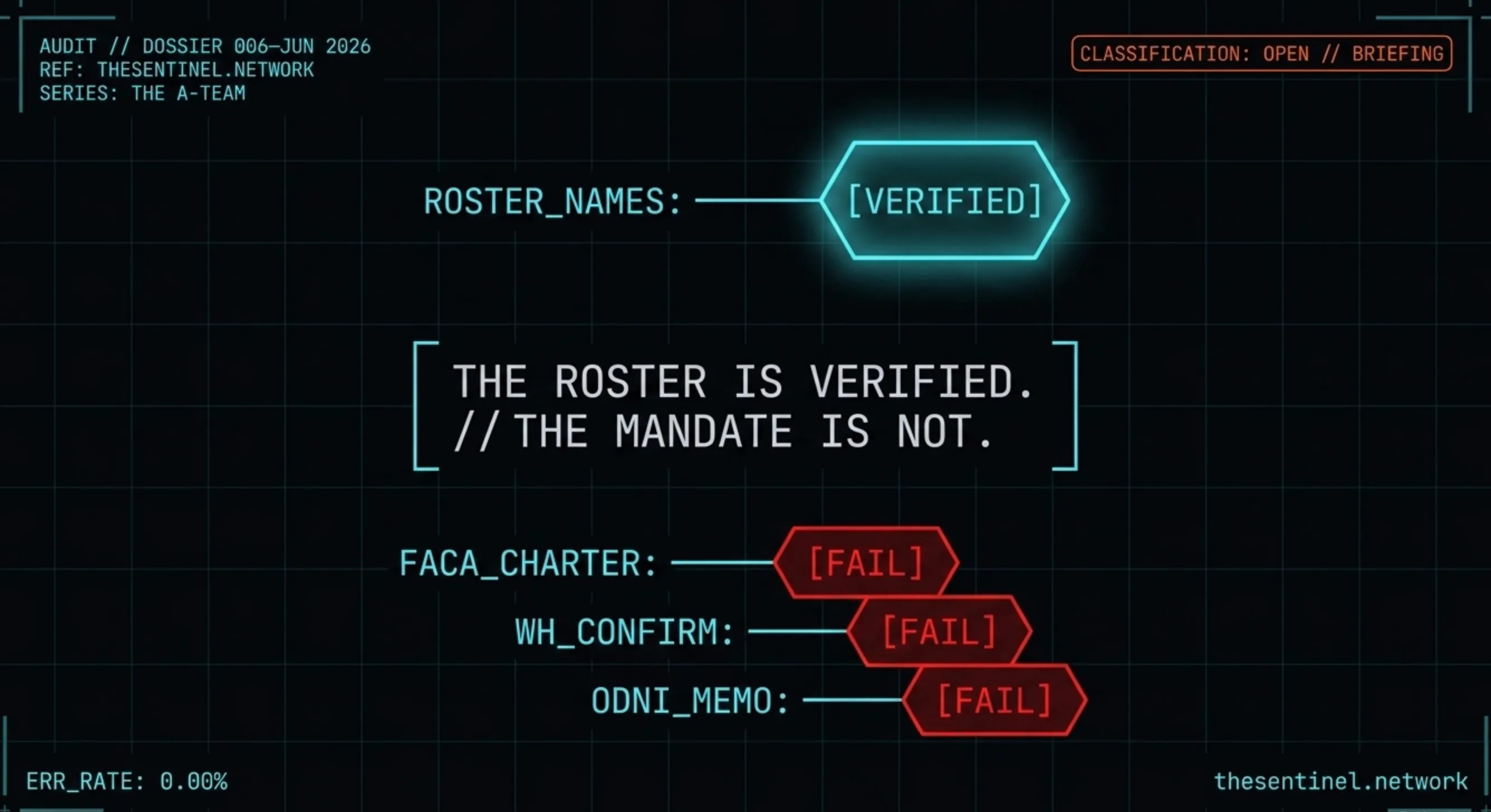
The roster is no longer in question. Loeb has now published all eleven names himself. What remains in question is everything around them: whether the council is a chartered federal body, who in the government stood it up, and whether it carries any authority at all. The names are sourced. The mandate is not.
We asked Loeb directly, before publishing. His reply was a link to his announcement post, which by then he had quietly expanded from five names to eleven. He answered the question of who is on the council by publishing the roster. He did not answer the others. No word on the council’s legal form, its charter, or whether any member holds a security clearance.
Here is what that normally looks like when it is real. When NASA convened outside scientists to study UAP in 2022, the body was chartered under the Federal Advisory Committee Act, the law that governs how the executive branch takes formal advice from non-government experts. It was announced by agency press release. Its meetings were noticed in advance in the Federal Register. Its sixteen members were chosen from eighty applicants, filed financial disclosures, and answered to a named Designated Federal Official. It delivered a public report on September 14, 2023. Transparency was the entire design.
Against that benchmark, the official record for this council is empty. As of this writing there is no charter in the General Services Administration’s advisory-committee database, no Federal Register notice, and no confirmation from the White House, ODNI, AARO, the Department of War, or the FBI. Loeb has named the entire council. The government has confirmed none of it.
We are not going to tell you that means it does not exist, because the empty record is consistent with more than one explanation. Loeb describes a tasking that came together over a single week, and a body that new would not yet appear in a chartering database that lags by weeks regardless. Not every arrangement by which the government takes scientific advice is a chartered FACA committee, either. A research team brought on by contract, or individuals giving advice in their own capacity rather than as a consensus panel, would never generate a public charter at all. The absence of paperwork today is what you would see if the council were overstated, and also what you would see if it were a real arrangement that is one week old or structured to sit outside the FACA process. We cannot yet tell those apart, and neither can anyone else working only from what is public.
Gallaudet’s account points toward the informal reading. By his telling, Loeb asked the White House to add him and the White House agreed. That is how an ad hoc advisory relationship grows. A chartered committee expands by amended charter, not by request. It may still be real. It is not, on this evidence, formal.
A few smaller items sit in the same unverified column. The council’s funding and jurisdiction are undefined. Advising the Intelligence Community on classified sensor data normally requires security clearances, and apart from Gallaudet, a retired flag officer, there is no public indication of who holds one. And four members hold international affiliations or origins: Swiss-funded, Israeli and a former naval officer, South African, and Spanish. For a body said to advise U.S. intelligence agencies, ordinary vetting questions follow. These are open questions, not accusations. Global collaboration is the norm in science, and none of it reflects on anyone’s competence, which is not in doubt.
THE SENTINEL ASSESSMENT: Two things are true at once, and the publication that flattens either one is lying to you. The first is that the people on this council are real and accomplished, and the hard-science half of it maps cleanly onto problems the Pentagon has said out loud it needs help with. The second is that the council, as an official body, is described entirely by the man who says he leads it. Loeb has published all eleven names. No charter, no notice, no word from any of the agencies he says appointed him. The roster is verified. The mandate behind it is not. And the shape of the roster, half of it built for the audience rather than the objects, is its own quiet answer to the question of what this council is for. We will update when the government confirms any of it. If it never does, that will tell us something too.
UPDATE, June 15: Since this briefing went to press, Loeb revised the roster again, adding a twelfth member, philosopher of science Carol Cleland of the University of Colorado Boulder, assigned to anomaly identification. We profile her in Part Two. The list has now changed three times in two days. We are tracking it as a moving target rather than re-cutting this briefing on every edit.
We read every name on the list. The bench is real. The mandate is the one thing still missing from the official record.
This is part one. Part two follows the thread our main beat keeps pulling. The artificial-origin hypothesis for 3I/ATLAS spent a year held out of the peer-reviewed record, as we documented in THE PUBLICATION GAP. The scientist who carried it now chairs this council. We trace where the hypothesis went when it left the journals, and we profile the rest of the bench in full.
Keep looking up.
-- The Sentinel Network™
Every briefing we’ve published is free. That’s not changing. This publication has no institutional backing, no sponsors, and no editorial board. We’re doing the work the newsrooms won’t: sourcing papers, filing FOIAs, building tools, and writing at the pace a once-in-a-civilization event demands.
Paid subscribers fund the investigation directly. They also get access to THE SIGNAL (weekly market intelligence derived from our forensic work), primary source documents, the comment section on every briefing, Fieldcraft Labs, and the FIELDCRAFT series. The tools and methods behind every investigation we publish. No ads. No sponsors. No strings. Your subscription is a data point against the suppression gradient.
If you can’t subscribe, we don’t care. Read everything. Share everything. The mission is the mission.
Subscribe to The Sentinel Network™
A top 100 Science publication on Substack.
Share this investigation. The Suppression Gradient documented what happens when this coverage reaches platforms that do not want you reading it. Every share, every restack, every forwarded link is a data point against the gradient.
Previous briefings: THE COMPLEX | THE MIRROR | THE WINDOW | THE PUBLICATION GAP | THE VERDICT | THE OPERATOR | THE SUPPRESSION GRADIENT | THE ATTRITION (Series)
I’m looking forward to a lot more posts! What an auspicious beginning!
An impressive list of people...I'm going to out on a limb here and say he should add Dr.Jeffrey Kripal of Rice University. If no one is familiar with him, look him up.
https://impossiblearchives.rice.edu/
https://kripal.rice.edu/
Kripal holds some unique perspectives, is an academic, and has also written a book with WhitleyStrieber.
He's no slouch. If Jane Goodall was still alive, I'd put her there too. If you can communicate and form connections to other species, she would have been invaluable.
So, will all this go anywhere? Frankly, it should be hands-off by our government and military (Good luck with that). Academics and other experts from other nations should be involved too. If push comes to shove, and NHI are involved, then certain experiencers should be involved.
No political agendas allowed.