
THE CHARTER: We Do Not Know What 3I/ATLAS Did at Jupiter. Avi Loeb Now Advises the Board That Could Release the Data.
Three months of silence since Jupiter. A federal board that coordinates UAP declassification. Its newest adviser: Avi Loeb.

SUBJECT: UAP GOVERNANCE BOARD, LOEB’S COUNCIL, AND THE 3I/ATLAS DATA BLACKOUT // PART TWO OF THE A-TEAM
DATE: JUNE 18, 2026
CROSS-REF: THE A-TEAM | THE PUBLICATION GAP | THE VERDICT | THE COMPLEX
DATA CONFIDENCE: VERIFIED (ODNI official via Liberation Times; Loeb’s own posts) + ANALYSIS (Sentinel cross-reference)
We are building the video side of this operation. If you want the briefings in a format you can watch, subscribe to The Sentinel Network on YouTube.
THE OBJECT
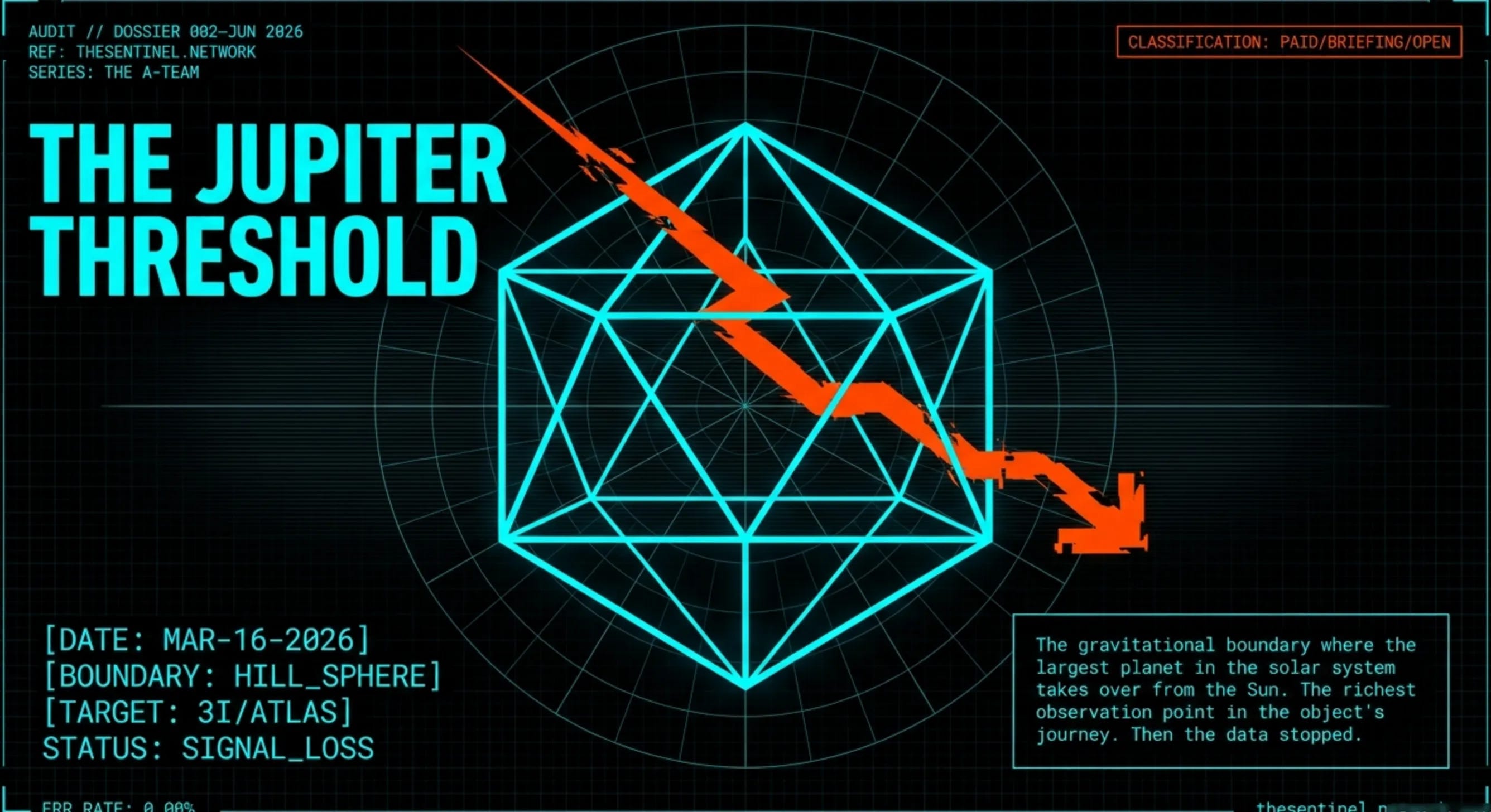
On March 16, 3I/ATLAS crossed into Jupiter’s Hill sphere. The gravitational boundary where the largest planet in the solar system takes over from the Sun.
It was the most important moment in the object’s entire passage. Every prediction we had on the record came due at once.
Then the data stopped.
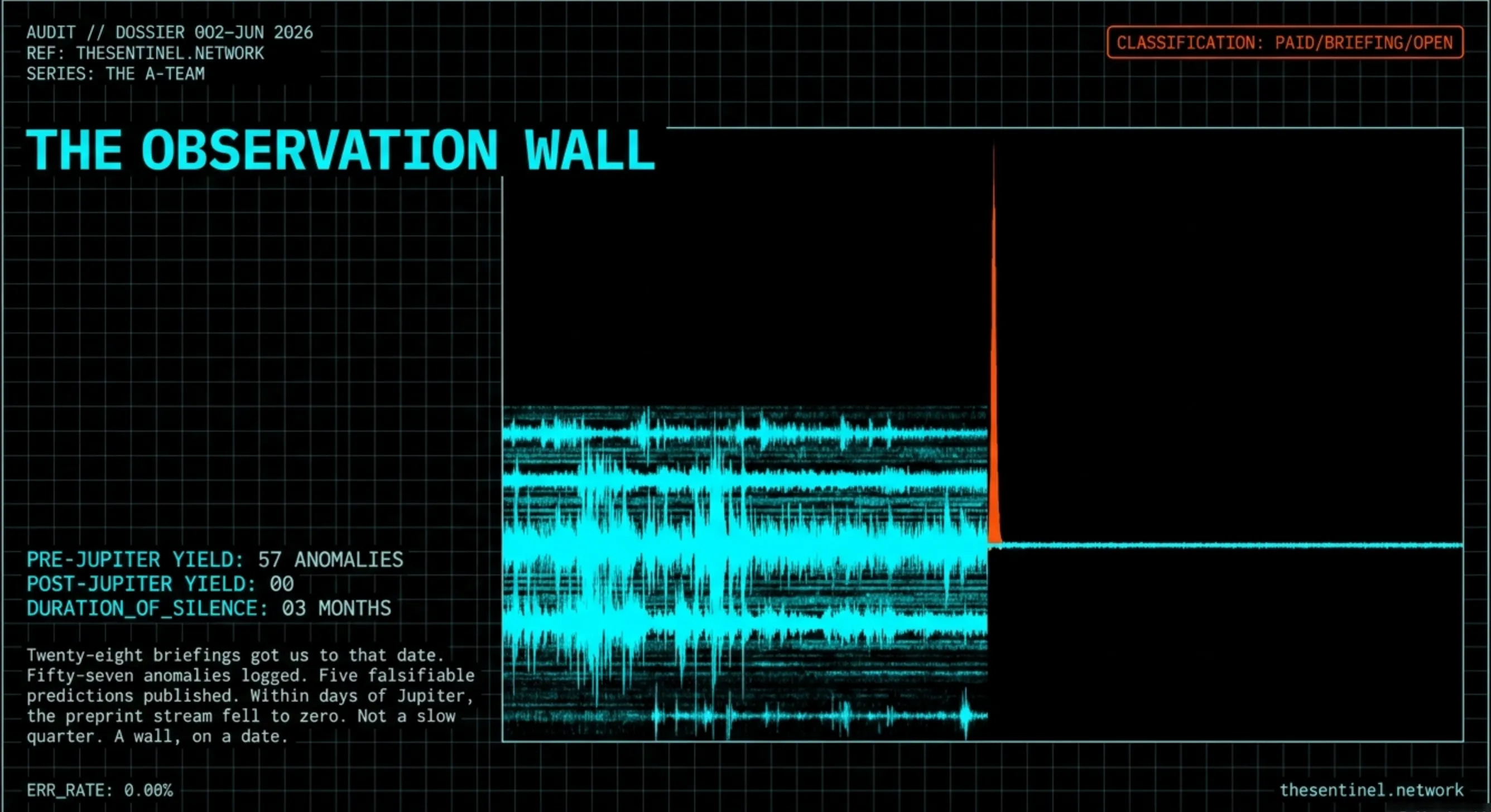
Twenty-eight briefings got us to that date. Fifty-seven anomalies. Five falsifiable predictions, published in THE VERDICT: the production field holds in weak sunlight, the thrust shifts again, the jets return, the brightness breaks its fade curve, the chemistry reconfigures. We wrote that if the object went dark and slipped through clean, we would print that too. We meant it. We never got the chance.
The preprint stream had run for nine straight months. Observation papers. Theory papers. A flood. We documented what happened next in THE PUBLICATION GAP: within days of Jupiter, it fell to zero. Not a slow quarter. A wall, on a date.
That was March. It is June. The wall is still up.
Read that slowly. An interstellar object reached the richest observation point in its journey, and three months later not one new dataset exists in public. So we will not tell you it sailed past Jupiter and faded quietly into the dark. We cannot see it. Neither can you.
What everyone repeats instead is that the trajectory is “consistent with a comet.” That phrase comes from one place. NASA JPL’s official orbit. It is built on 782 observations. There are 7,578 available. JPL kept one in ten and left the rest on the floor.
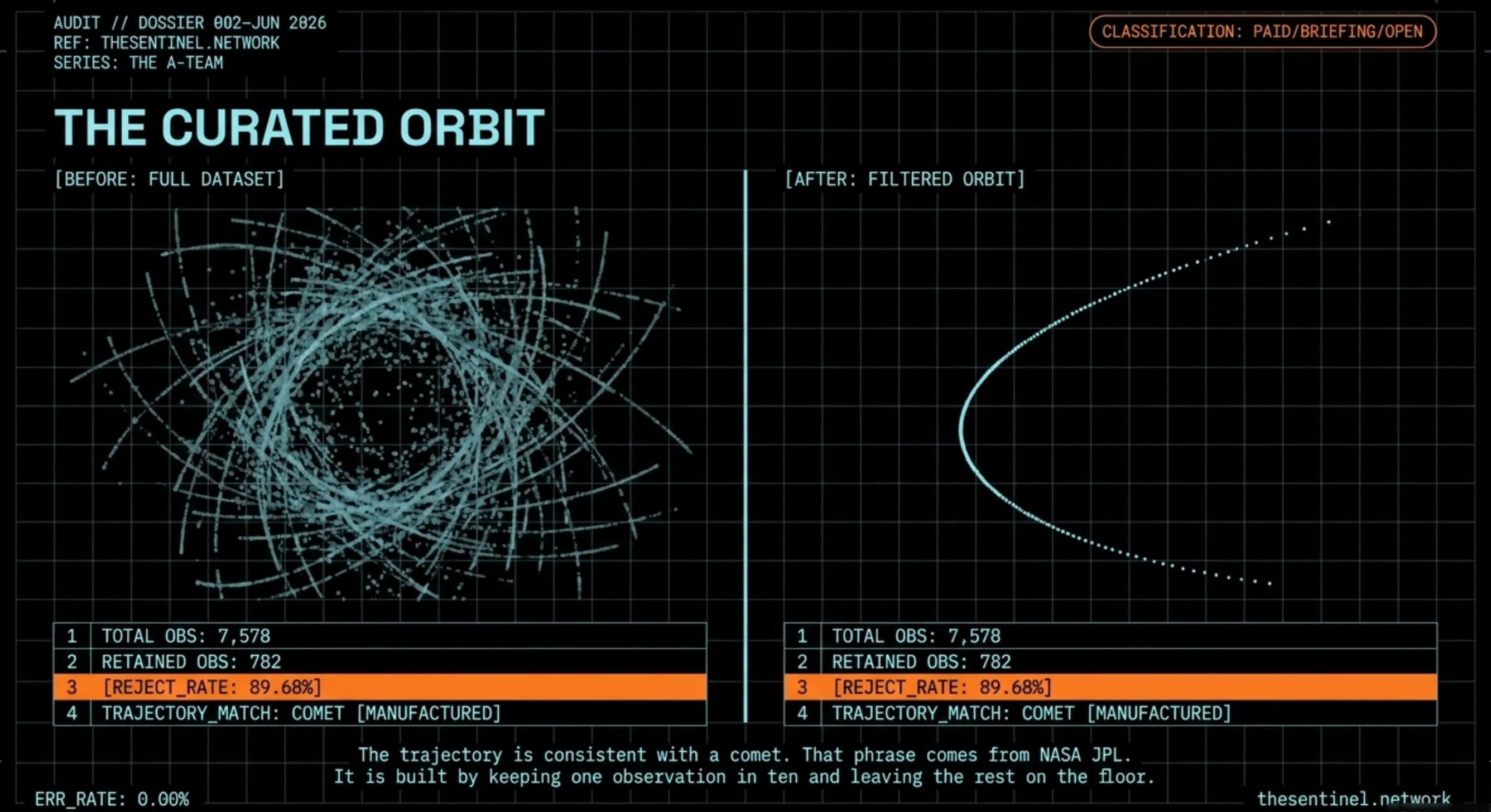
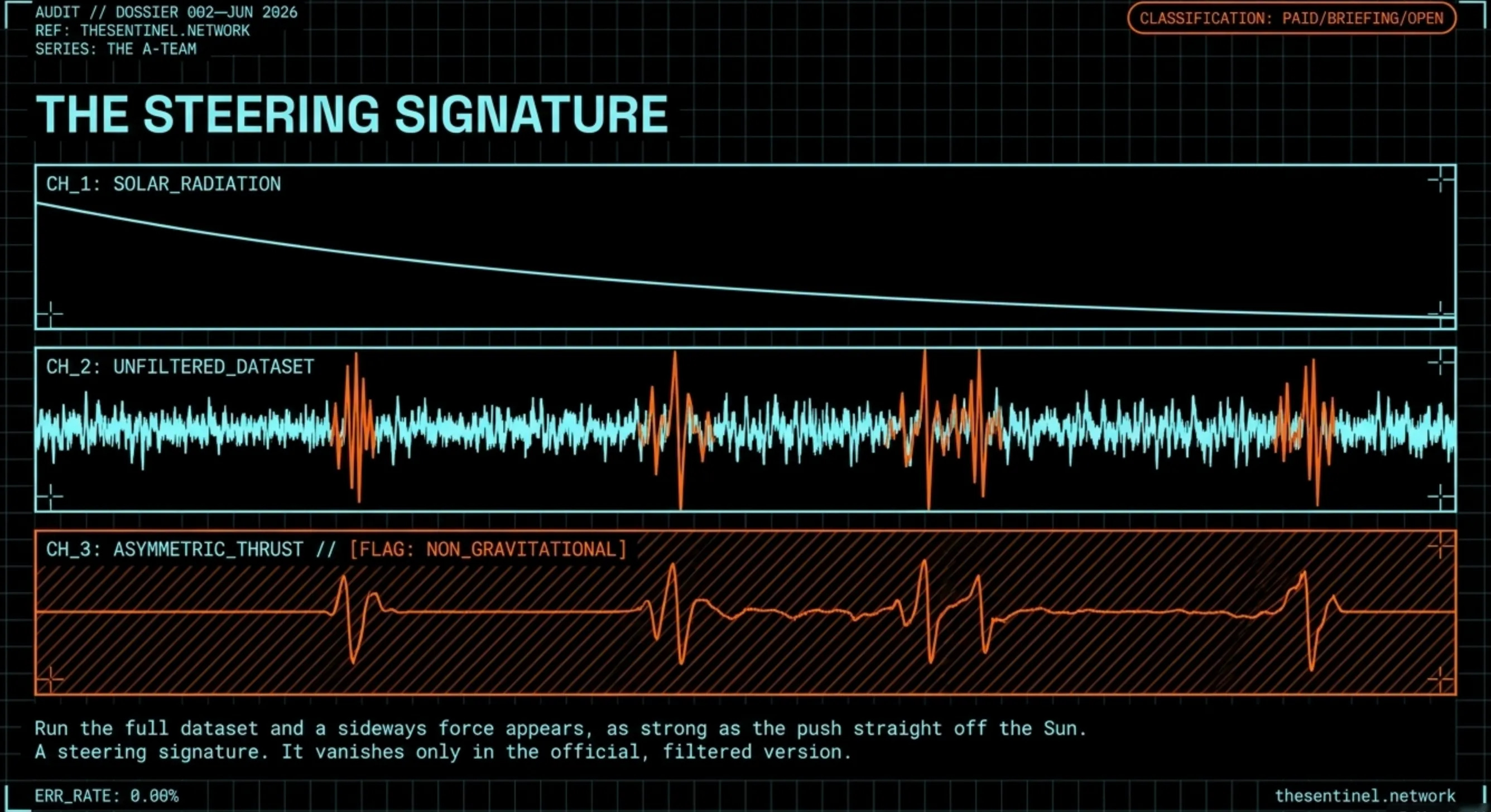
We showed what the missing nine-tenths hold in THE CURATED ORBIT. Run the full dataset and a sideways force appears, as strong as the push straight off the Sun. A steering signature. It lives in all the data. It vanishes only in the official version. The comet trajectory is not a measurement. It is a selection.
The label survives one other way. By ignoring the fifty-seven anomalies we logged before Jupiter ever happened. Water rising thousands of kilometers off the nucleus. The dead ice-grain theory. Exhaust pointed one way. Chemistry firing in stages. Dust that scatters like metal, not ice. The model was already breaking on the way in. Jupiter was the test. The results have been classified by absence.
We do not know what 3I/ATLAS did at Jupiter. That is the most honest sentence we can write. It is also the most alarming. We were promised the answer. It never came.
THE BOARD
The data that would answer that question is classified observation of an anomalous interstellar object. That is exactly the kind of data a newly revealed arm of the government now exists to manage.
In the first briefing we went looking. For a charter. For a Federal Register notice. For one agency, any agency, willing to say the body Loeb described was real. We found none of it. We said so.
Three days later, the record moved. Not through Loeb’s blog. Through a reporter.
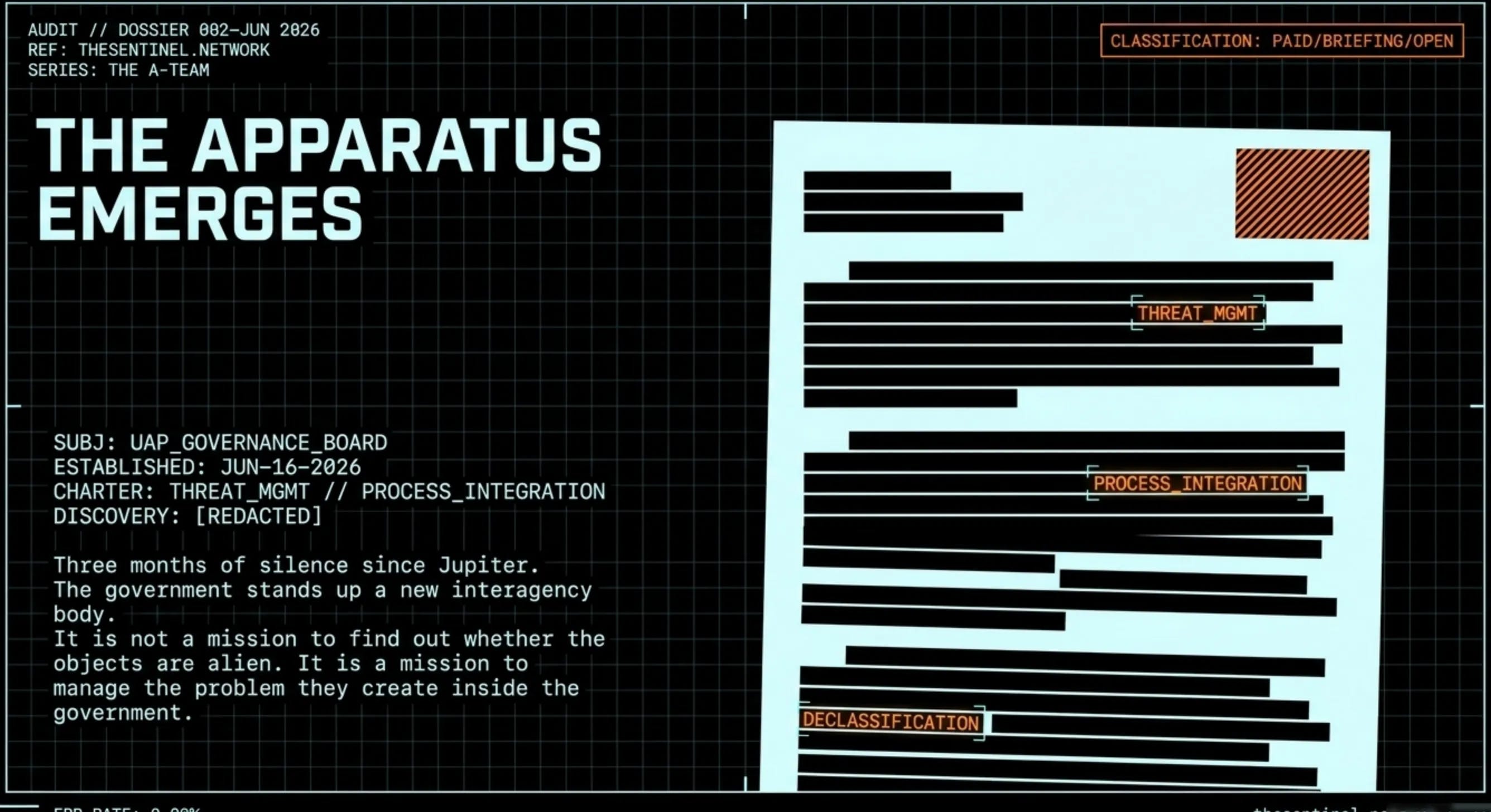
On June 16, Christopher Sharp of Liberation Times reported that an official from the Office of the Director of National Intelligence confirmed it on the record. The government has stood up a new interagency body. The UAP Governance Board. To support the President’s transparency directive, ODNI, the FBI, and the Department of War established it to coordinate UAP work across the military, law enforcement, the intelligence community, and the civilian agencies.
This is the thing Loeb’s post pointed at and never produced. A named body. A sourced existence. An official willing to describe it to a journalist.
Sharp quoted the charter. The mission: address national-security threats from UAP, integrate the interagency processes that feed the All-Domain Anomaly Resolution Office, and assist in the timely coordinated declassification of UAP information under Executive Order 13526.
Read that mission twice. It is not a mission to find out whether the objects are alien. It is a mission to manage the problem they create inside the government. Threat. Process. The orderly release of classified material.
The board met for the first time on June 15.
THE PLACEMENT
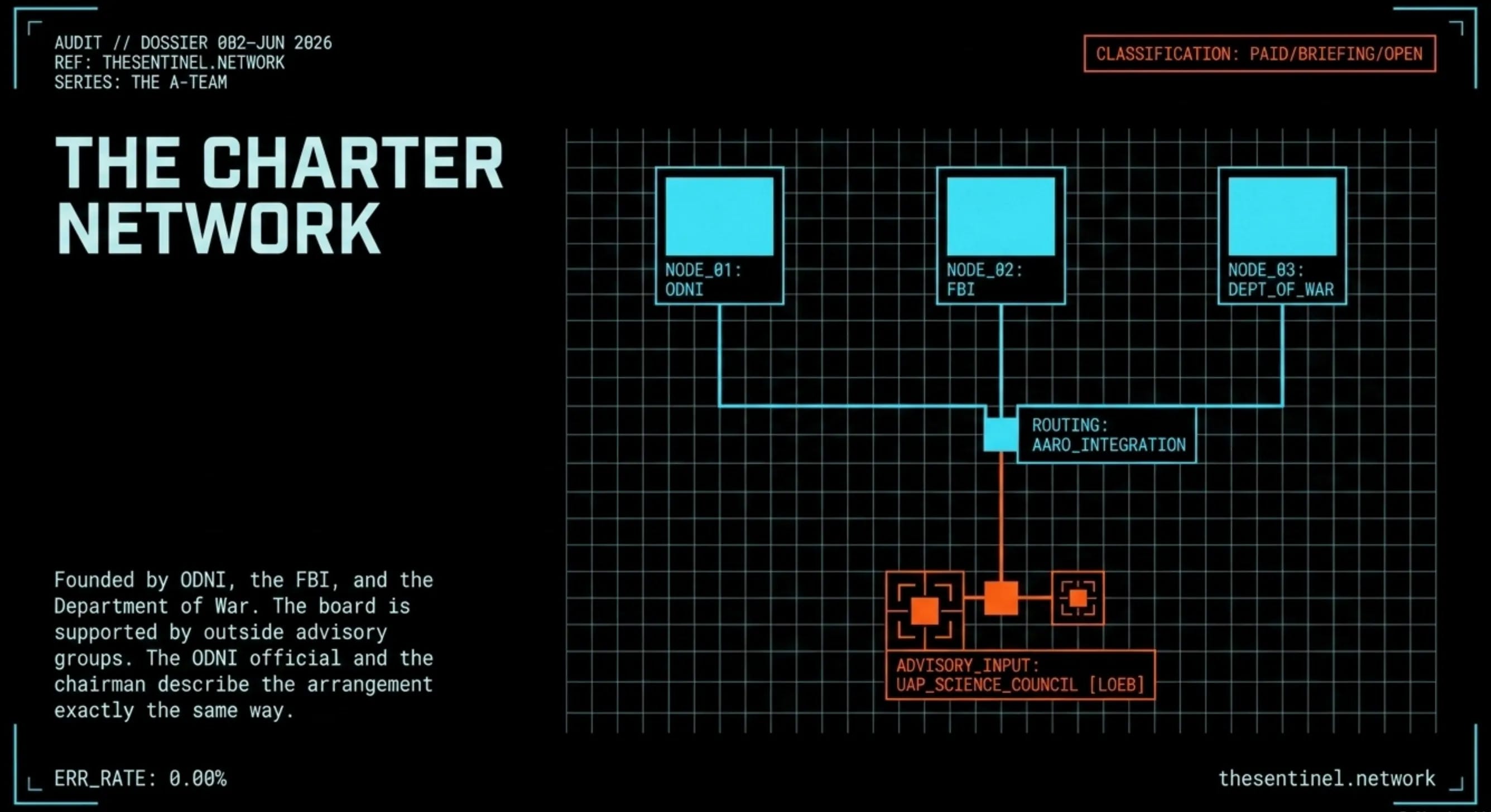
Sharp reported one more thing. The board is supported by outside advisory groups. Liberation Times understands Loeb’s UAP Science Advisory Council is one of them.
Loeb says the same. In a follow-up Q&A on June 17, he laid out the structure from the inside. The council reports up to the Governance Board. The board takes advice from the council and other committees. He describes the board’s mission in nearly the ODNI official’s words.
Two descriptions of one arrangement. One from a government official, through a reporter. One from the chairman himself. They match.
That settles the seam we flagged in part one. Loeb wrote he was tasked by the White House, AARO, ODNI, the FBI, and the intelligence community to build the council. The ODNI official said the board was founded by ODNI, the FBI, and the Department of War. Those are not rival claims about one body. One names the authorities that asked Loeb to assemble a council. The other names the agencies that founded the board it answers to. The follow-up closes the gap. It does not widen it.
The record has moved. In part one the council floated free, sourced to one man. Now the charter exists, it belongs to the board, and the official and the chairman describe Loeb’s group the same way. One of the board’s outside advisory inputs.
THE BUILDING
Now set the object beside the board.
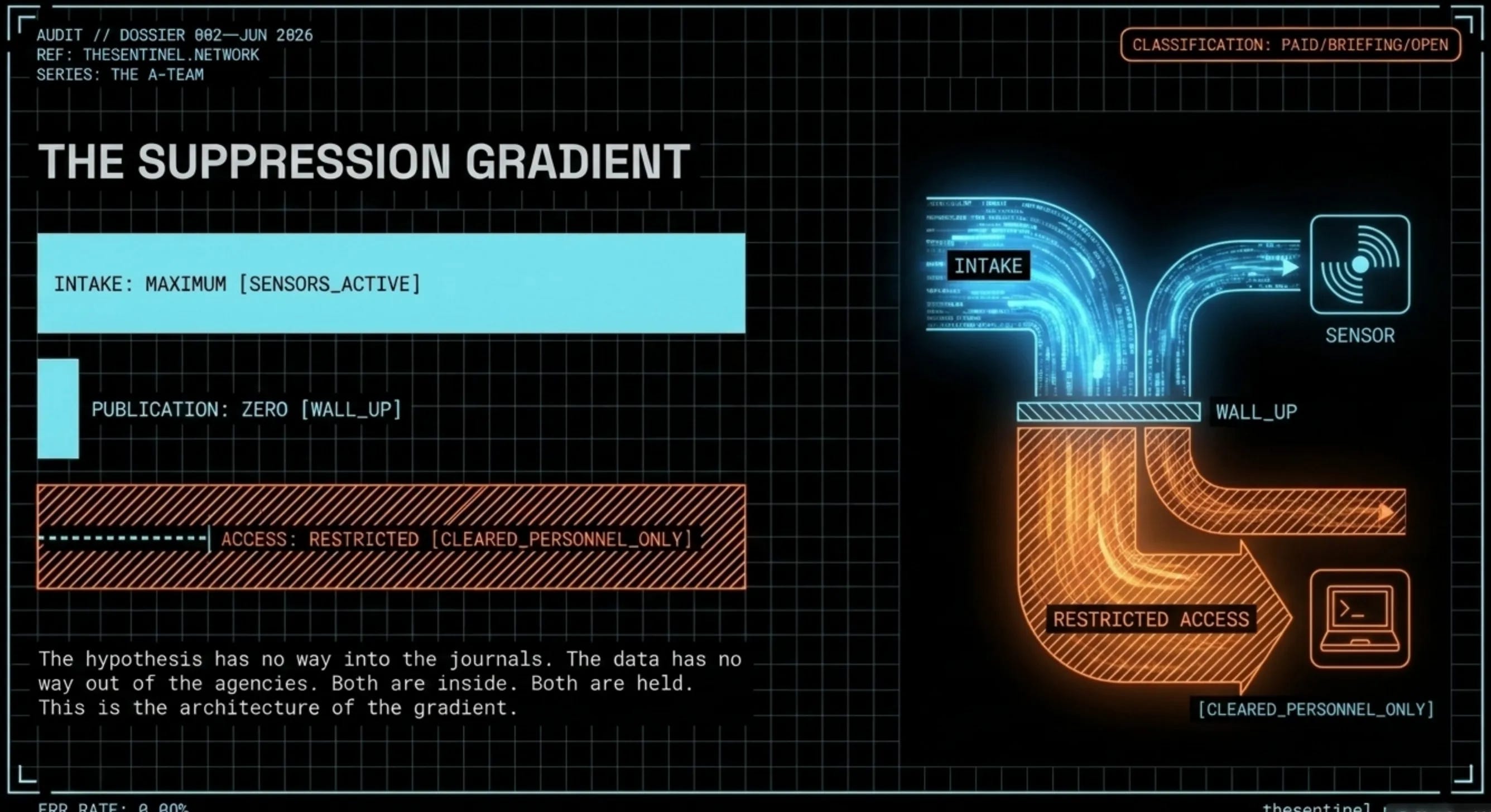
The artificial-origin reading of 3I/ATLAS never made it through the front door of the institutions built to weigh it. An editor told Loeb to cut the hypothesis from his own paper before it could run. NASA edited its near-Earth-object database within a day of a challenging result. JPL filtered the orbit down to one observation in ten, and the steering signal shrank to noise. A NASA satellite went dark through the key window. The largest publisher on Earth printed almost nothing. We mapped the whole architecture in THE SUPPRESSION GRADIENT.
The hypothesis has no way into the journals. The data has no way out of the agencies. Both are inside. Both are held.
Now the man.
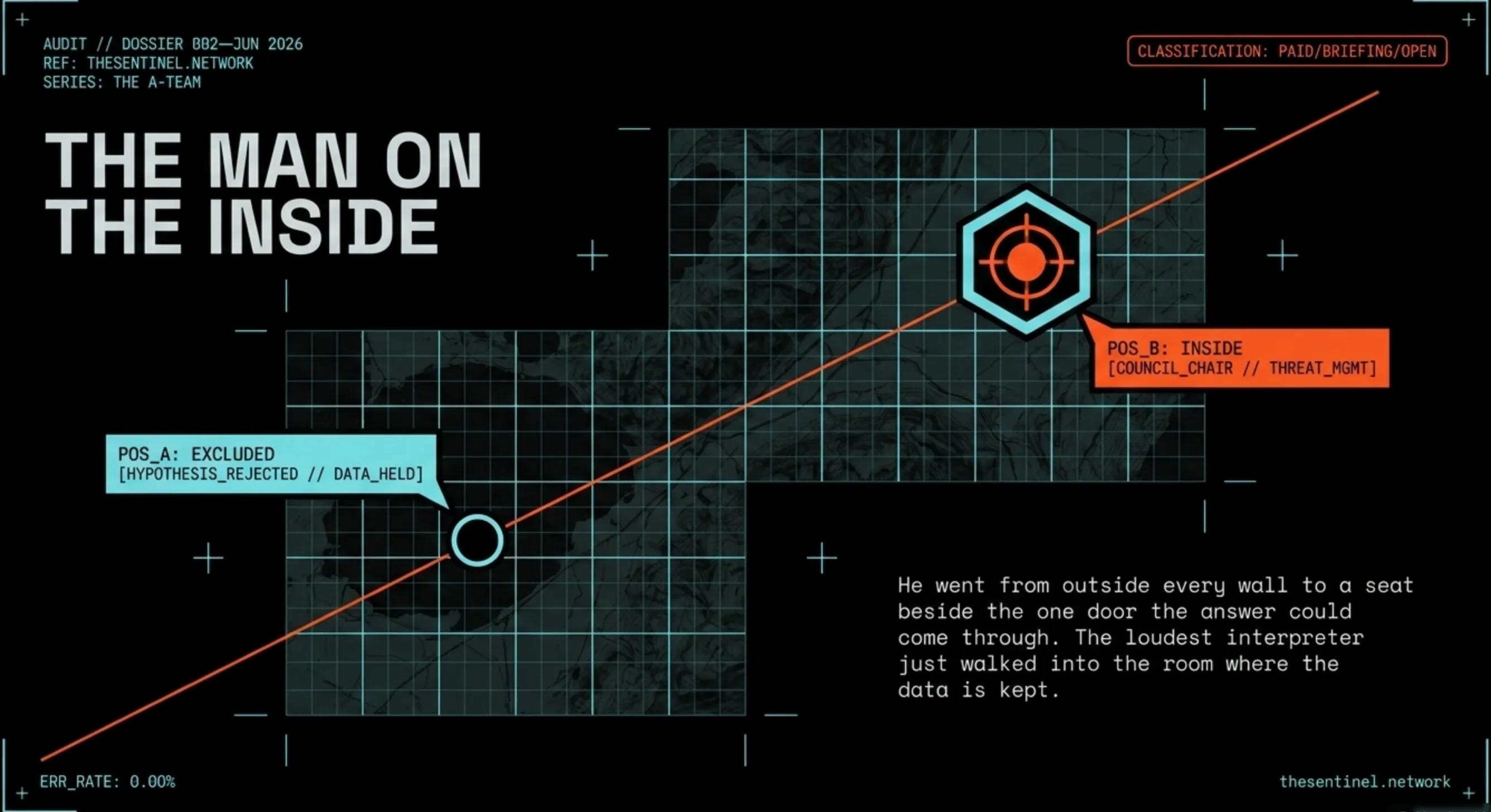
Avi Loeb carried the artificial-origin reading longer and louder than anyone alive. He is the scientist an editor ordered to delete his own conclusion. This week he sits on the science council advising the federal board whose charter mission is the coordinated declassification of UAP information. By his own account, and the ODNI official’s.
Hold those two facts in one hand. The data that would settle 3I/ATLAS is the exact category that board exists to release. The man who could not get the question published now advises the body that controls the door.
This is the arc. The hypothesis did not get out. The data did not get out. The man got in.
He went from outside every wall to a seat beside the one door the answer could come through. Maybe he forces it open. Maybe a seat at the table is how the most stubborn man at the gate gets brought inside, where stubborn men are managed. We do not know yet. We know the object is gone. We know the predictions are unanswered. We know its loudest interpreter just walked into the room where the data is kept.
THE MANDATE
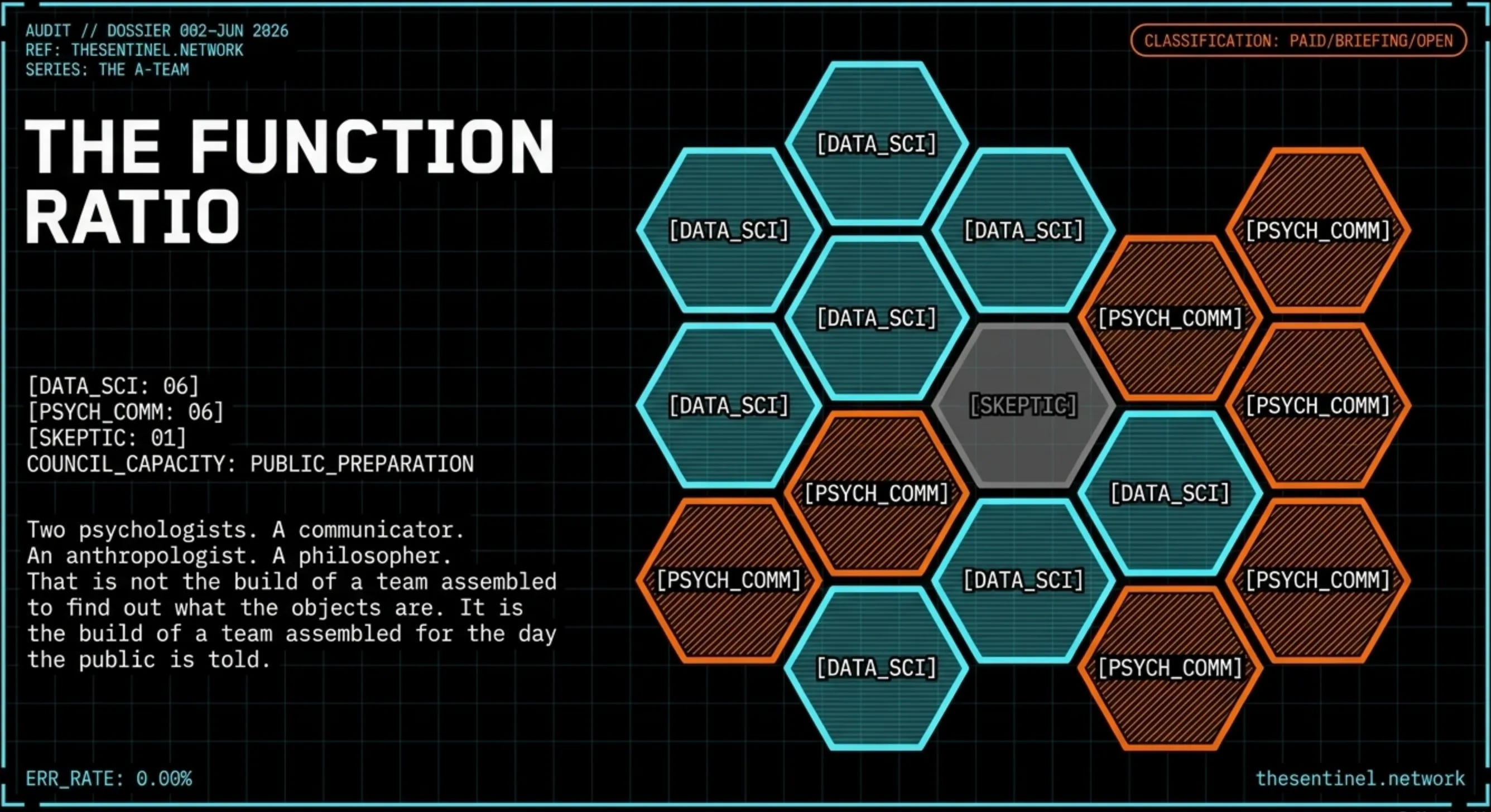
In part one we flagged the tell. Loeb titled his announcement “Keeping Our Eyes on the Orbs, Not the Audience.” Then he built a council half of which is not pointed at the orbs. Two psychologists. A communicator. An anthropologist. A professional skeptic. A philosopher of science. That is not the build of a team assembled to find out what the objects are. It is the build of a team assembled for the day the public is told.
The board’s charter sharpens the read. Its mission is not discovery. It is threat assessment, process integration for AARO, and coordinated declassification. A science group feeding that mission would be weighted toward exactly what Loeb chose. Data handling, yes. But also psychology. Communication. The study of how people absorb a shock.
Read the non-detection seats as functions and the fit hardens. Omer Eldadi designs how a paradigm-breaking finding gets announced; his published work is a graduated disclosure protocol, not a single reveal. Vilhauer models how the public reacts to it. Howard delivers it. Skafish reads what it does to the culture. Shermer screens the weak claims before they reach the board. Cleland rules on what counts as a real anomaly. Half this council finds and measures. The other half judges, interprets, and tells.
Loeb’s own follow-up fits the same shape. Asked what the council offers national security, he does not lead with aliens. He leads with the prosaic case. If the orbs are adversarial human technology, that is a serious breach. He reaches for the Chinese spy balloon. He reaches for the image of one ant in the kitchen meaning more are on the way. He stresses the council works only with unclassified data. That is a chairman describing a body built to manage a national-security and information problem. Which is what the board above it is chartered to do.
And the public-preparation function is not our inference. Liberation Times reported on May 30 that White House and defense officials had sought advice on how to prepare the public for a possible announcement about UAP and non-human intelligence. Two weeks before Loeb’s council surfaced. When a government is independently reported to be working on how to tell the public something, and the science group attached to its new UAP board is one-third psychologists and communicators, the composition stops looking like an oversight. It starts looking like a brief.
THE THIRTEENTH
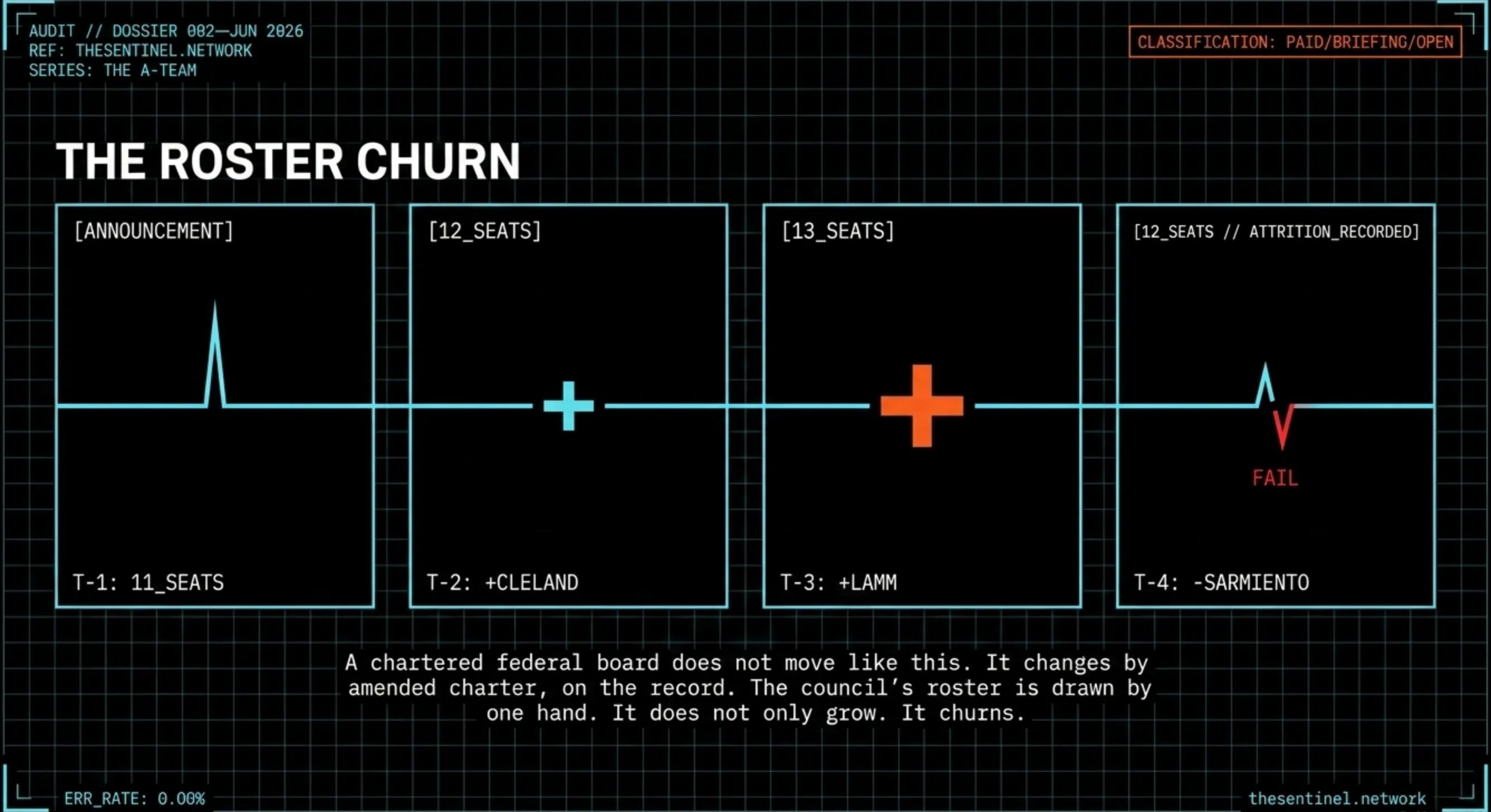
The roster does the one thing it has done since June 13. It moves.
Part one published eleven names. The post named twelve soon after. The addition was Carol Cleland, a philosopher of science at the University of Colorado Boulder whose whole career is the question of how science recognizes a real anomaly. One of the strongest picks on the list, seated in her own field.
Then the post named thirteen. The newest addition is not a working scientist. Ben Lamm is the co-founder and CEO of Colossal Biosciences, the de-extinction company building woolly mammoths and dire wolves out of edited genomes. Serial tech entrepreneur. Former founder of the AI firm Hypergiant. Fellow of the Explorers Club. Member of the Planetary Society’s advisory board. He runs a private company carrying a paper valuation bigger than several publicly traded defense contractors, north of ten billion dollars. Loeb seats him for oceanography and biology.
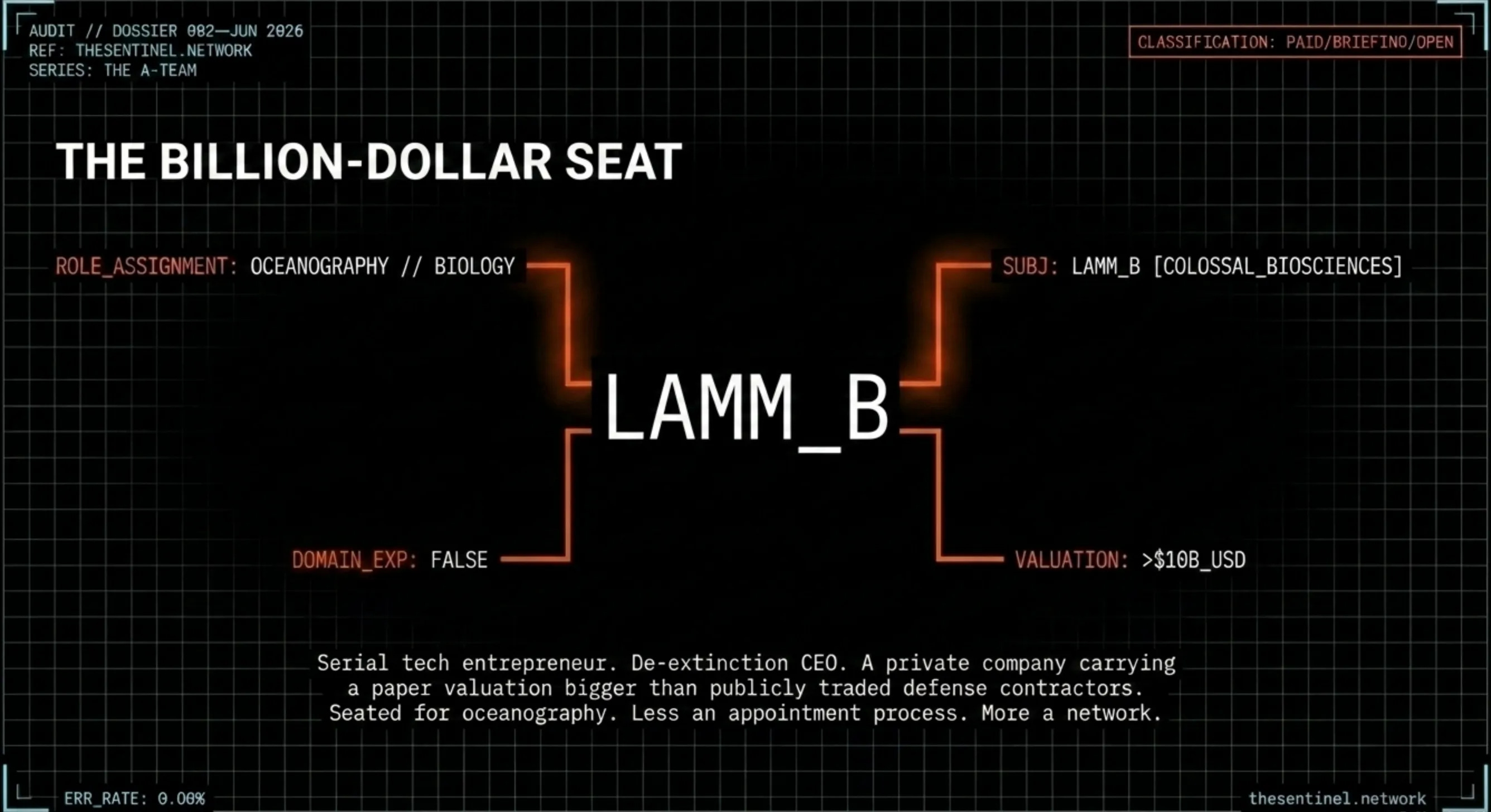
Lamm is accomplished. He is also a biotech entrepreneur, not a working ocean scientist, and his arrival shows how this roster is built. Less an appointment process. More a network.
And it does not only grow. It churns. Loeb’s June 17 follow-up lists twelve, not thirteen. It keeps Lamm. It quietly drops Regina Sarmiento, who still appears on the main announcement post. Twelve or thirteen, on the same day, depending which post you read.
A chartered federal board does not move like that. It changes by amended charter, on the record. We still have not seen a Federal Register notice for the council. Or a public charter for it in the GSA advisory-committee database, as distinct from the board. Or a membership list from any agency, rather than from Loeb. The board is documented. The council’s roster is drawn by one hand. Neither is an accusation. Both are just where the record stands.
THE SENTINEL ASSESSMENT:
Part one asked if the council was real. We could not confirm it, and we said so. Part two has the answer, and it is stranger than yes or no. The government built something. It built a board, not a council. Chartered for threat assessment and declassification, not discovery. Founded by ODNI, the FBI, and the Department of War. Loeb’s science council is one of several outside groups that advise it. The ODNI official and Loeb describe it the same way. We are not going to call that a contradiction. It is a real place to sit, and a meaningful one.
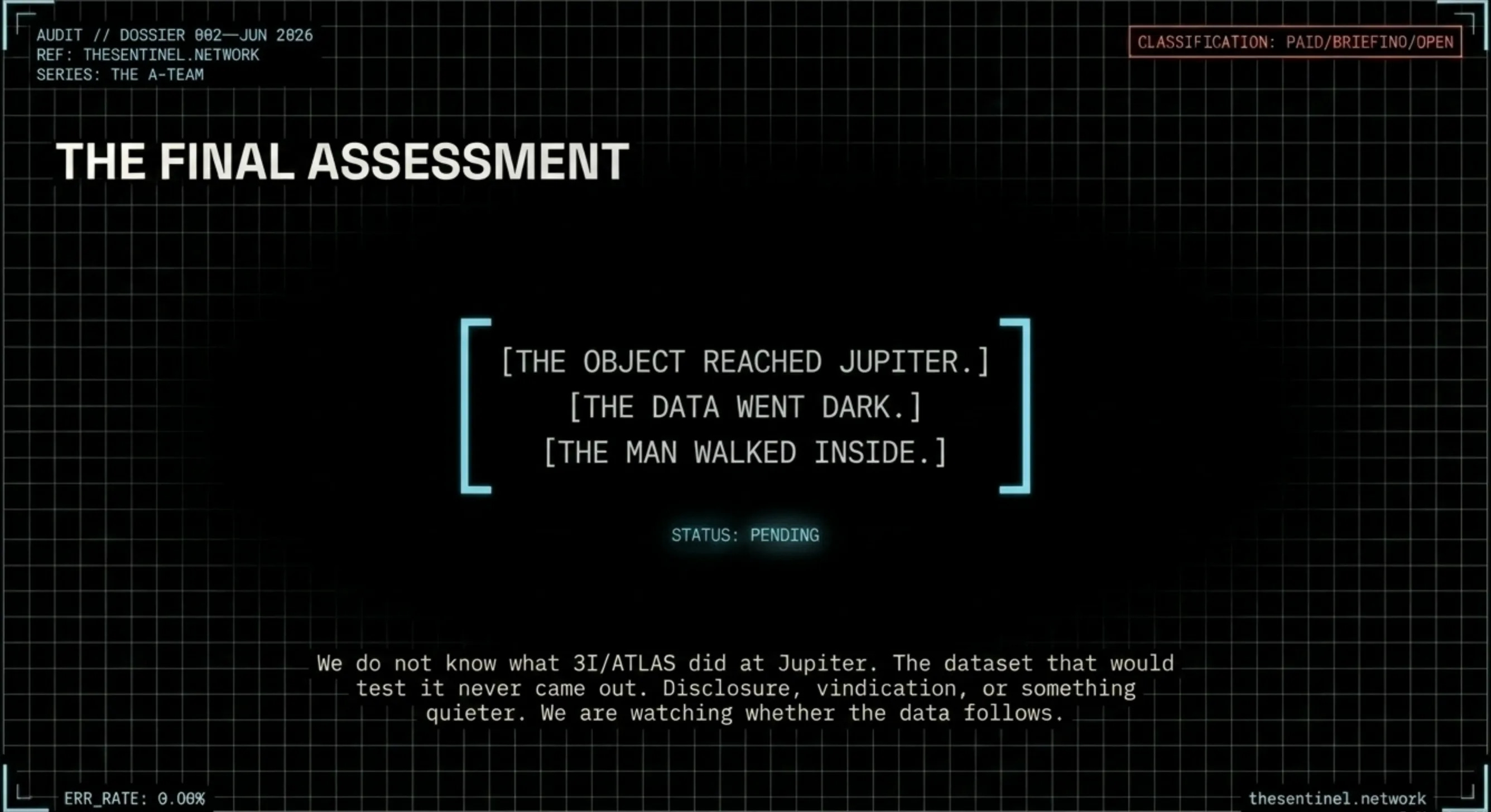
What stays worth watching is the shape. A council built audience-heavy, attached to a board whose job includes timing what the public is told. A roster that will not hold still across its own chairman’s posts. And a man at the center who pressed the artificial-origin reading of 3I/ATLAS from outside every institution that holds the data, until an editor told him to delete it from his own paper. The object reached Jupiter. The data went dark. The dataset that would test it never came out. He now advises the board chartered to coordinate exactly that release. Disclosure, vindication, or something quieter, the man has walked into the building. We are watching whether the data follows.
The board is real. The charter exists. Loeb has a seat. We can source all of it.
What we cannot source is the one thing that started this publication. What 3I/ATLAS did at Jupiter. Three months on, the answer has not come. If the object is gone, the data went with it, into a building its loudest interpreter just walked inside.
Keep looking up.
-- The Sentinel Network™
Every briefing we’ve published is free. That’s not changing. This publication has no institutional backing, no sponsors, and no editorial board. We’re doing the work the newsrooms won’t: sourcing papers, filing FOIAs, building tools, and writing at the pace a once-in-a-civilization event demands.
Paid subscribers fund the investigation directly. They also get access to THE SIGNAL (weekly market intelligence derived from our forensic work), primary source documents, the comment section on every briefing, Fieldcraft Labs, and the FIELDCRAFT series. The tools and methods behind every investigation we publish. No ads. No sponsors. No strings. Your subscription is a data point against the suppression gradient.
If you can’t subscribe, we don’t care. Read everything. Share everything. The mission is the mission.
Subscribe to The Sentinel Network™
A top 100 Science publication on Substack.
Share this investigation. The Suppression Gradient documented what happens when this coverage reaches platforms that do not want you reading it. Every share, every restack, every forwarded link is a data point against the gradient.
Previous briefings: The A-Team | The Publication Gap | The Verdict | The Complex | THE ATTRITION (Series)
One way to prevent people from talking or writing about certain topics is get them to sign an NDA or similar document. I hope Loeb and others are not going to fall into that trap.