

DATE: FEBRUARY 14, 2026
SUBJECT: FORENSIC ANALYSIS OF CNEOS DATABASE INTEGRITY // INTERSTELLAR METEORS
CLEARANCE: PUBLIC
In the world of open-source intelligence (OSINT), we look for the “diff”—the difference between what was said yesterday and what is claimed today. Usually, we apply this to geopolitical troop movements or corporate scrubbings. But this week, the front line of information suppression moved to the most sterile environment imaginable: the CNEOS fireballs catalog of NASA/JPL.
We have been tracking the ongoing saga of Professor Avi Loeb and the Galileo Project closely. For months, the resistance to new data regarding Interstellar Objects (ISOs)—specifically the anomalous 3I/ATLAS—has been palpable. But a recent incident detailed by Loeb signals a shift from passive skepticism to active, data-level interference.
Here is the deep dive on the latest attempt to gatekeep the study of non-terrestrial intelligence.
The “Glitch” in the Matrix
A few days ago, Loeb and his postdoc, Richard Cloete, identified two meteors (from 2022 and 2025) in NASA’s CNEOS database that, statistically, appeared to be interstellar in origin. This is a massive claim. It implies that the solar system is permeable, frequently visited by objects from other star systems—some of which might not be mere rocks.
They wrote a paper. They posted it. And then, the “system” reacted.
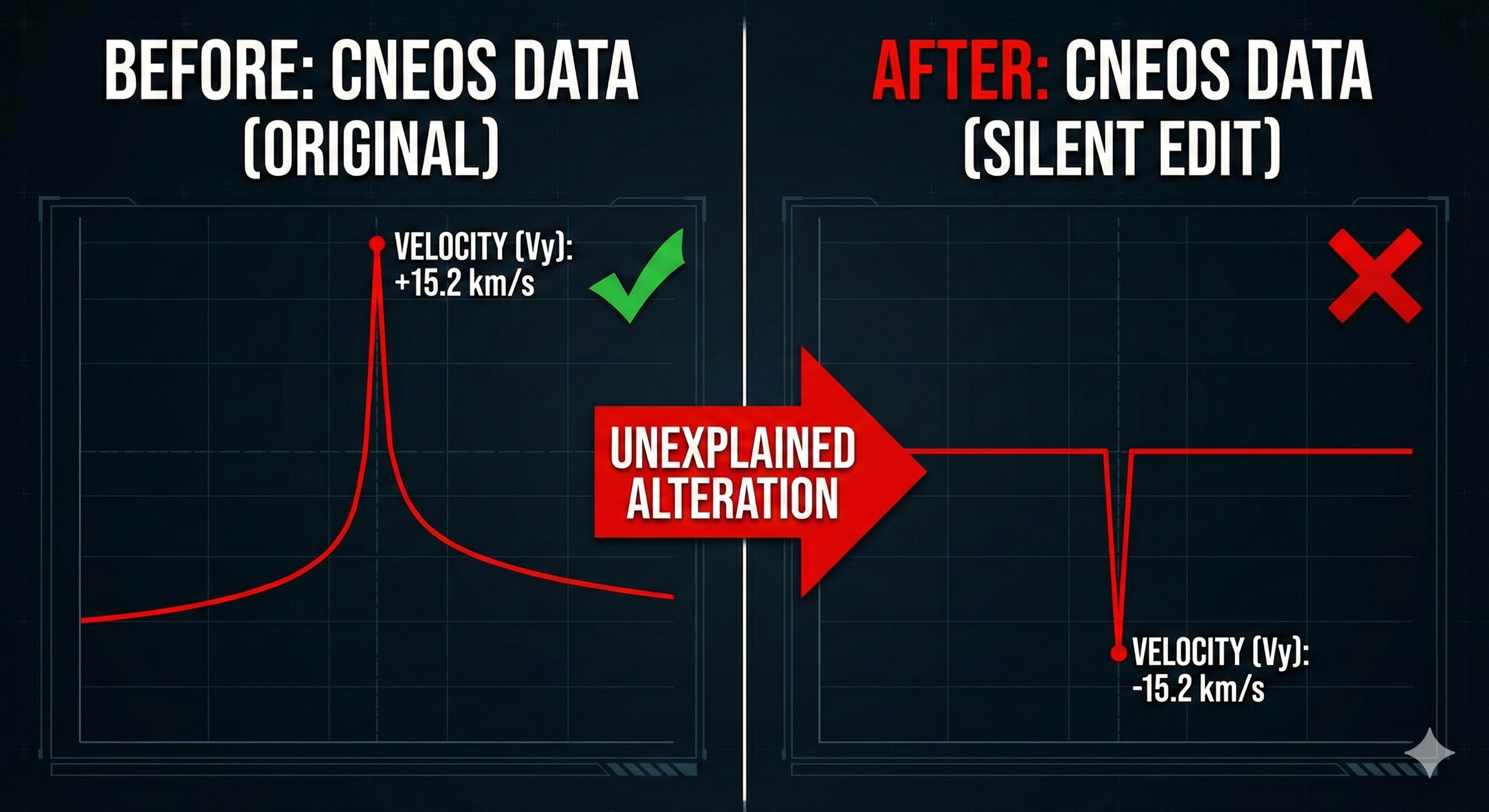
Less than 24 hours after their paper went public, NASA/JPL updated the CNEOS database. They didn’t issue a press release. They didn’t add a footnote explaining a recalculation. They simply flipped the sign on one velocity component of the 2025 meteor.
This single, silent edit effectively “grounded” the object, mathematically forcing it back into a Solar System origin.
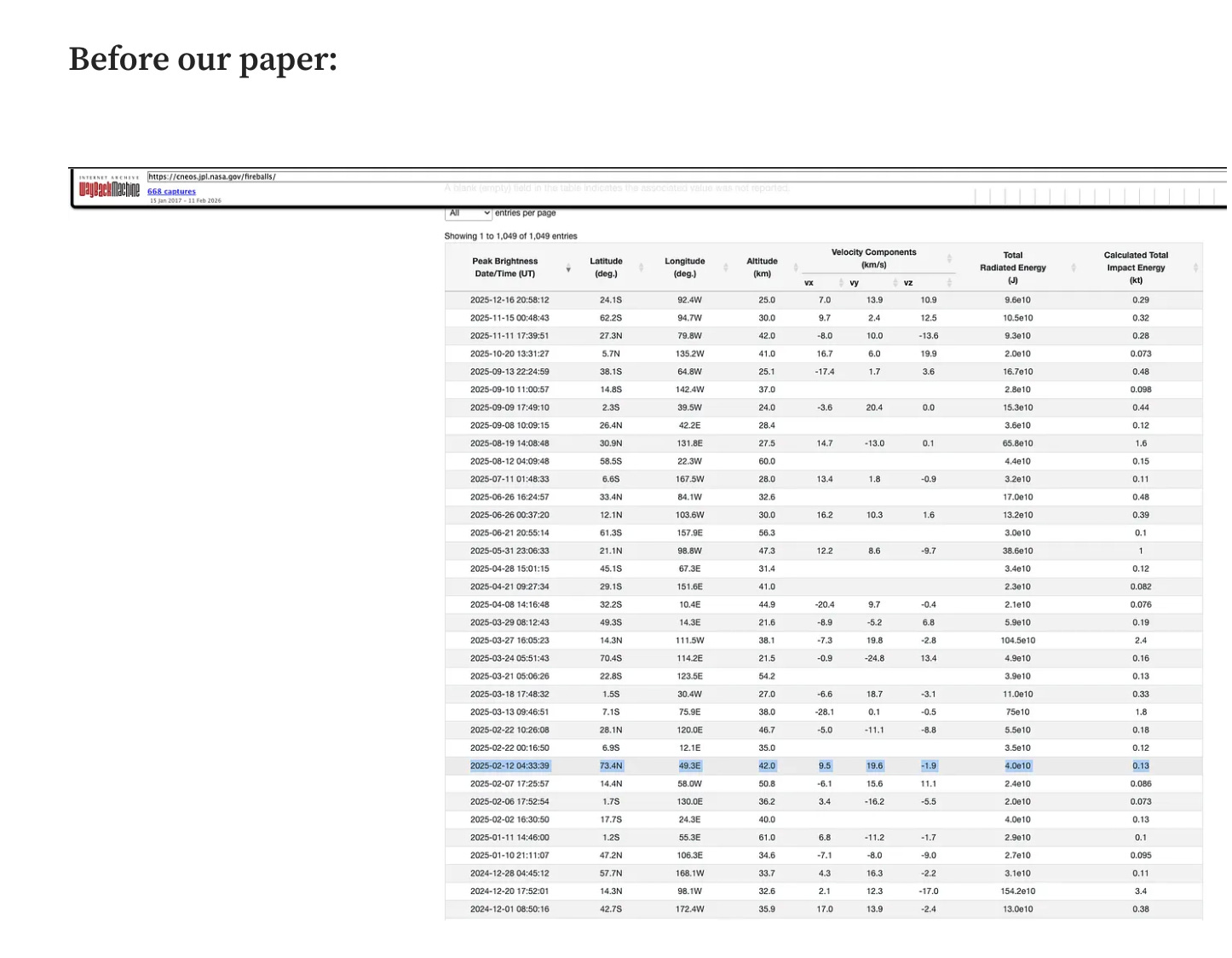
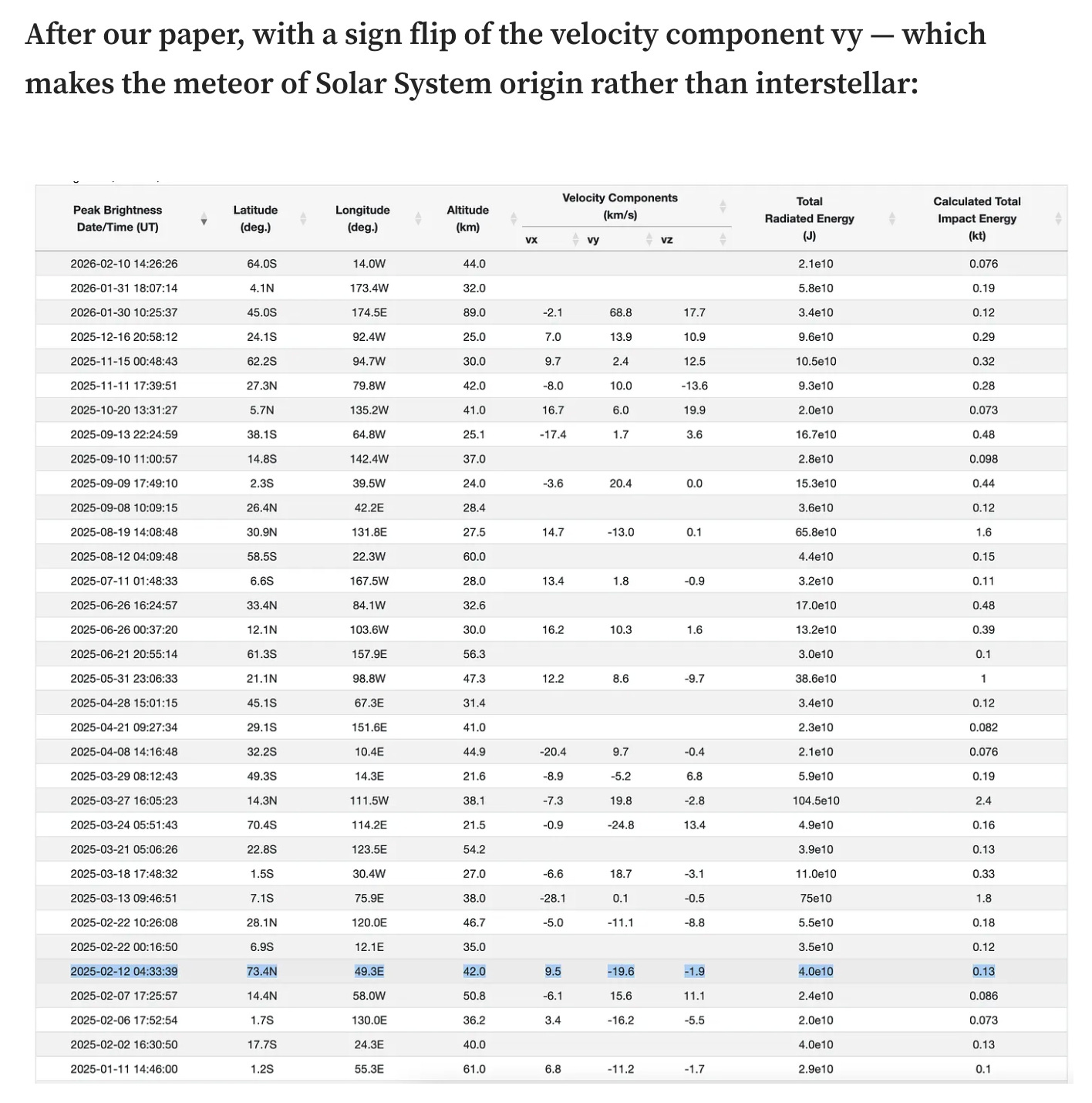
Loeb caught them because, like any good investigator, he had the receipts. Using the Internet Archive, he was able to show the “Before” and “After.” If the data was genuinely incorrect, scientific integrity demands a public correction. A silent, retroactive edit made only after a challenging paper is published is not science; it is a cover-up.
The Gatekeeper’s Template
While NASA scrubbed the data, the academic publishing world closed ranks.
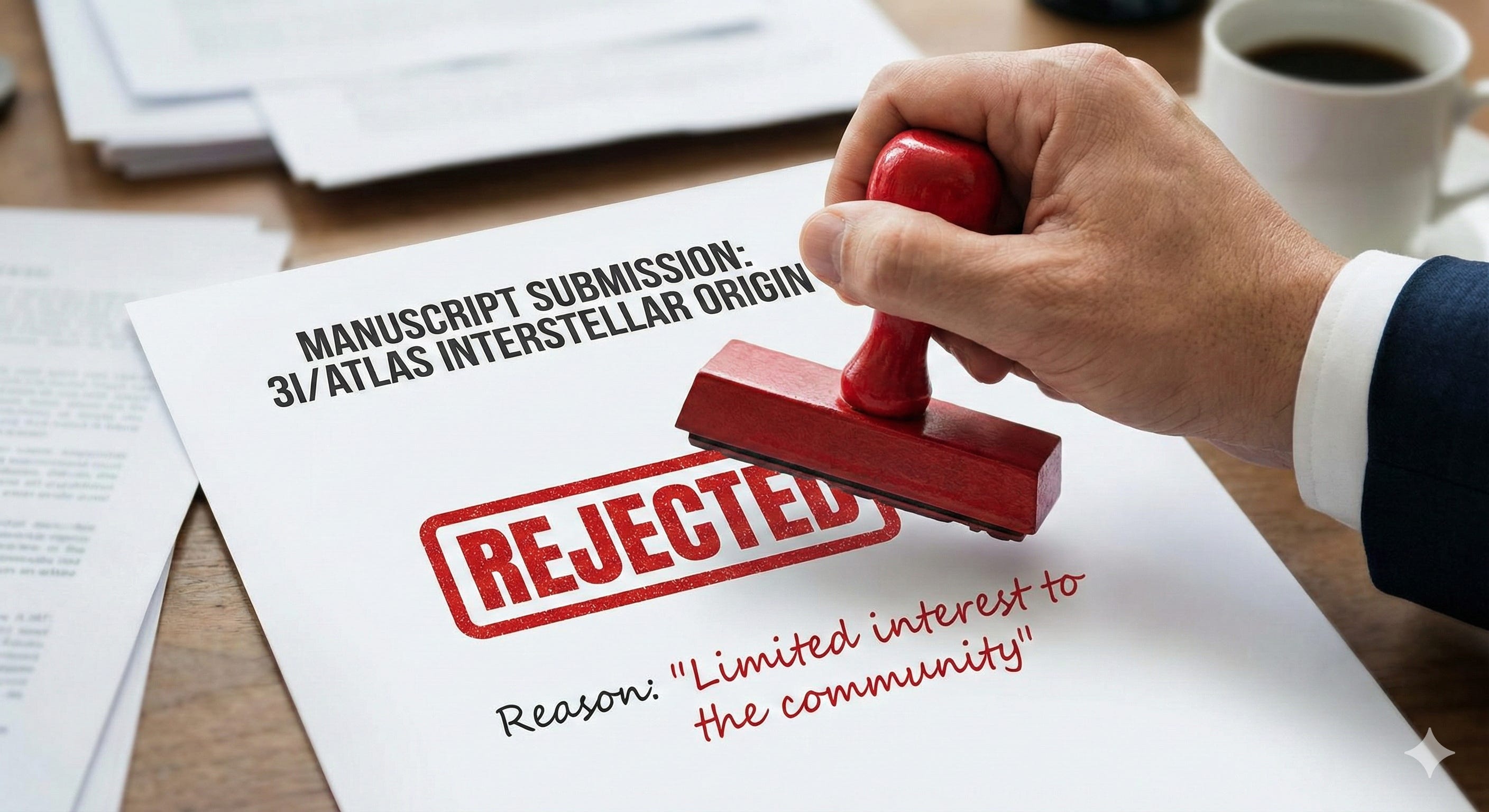
Loeb reports that an associate editor at a prestigious astrophysics journal refused to even send this new paper to peer review. The reason given? “I believe that your work would be of rather limited interest to the astrophysics research community as a whole.”
This wasn’t a one-off. The same editor used this exact template to reject two previous papers on 3I/ATLAS:
A paper on 3I/ATLAS’s anti-tail physics (later published in Monthly Notices of the Royal Astronomical Society to rave reviews).
A paper on the object’s anomalous rotation and wobble.
This is the definition of a choke point. When a single individual can unilaterally decide that the analysis of a potential interstellar probe is of “limited interest,” they are not acting as an editor; they are acting as a filter for “acceptable” reality.
Why This Matters
For those of us tracking 3I/ATLAS, this pattern is alarmingly familiar. We are seeing a bifurcation in the scientific community:
The Data Hunters: Those using sensors, satellites, and OSINT methods to analyze what is actually happening in our skies (Loeb, the Galileo Project, independent analysts).
The Curators: Those who believe their role is to protect the “stability” of established narratives by filtering out data that doesn’t fit the standard model.
The “unborn babies of scientific discovery,” as Loeb puts it, are being culled before they can even reach the peer-review incubator.
At The Sentinel, we believe the truth is found in the anomalies—the data points that don’t fit. When a government agency silently alters a database to make an anomaly disappear, they aren’t just cleaning up a spreadsheet. They are trying to close a door that has already been blown off its hinges.
We are watching the edits. We are archiving the data. The suppression is no longer subtle—which means we are getting closer to the signal.
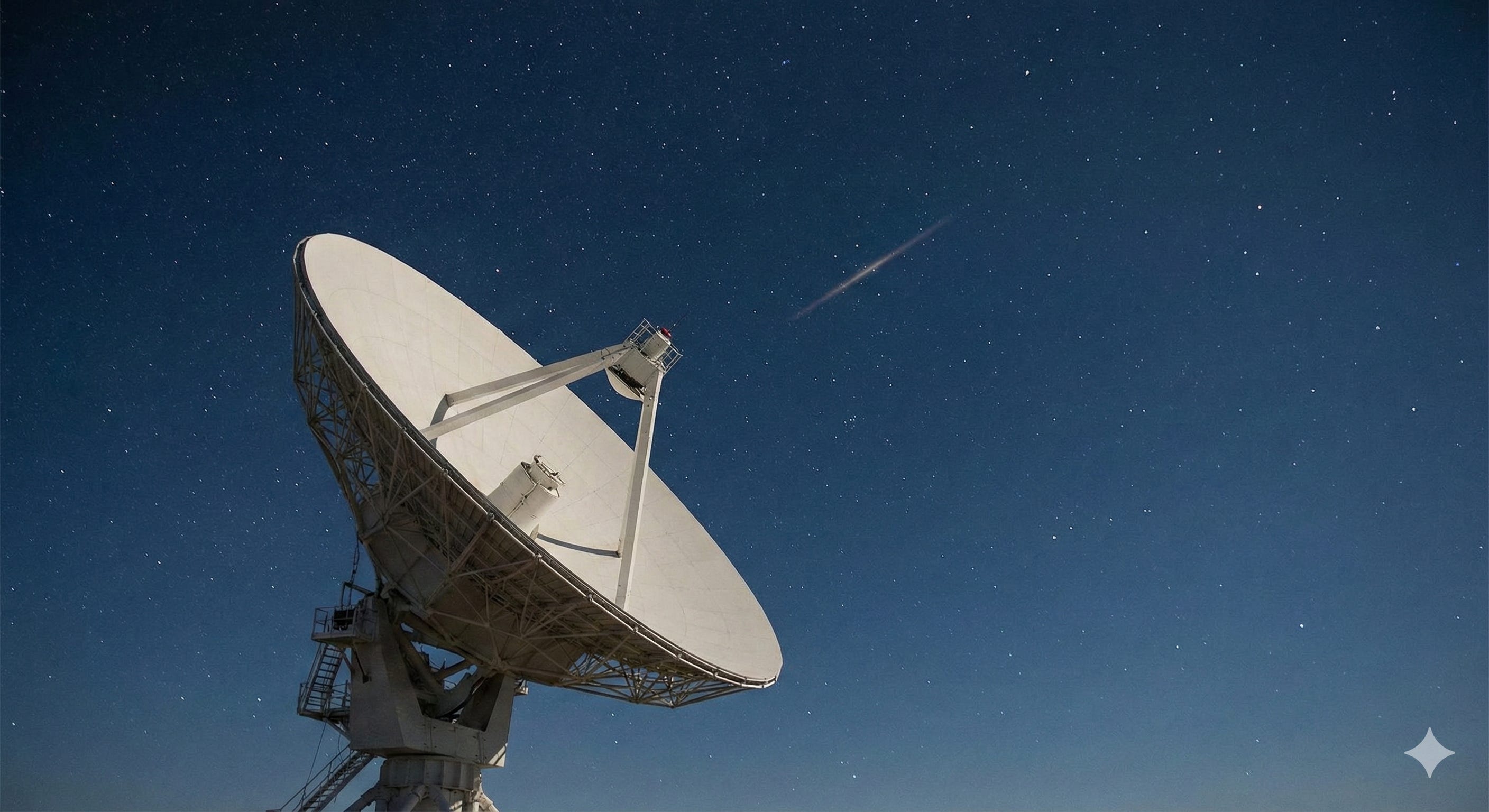
“This is the definition of a choke point. When a single individual can unilaterally decide that the analysis of a potential interstellar probe is of “limited interest,” they are not acting as an editor; they are acting as a filter for “acceptable” reality.”
Exactly!! I’ve been keeping up with 3i/ATLAS from the beginning, haven’t stopped paying attention 👀
I’m just really glad that Prof Avi Loeb finally created his YouTube channel. Interesting how a few turds 💩 out in our world thought they could trick people and also news outlets, into believing anything other than the facts/truth.