

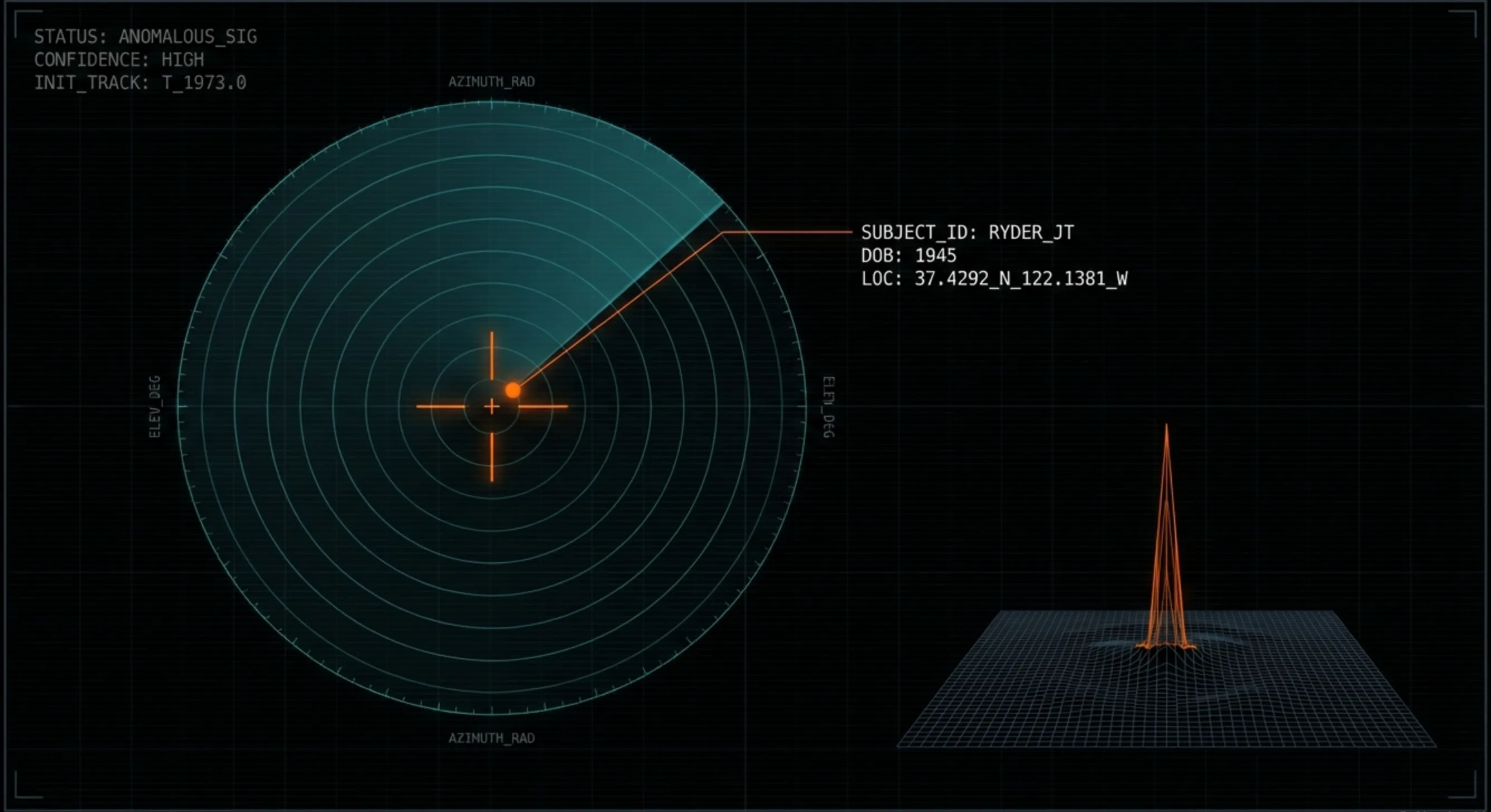
SUBJECT: Dr. James T. Ryder (1945-2018), Vice President, Lockheed Martin Space Systems Company // Advanced Technology Center
DATE: MARCH 31, 2026
CROSS-REF: THE ATTRITION SERIES | THE GHOST GENERAL | THE DEAD DROP | THE GREEN BURIAL | THE LONG COUNT | THE PHONE GAP | THE BLIND SPOT | THE DIAGNOSTIC GAP
DATA CONFIDENCE: HIGH on career biography and institutional record (DTIC, IVS leadership page, corporate documentation). HIGH on material divestment attempt (three independent DOPSR-cleared or multi-sourced vectors). SINGLE ADMINISTRATIVE RECORD located (property tax Affidavit of Death). No obituary, SSDI entry, death certificate, or institutional acknowledgment across multiple authoritative databases.
THE RÉSUMÉ
Before we tell you what this man tried to do, you need to understand what he was authorized to touch.
Dr. James T. Ryder held a Ph.D. in theoretical and applied mechanics from the University of Illinois, along with his master’s and bachelor’s degrees in the same discipline from the same institution. He spent thirty-eight years at the Lockheed Corporation and its successor, Lockheed Martin. During that career he held the titles of Vice President, Director, Manager, Program Manager, Principal Investigator, and scientist/engineer. His programs included the L-1011 TriStar, the F-22 Raptor, Space Shuttle main engines, Fleet Ballistic Missiles, the Terminal High Altitude Area Defense system. He worked inside Skunk Works. He worked on classified and unclassified defense systems for NASA. He published more than thirty papers in open literature. He authored numerous classified publications whose titles you will never read.
From May 2005 until his retirement in February 2011, Ryder served as the Vice President of the Lockheed Martin Space Systems Company, headquartered in Palo Alto, California. In that role he commanded the Advanced Technology Center, the research and development engine responsible for technology discriminators across the Space Systems Company and the broader Lockheed Martin Corporation. The ATC portfolio covered remote sensing and space science, telecommunications and photonics, space-based navigation, guidance and navigation systems, defensive systems, and strategic systems. Programs flowing through that organization totaled more than $9 billion annually.
His Defense Technical Information Center records confirm early-career expertise in the fatigue and fracture mechanics of graphite/epoxy bi-materials, resin matrix composites, and composite bonded joints. In the early 1980s, he authored technical reports under contract to the Air Force Materials Laboratory at Wright-Patterson Air Force Base, presenting that work at conferences sponsored by the same laboratory. He understood what happens to advanced materials when they are pushed beyond their design limits under extreme kinetic and thermal stress. That expertise is documented in the public record. What he applied it to behind a classification stamp is not.
The Advanced Technology Center under his leadership assembled the Near Infrared Camera for the James Webb Space Telescope. It built the TRACER synthetic aperture radar for battlefield surveillance. It delivered the FBI’s Next Generation Identification biometric system. It developed CuantumFuse nanotechnology for military-grade electrical interconnects. Those are the unclassified outputs. The classified portfolio is larger. We know this because the ATC’s own institutional literature describes work spanning “classified and unclassified defense systems.” You do not build a $9 billion annual R&D portfolio on telescope cameras and fingerprint scanners.
This is the record of a man who spent four decades accumulating the credentials, the clearances, and the institutional authority to know exactly what Lockheed Martin had in its possession. Remember that. It is the foundation for everything that follows.
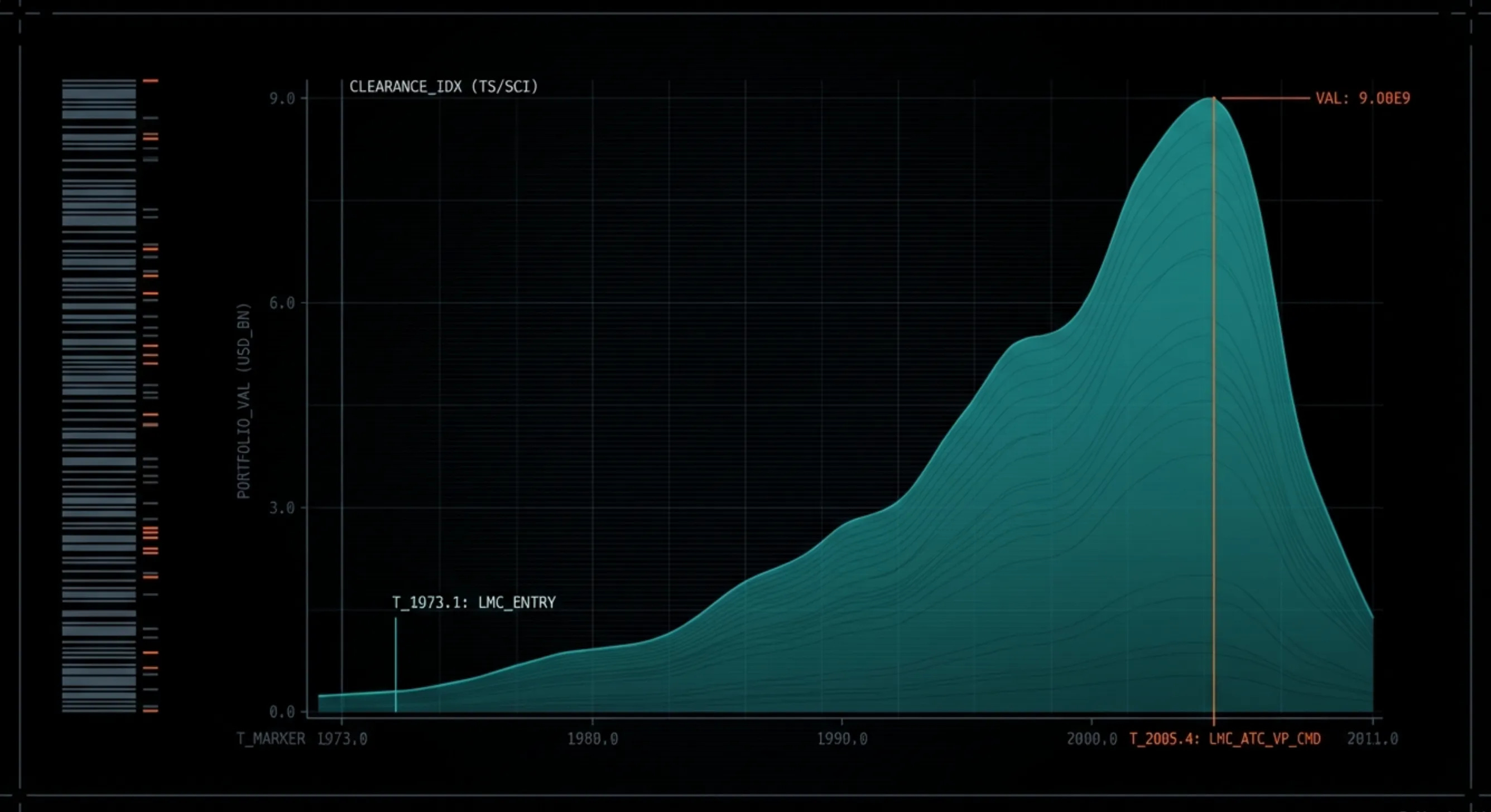
THE SENTINEL ASSESSMENT: Dr. James T. Ryder operated at the apex of the American defense-industrial apparatus for thirty-eight years. His documented expertise in advanced aerospace materials, his TS/SCI-eligible clearance pedigree, and his command of a $9 billion R&D portfolio placed him among the most technically authorized individuals in the Lockheed Martin Corporation. He was not adjacent to the most sensitive work. He directed it.
THE FACILITY
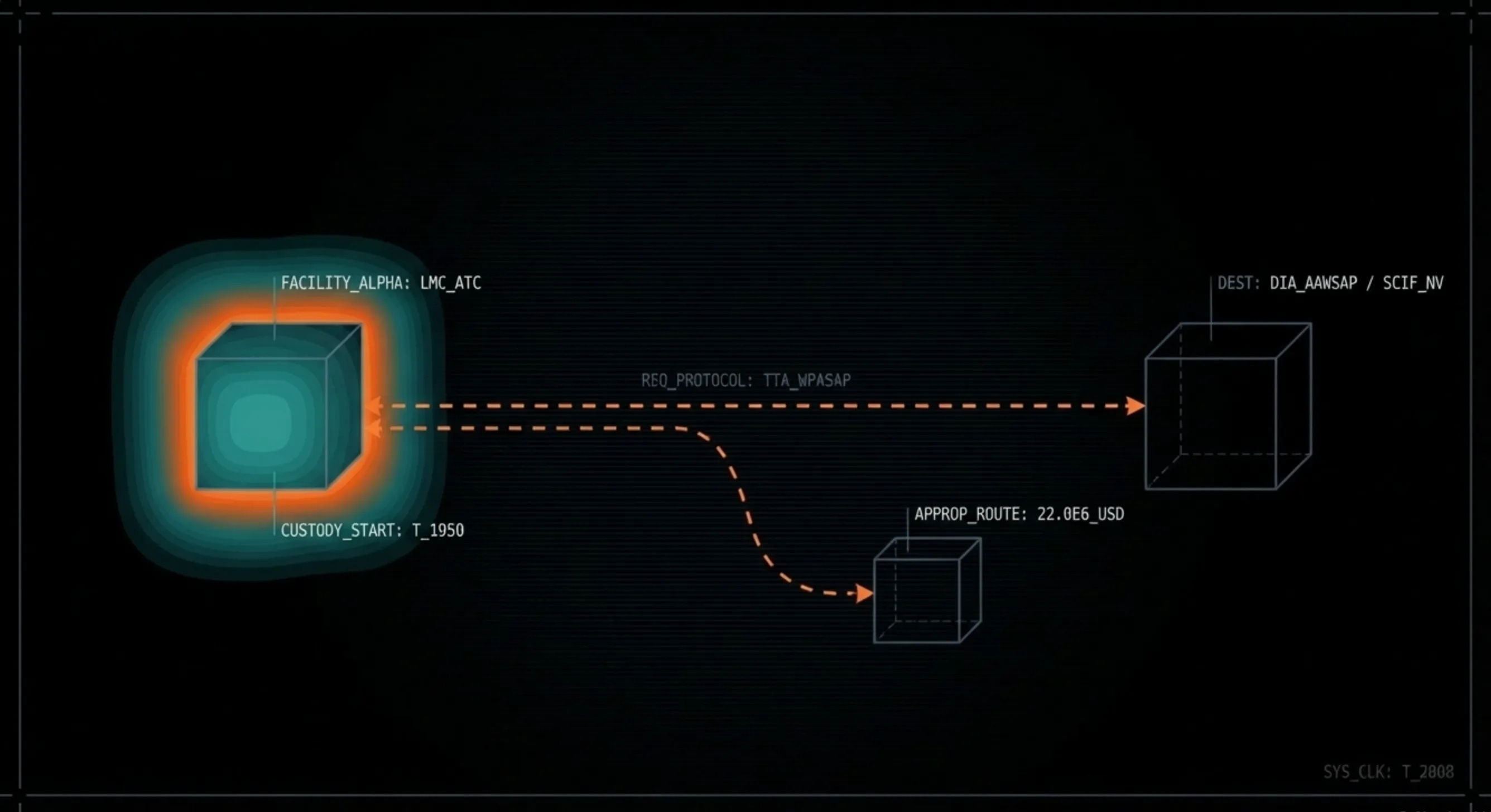
In 2008, the Defense Intelligence Agency activated the Advanced Aerospace Weapon System Applications Program. AAWSAP was funded by a $22 million congressional appropriation championed by Senator Harry Reid of Nevada and managed by Dr. James Lacatski of the DIA.
What happened next has been confirmed through three independent sourcing vectors, and it is the most consequential data point in this briefing.
The first vector is a passage from Dr. Lacatski’s own book, Skinwalkers at the Pentagon, which was cleared through the Defense Office of Prepublication and Security Review before publication. The second is a statement by David Grusch on the Joe Rogan Experience, which Grusch explicitly confirmed had been DOPSR-cleared before broadcast. The third is investigative reporting by Liberation Times, citing multiple sources within the program. All three converge on the same event.
Dr. James T. Ryder, acting in his capacity as Vice President of the Lockheed Martin Space Systems Company, approached AAWSAP leadership with a divestment proposal. He did not speak in abstractions. He identified a specific Lockheed Martin facility. He described the contents: crash retrieval material from the 1950s and other historical operations. He proposed a mechanism: a Technology Transfer Agreement into a Waived Partially Acknowledged Special Access Program under DIA oversight.
Read that again slowly.
A sitting Vice President of Lockheed Martin Space Systems Company, the man commanding $9 billion in annual R&D, walked into a DIA program and said: we have physical material. It has been in our custody since the 1950s. Here is where it is. Here is what it is. I want to move it to you.
The $22 million appropriated by Senator Reid was originally intended to construct Special Compartmented Information Facilities at Bigelow Aerospace in Las Vegas, Nevada. The SCIFs were not for theoretical research. They were physical infrastructure designed to receive and secure physical material. Robert Bigelow, the aerospace contractor who had already funded UAP research privately, was building the receiving end.
This was not a leak. This was not a whistleblower stuffing documents into a gym bag. This was a legal, procedural attempt by a senior corporate officer to transfer classified material from one custodial arrangement to another through the channels the system provides for exactly that purpose. Ryder used the system. He played by the rules. He identified the facility, described the material, and proposed the transfer mechanism.
David Grusch later told Congress that he had provided the Inspector General with a specific street address for a facility containing non-human craft material. He submitted that information through DOPSR. It was cleared for public release. We do not know if Grusch’s facility and Ryder’s facility are the same location. We do know that two independent sourcing chains, separated by more than a decade, both identify a specific Lockheed Martin facility housing crash retrieval hardware. One of those chains originates with the Vice President who ran the company’s most advanced laboratory.
THE SENTINEL ASSESSMENT: Dr. Ryder’s divestment proposal is the most granular, operationally specific claim in the public record regarding the physical location and custodial history of alleged crash retrieval material within the U.S. defense-industrial base. He did not allege. He did not speculate. He identified a facility, described material dating to the 1950s, and initiated a formal transfer mechanism. Three independent sourcing vectors confirm the event.
THE BLOCKADE
The proposal died in a meeting.
The original government custodian of the material Ryder described was not the Department of Defense. It was the Central Intelligence Agency’s Directorate of Science and Technology. The CIA held the keys. The DIA wanted to build a new lock. Ryder was offering to carry the material from one vault to the other.
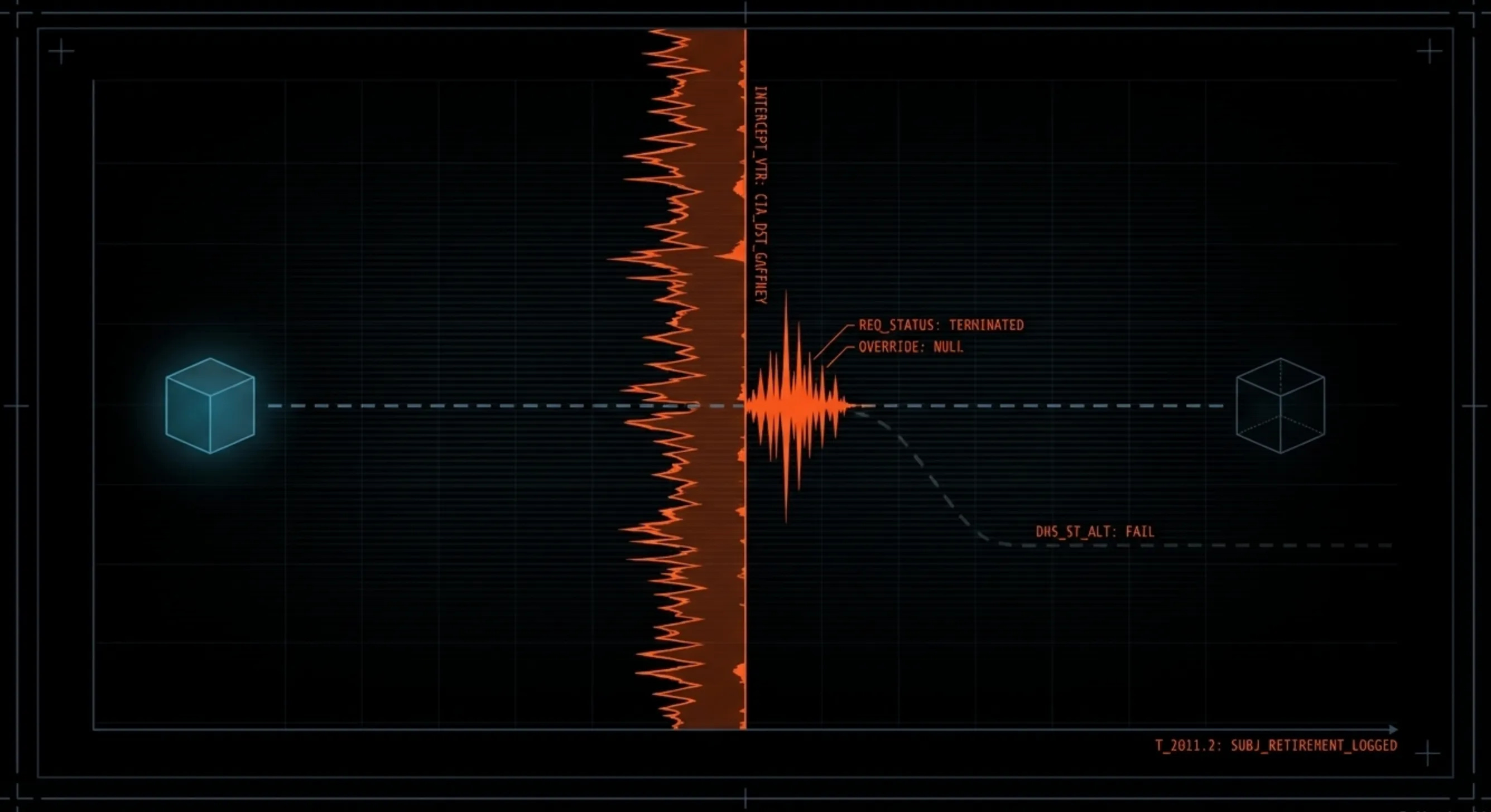
Glenn Gaffney, serving as Director of the CIA’s Directorate of Science and Technology from approximately 2007 to 2015, personally disapproved the transfer. The meeting where this occurred has been described by multiple sources. Liberation Times reported that those involved, including Ryder, felt threatened by the harshness of exchanges with CIA officials.
Feel the weight of that sentence. A Vice President of Lockheed Martin, a man who had managed the most sensitive aerospace programs in the Western world for decades, who had navigated classification barriers and compartmentalized briefing rooms for his entire adult life, felt threatened. Not bureaucratically frustrated. Not disappointed. Threatened.
The $22 million was redirected. Instead of constructing SCIFs to house physical material, the money funded the production of thirty-eight theoretical Defense Intelligence Reference Documents. Papers on warp drive theory, metamaterials, invisibility cloaking, traversable wormholes. Academic exercises. The hardware stayed at Lockheed.
When AAWSAP failed to secure the material through the DIA, a second attempt was made. Participants in the program approached the Department of Homeland Security’s Science and Technology Directorate, through Tara O’Toole, to establish a Prospective Special Access Program through a different agency. That effort also failed.
Three months after the CIA killed his first proposal, in February 2011, James T. Ryder retired from Lockheed Martin.
He was sixty-five years old. He had spent thirty-eight years inside the machine. He had identified the material, proposed the mechanism, and been told no by the CIA. The system he had trusted for four decades to manage the most sensitive technology on Earth had refused to let him move it to a different part of itself.
He left. But he did not stop.
THE SENTINEL ASSESSMENT: The CIA’s Directorate of Science and Technology, through Director Glenn Gaffney, terminated the transfer of material that a sitting Lockheed Martin Vice President had identified and proposed to divest. Sources reported that those involved felt threatened. The $22 million intended to build receiving infrastructure was redirected to theoretical papers. A second transfer attempt through DHS also failed. The material remained in contractor custody. Ryder retired three months later.
THE SECOND LIFE
What does a man do when the system tells him no?
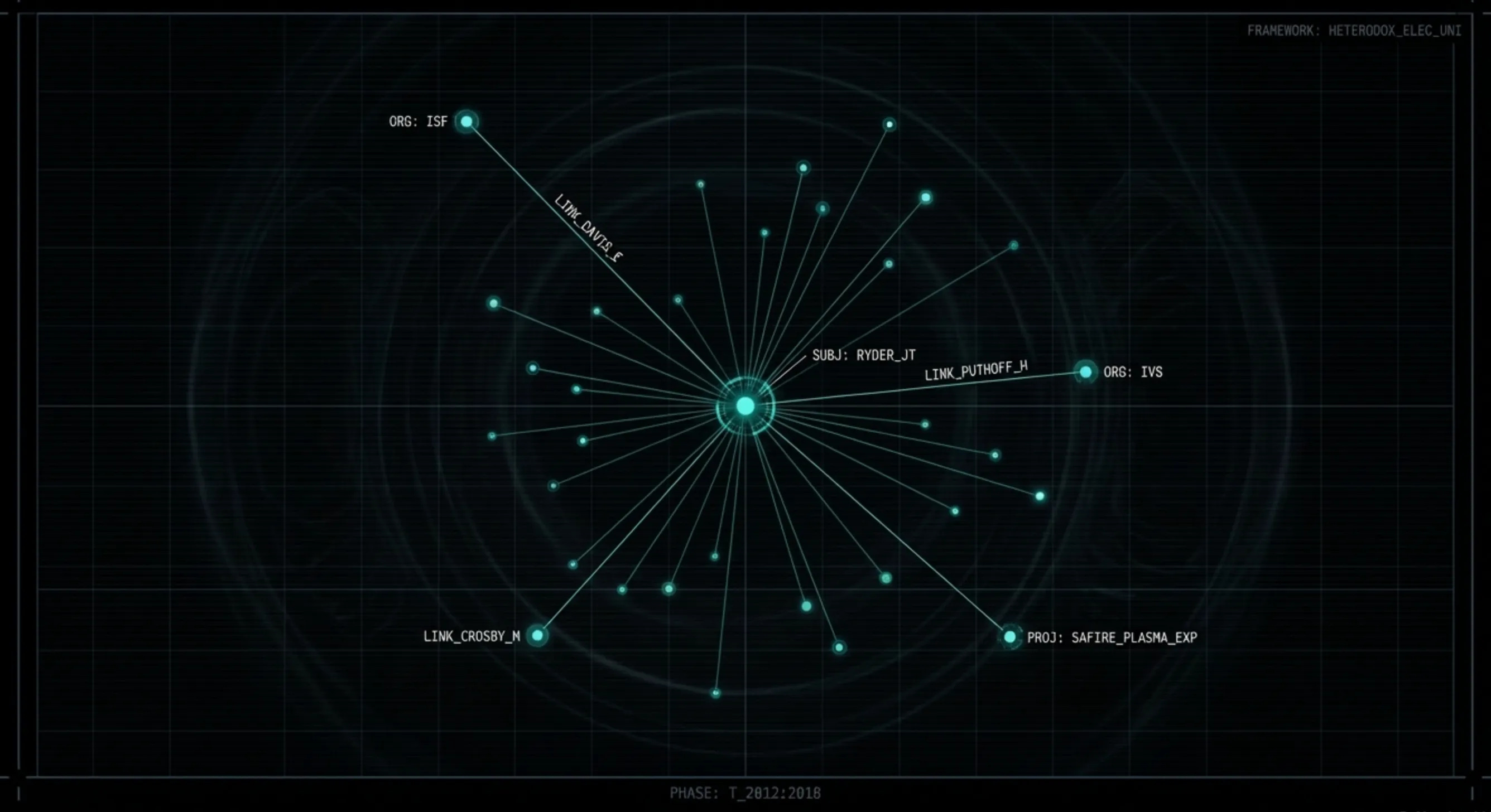
Within two years of leaving Lockheed Martin, Ryder had constructed an alternative infrastructure. He founded the International Science Foundation and served as Chairman of its board. He chaired the Institute for Venture Science, an organization co-founded by Dr. Gerald Pollack of the University of Washington. The IVS board was not populated by hobbyists. Dr. Michael P. Crosby, former Executive Director of the National Science Board at the National Science Foundation, sat on it. A man who had helped direct the strategic priorities of federal science funding in the United States lent his name and credibility to Ryder’s post-retirement operation.
The ISF’s primary investment was the SAFIRE Project: the Stellar Atmospheric Function in Regulation Experiment. Directed by Montgomery Childs of Aurtas International, SAFIRE was a laboratory plasma physics experiment investigating the behavior of electromagnetic fields in confined plasma environments. The project operated within the Electric Universe theoretical framework, a heterodox cosmological model that posits electromagnetic forces, rather than gravity alone, as the primary drivers of astrophysical structure. Ryder contributed directly to the electromagnetic modeling.
SAFIRE claimed results that mainstream physics would consider extraordinary: anomalous energy signatures, the transmutation of elements, potential applications for nuclear waste remediation. We are not in a position to evaluate those claims. What we are in a position to document is the pattern of behavior.
Through SAFIRE and its adjacent networks, Ryder maintained direct connections to Dr. Eric Davis and Dr. Hal Puthoff. Davis is a physicist at EarthTech International and the Institute for Advanced Studies at Austin, a contractor who produced Defense Intelligence Reference Documents for AAWSAP, and the man who later briefed congressional staff on crash retrieval programs. Puthoff is the founder of EarthTech International, a former NSA and CIA contractor who managed the STARGATE remote viewing program, and another AAWSAP contractor. Both men operate at the intersection of mainstream defense physics and the specific programs that were supposed to receive Ryder’s material.
Ryder gave keynote presentations at Electric Universe conferences in 2012 and 2017. He spoke at the Lucis Trust‘s Arcane School Conference in early 2018, delivering a presentation titled “The Garment of God,” in which he explored the intersection of empirical observation and what he described as deeper dimensions of reality. His final known public statement on the role of science: “I think the role of science is to bring light into the world.”
Read the trajectory as an intelligence analyst would. A man with four decades of access to the most classified aerospace material in the country is blocked from transferring physical hardware through official channels. He retires. He immediately builds a private funding apparatus to investigate the physics of plasma confinement, electromagnetic anomalies, and non-standard energy production. He recruits former federal science leadership. He maintains connections to the very researchers who worked AAWSAP. He funds experiments that, if their claims held up, would begin to describe the physics of the technology he had seen but could no longer touch.
That is not the behavior of a man who lost interest. That is the behavior of a man who changed approach.
THE SENTINEL ASSESSMENT: Following the CIA’s termination of his material transfer proposal, Ryder constructed a parallel scientific infrastructure outside the classified world. His organizations connected former federal science leadership, AAWSAP-affiliated researchers, and experimental plasma physics. The trajectory from divestment attempt to private funding of exotic physics research is consistent with an individual who was denied access to hardware and resolved to investigate the underlying science through other means.
THE ERASURE
Dr. James T. Ryder died on May 28, 2018. Memorial Day.
Here is everything that exists in the public record confirming that this happened.
Dr. William A. Gardner, a close collaborator and fellow physicist, wrote on his cyclostationarity research blog that “in the spring of 2018, Jim passed away suddenly and unexpectedly, and the International Science Foundation was closed.” Gardner described losing a “best friend” and an “undeniably qualified source of ideas” in astrophysics and cosmology. The two men had met in 2013 at an Electric Universe conference, shortly after Ryder left Lockheed Martin. Gardner later discovered that it was Ryder who, in 2010, had initiated Lockheed Martin’s purchase of Gardner’s company’s intellectual property.
The Lucis Trust published a brief memorial excerpt from Ryder’s final presentation.
The SAFIRE Project lost its financial architecture overnight. The ISF closed.
That is the complete record.
Now here is what does not exist.
No obituary has been located on Legacy.com. None on Dignity Memorial. None on FindAGrave. None on any obituary aggregator we searched. A man who commanded a $9 billion R&D portfolio for one of the five largest defense contractors on Earth died, and no one published a memorial.
No death certificate has been located in the California Death Index for James T. Ryder with a death date in May or June of 2018. Ryder lived in Palo Alto, which falls within Santa Clara County jurisdiction. No record appears there. No record appears in neighboring San Mateo, Alameda, San Francisco, or Contra Costa counties.
No entry has been located in the Social Security Death Index.
No probate filing has been located in Santa Clara County Superior Court under the name James T. Ryder or James Ryder for 2018 or 2019. Following publication, a subscriber located a single administrative record: an Affidavit of Death filed with the Santa Clara County Assessor's Office, document #25415745, on a property in San Jose. The transfer date listed is May 28, 2018. The name on the filing: James T Ryder / James Thomas Ryder. The document was not recorded with the Clerk-Recorder until December 14, 2022, more than four years after his death. This property tax transfer filing is the only governmental record of James T. Ryder's death located to date.
Lockheed Martin issued no press release. No internal newsletter notice. No corporate memorial of any kind acknowledging the death of their former Vice President and ATC commander. The company that employs 116,000 people and publishes press releases when it wins a contract to build a satellite component said nothing when the man who ran their most advanced laboratory died.
No aerospace trade publication carried a death notice. Not Aviation Week. Not Defense News. Not SpaceNews. Not the AIAA, of which Ryder would almost certainly have been a member or fellow given his publication record and institutional standing.
The University of Illinois, where Ryder earned three degrees, has no alumni death notice that we have located.
A researcher on X spent months conducting independent searches for any verifiable proof of death and eventually posted a public bounty for documentation. The bounty went unclaimed.
UPDATE: Following publication, Sentinel subscriber Peggy Ann Chowning identified a public family tree on Ancestry.com created by Ryder's sister, Marrilee. The entry lists his birth date, marriage date, and death date with a single comment: "Passed away from a massive heart attack." The entry contains no attached documentary records. No death certificate. No obituary. No funeral home filing. Ancestry surfaces potential record matches as hints that the tree owner can review and attach. Nearly eight years after his death, no such records appear to exist for attachment. Independent searches by Chowning confirmed no SSDI records, obituaries, funeral home records, or state vital records for James Ryder. She did locate a marriage record, city directory entries, a 1950 census record, and a high school yearbook entry. A life fully documented from childhood through marriage produces nothing at the end. A family member's manually entered genealogy notation and a collaborator's blog post remain the only public acknowledgments that this man died.
We need to be precise about what this means and what it does not mean.
It does not mean James T. Ryder is alive. Gardner’s testimony is credible, specific, and consistent with the collapse of the ISF and SAFIRE. The man died. The question is not whether. The question is why the standard documentary infrastructure that records the deaths of American citizens failed to capture this one. People with far less institutional visibility than a Lockheed Martin Vice President leave deeper footprints in the public record when they die. A county coroner files a report. A funeral home publishes a notice. A university lists an alumnus. A former employer issues a statement. None of these things happened.
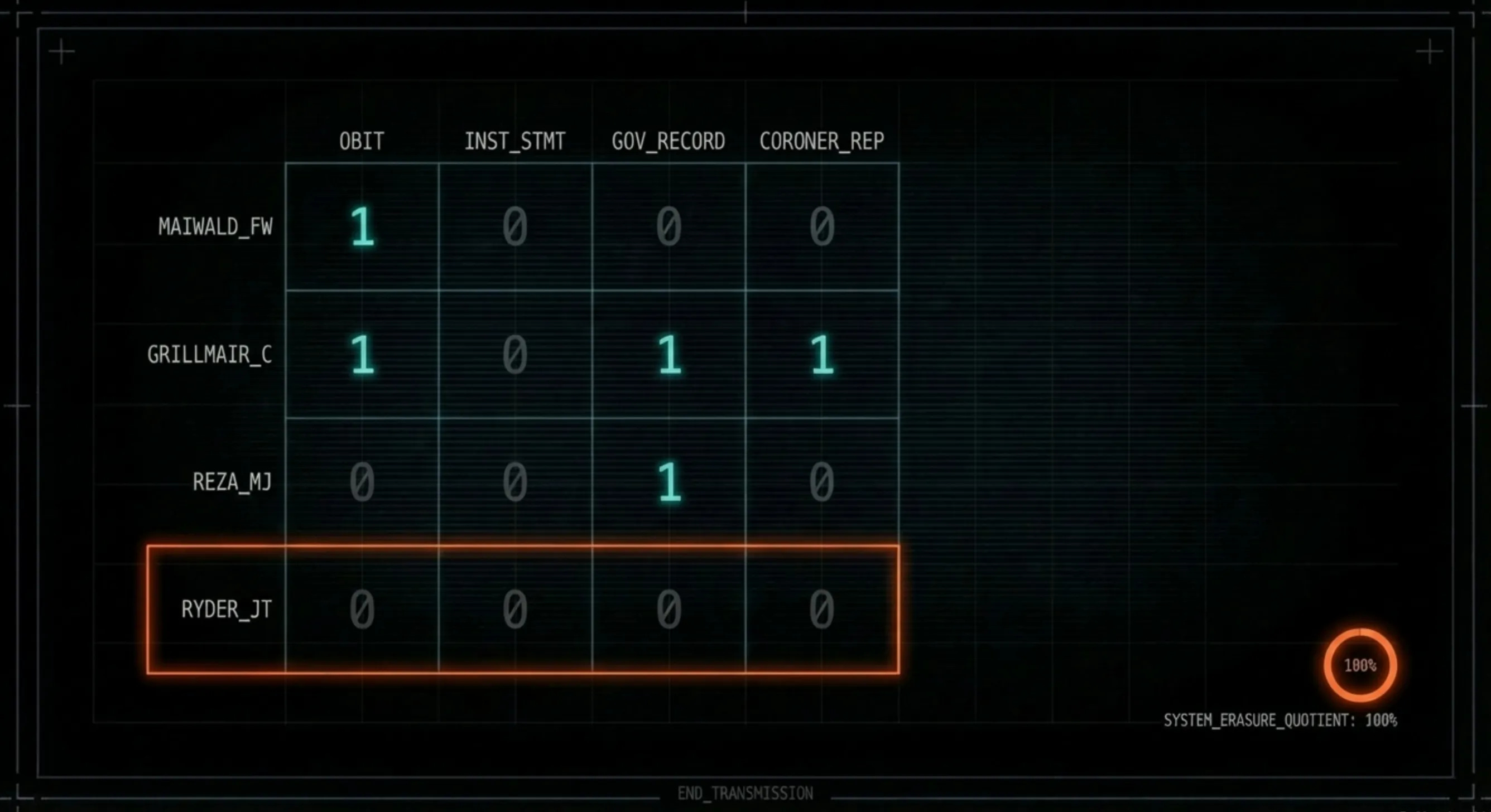
We have documented similar patterns of institutional silence across the ATTRITION series. When Monica Jacinto Reza disappeared, Aerojet Rocketdyne issued no statement. When Frank Werner Maiwald died on the Fourth of July 2024, JPL issued no statement. His Legacy.com obituary, with no cause of death, is the sole public record of a nineteen-year technical group supervisor’s passing. When Carl Grillmair was shot dead in his home, Caltech and IPAC said nothing.
But those cases each have at least one thread anchoring the death to the public record. An obituary. A news report. A memorial page. A police blotter. Ryder has none. The erasure is total.
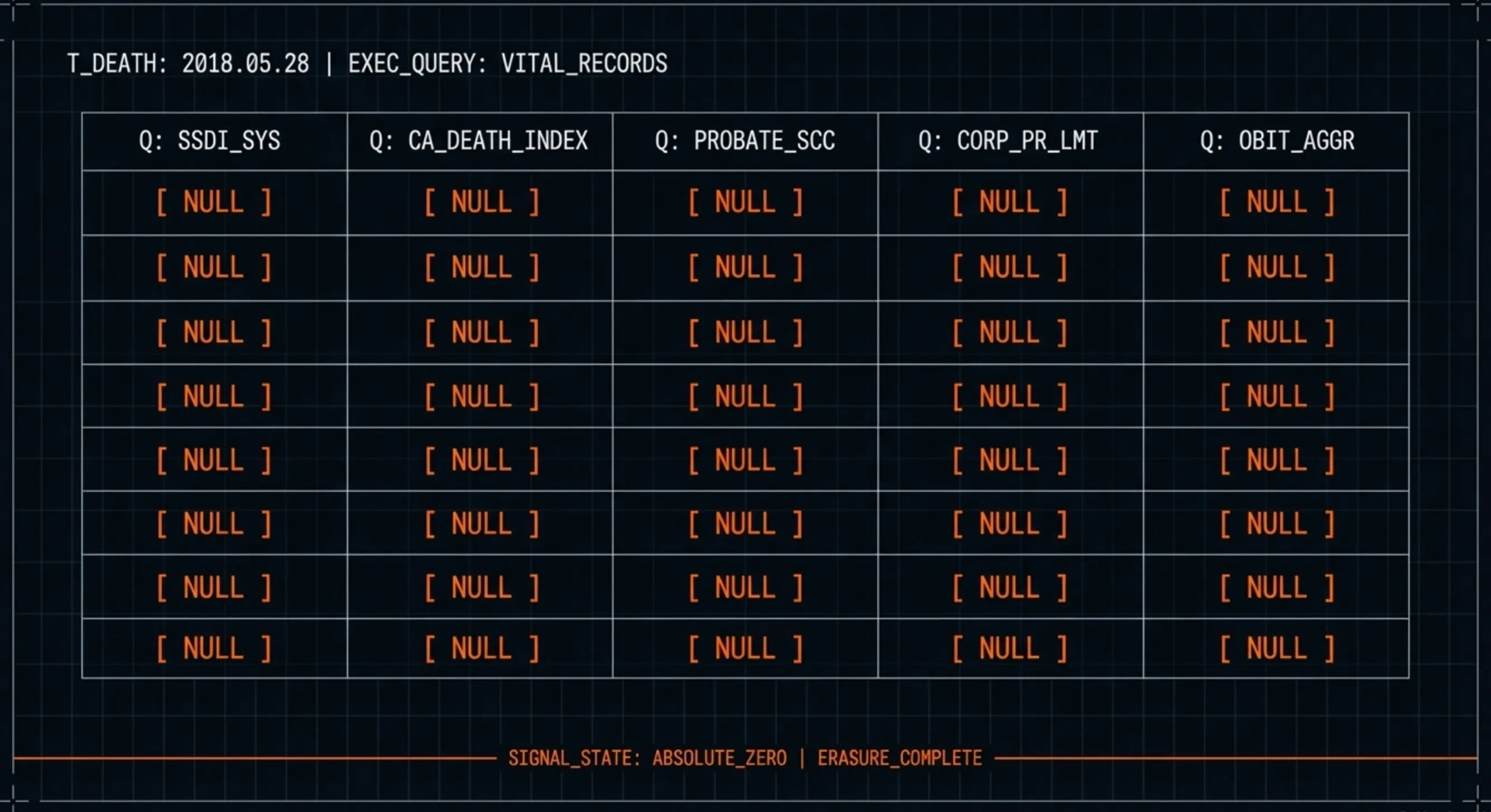
THE SENTINEL ASSESSMENT: The absence of a death record for Dr. James T. Ryder across multiple authoritative state and national databases, combined with the absence of any corporate, institutional, or media acknowledgment of his death, represents the most complete documentary erasure we have encountered in the ATTRITION series. A former Vice President of Lockheed Martin Space Systems Company, named in DOPSR-cleared testimony as the executive who attempted to transfer crash retrieval material from a Lockheed facility, died suddenly in May 2018. The public record acknowledges his death through a single document: a county property tax transfer filing recorded four years late.
THE GEOMETRY
We need to talk about where Ryder sat in the institutional architecture of American defense aerospace, because his position connects to structures we have been documenting for months.
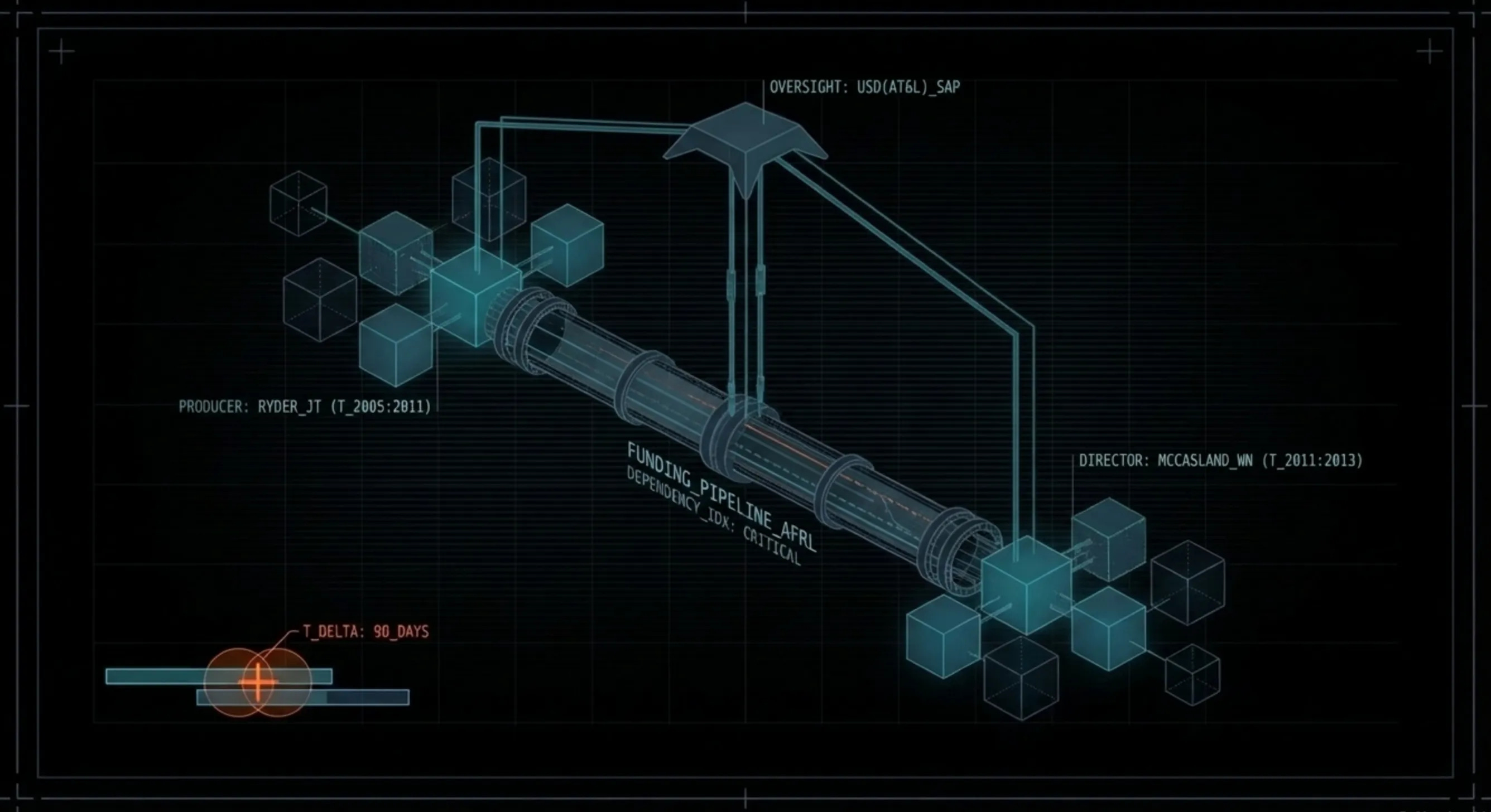
Defense aerospace research in the United States operates through a contracting pipeline. The Air Force Research Laboratory issues research requirements and directs funding. Prime contractors like Lockheed Martin execute the research. This is not a casual relationship. It is a structural dependency. AFRL cannot conduct its mission without the contractors. The contractors cannot sustain their classified programs without AFRL funding and direction. The Commander of AFRL and the Vice President of Lockheed Martin’s Advanced Technology Center are not two random positions in the defense bureaucracy. They are the two endpoints of the same pipeline. One writes the requirements. The other delivers the product.
From May 2005 to February 2011, James T. Ryder occupied one end of that pipeline.
From May 2011 to July 2013, Major General William Neil McCasland occupied the other.
Ryder retired in February 2011. McCasland assumed command of AFRL ninety days later, in May 2011. We documented McCasland’s disappearance in THE GHOST GENERAL and his broader operational footprint in subsequent briefings.
But the geometry goes deeper than a ninety-day transition window.
Before commanding AFRL, McCasland served as the Director of Special Programs for the Under Secretary of Defense for Acquisition, Technology, and Logistics. This is not a ceremonial post. The USD(AT&L) Special Programs office is the approval and oversight authority for Special Access Programs across the entire Department of Defense. If Lockheed Martin’s Advanced Technology Center was running any SAP-level work during McCasland’s tenure in that office, and a $9 billion R&D portfolio spanning classified defense systems almost certainly included SAP-level work, then McCasland’s directorate was in the approval chain. Not adjacent to it. In it. The directorate that reviews, approves, continues, or terminates the most sensitive compartmented programs in the U.S. military was led by the same man who would later command the laboratory that funded Lockheed’s research.
Ryder’s material transfer proposal sought to create a Waived Partially Acknowledged Special Access Program under DIA oversight. The creation of any SAP, waived or otherwise, requires coordination with the USD(AT&L) Special Programs apparatus. McCasland ran that apparatus before he ran AFRL.
We are not asserting that James T. Ryder and William Neil McCasland ever sat in the same room. We have no unclassified documentation of a direct interaction. What we are documenting is that the institutional architecture of the American defense establishment structurally interlocked their roles across three distinct vectors: the AFRL-to-Lockheed contracting pipeline, the USD(AT&L) SAP oversight chain, and the temporal overlap of their tenures at the apex of both systems.
One of them is dead with no public record. The other is missing.
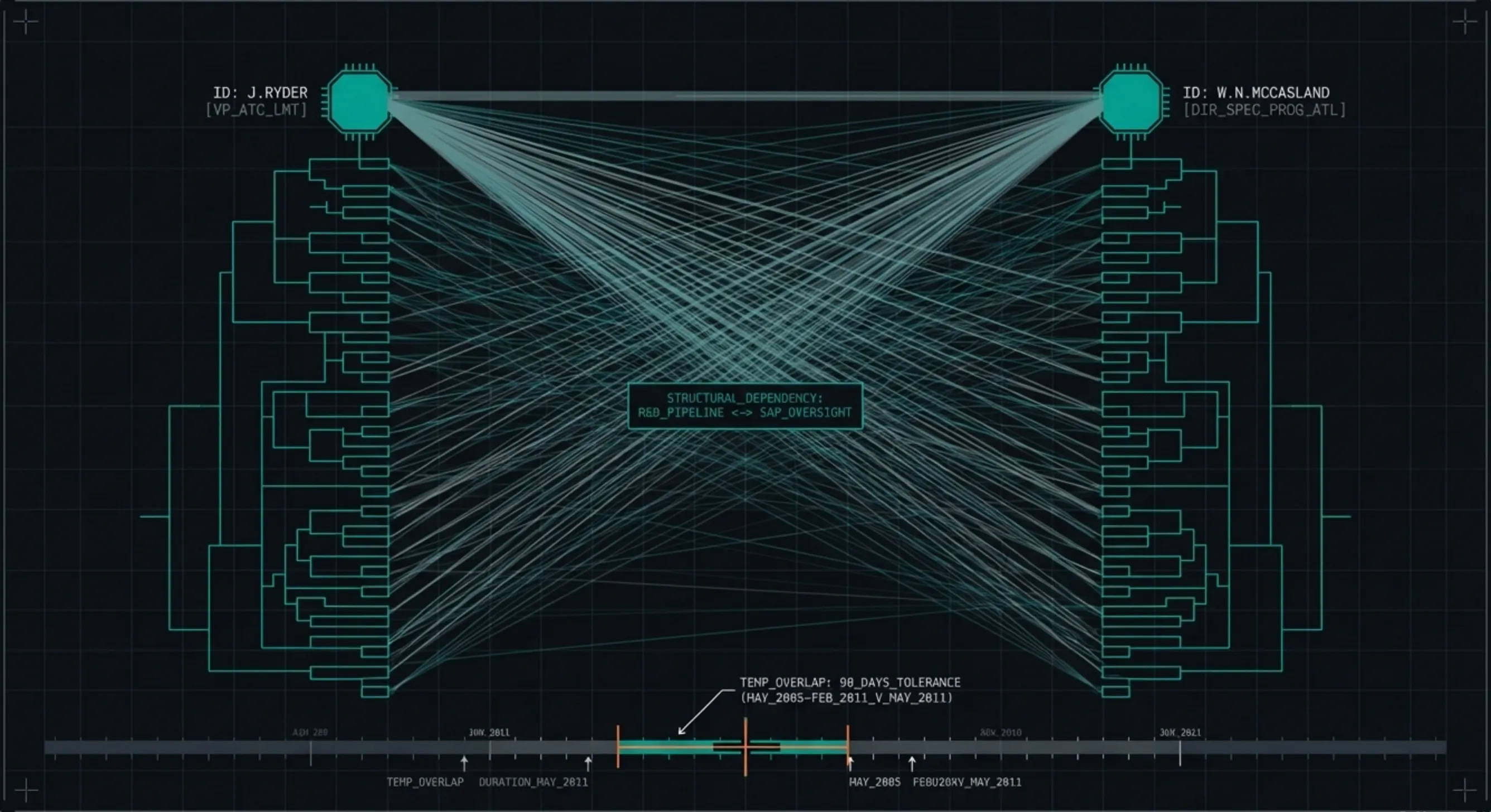
THE SENTINEL ASSESSMENT: The institutional geometry connecting Ryder and McCasland operates across three documented vectors: the AFRL contracting pipeline that funds Lockheed Martin ATC research, the USD(AT&L) Special Programs oversight chain that approves and reviews Lockheed SAPs, and the ninety-day transition window in which both men occupied the apex of their respective systems. We are not asserting direct coordination. We are documenting that the defense-industrial architecture made their roles structurally interdependent regardless of personal contact. The positions themselves were interlocked. The humans who held them are now dead and missing, respectively.
THE NETWORK
Here is the question that should keep someone with subpoena power awake tonight.
James T. Ryder did not manage crash retrieval material alone.
A Vice President does not walk into a DIA program office and propose a Technology Transfer Agreement as a solo act. There are engineers who evaluated the material. Program managers who tracked it. Security officers who controlled access. Facility managers who maintained the site. A predecessor who held the VP role before Ryder and managed the ATC’s classified portfolio before him. A successor who inherited whatever Ryder left behind.
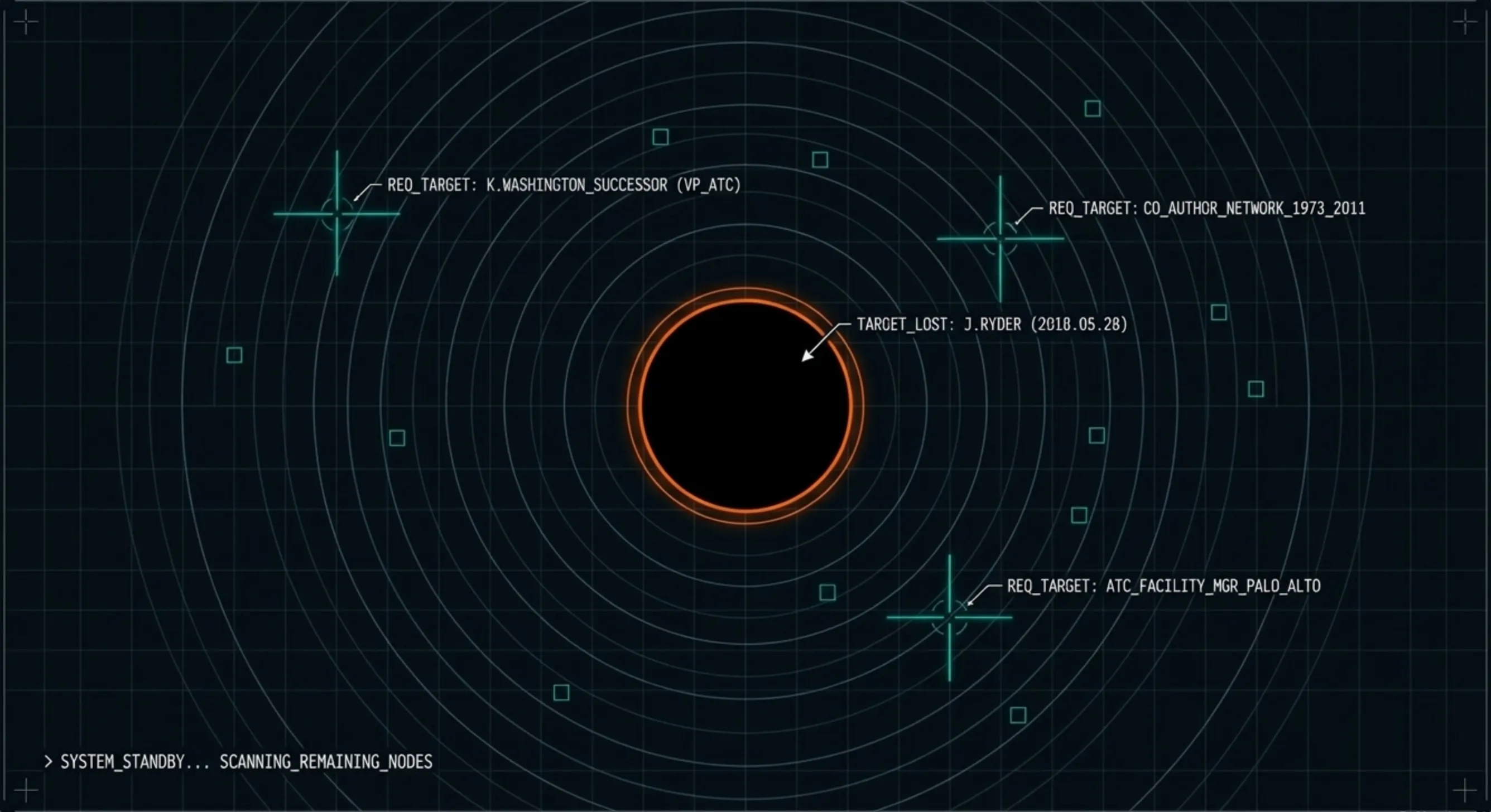
Dr. Kenneth Washington replaced Ryder as Vice President of the Advanced Technology Center. He has since become the Chief Technology Officer of Ford Motor Company. He is a public figure with a public career. He would know what the ATC’s classified portfolio contained during the transition. Whether he would discuss it is a separate question. That he would know is not.
The SAFIRE network extends outward from Ryder through documented, named connections. Dr. Eric Davis, who briefed congressional staff on crash retrievals and produced AAWSAP research documents. Dr. Hal Puthoff, who ran CIA-funded programs and co-founded the organization that hosted Davis. Montgomery Childs, who directed the experiment Ryder funded. Dr. Michael P. Crosby, former executive at the National Science Foundation, who sat on the IVS board Ryder chaired. These are not inferences. Ryder chaired their boards, funded their experiments, and spoke at their conferences.
Extend the question backward. Ryder worked at Lockheed from 1973 to 2011. His DTIC records list co-authors. Those co-authors had careers. The network of people who worked alongside him across four decades of classified aerospace research has never been systematically mapped by any public investigation.
It is a finite and identifiable group. Their names are in corporate records, clearance databases, and program access lists that the United States government has the legal authority to compel. The material Ryder identified has never been publicly accounted for. The facility he described has never been publicly acknowledged. The death of the man at the center of all of it left no trace in the systems that record the deaths of every other American.
We do not have a badge. We do not have a budget. We do not have subpoena power. We have a keyboard and a pattern, and that was never supposed to be enough.
He spent thirty-eight years building the machine. He tried to use it to move the material into the light. The machine said no. He died, and the machine pretended he had never existed.
Keep looking up.
-- The Sentinel
Sentinel Note: Every briefing we’ve published is free. That’s not changing. This publication has no institutional backing, no sponsors, and no editorial board. We’re doing the work the newsrooms won’t — sourcing papers, filing FOIAs, building tools, and writing at the pace a once-in-a-civilization event demands.
Paid subscribers fund the investigation directly. They also get access to the comment section on every briefing, Fieldcraft Labs, and the FIELDCRAFT series — the tools and methods behind every investigation we publish. No ads. No sponsors. No strings. Your subscription is a data point against the suppression gradient.
If you can’t subscribe, we don’t care. Read everything. Share everything. The mission is the mission.
Subscribe to The Sentinel Network
Share this briefing. The Suppression Gradient documented what happens when this coverage reaches platforms that do not want you reading it. Every share, every restack, every forwarded link is a data point against the gradient.
Previous briefings: The Weigh-In | The Verdict | The Ancient Engine | The Curated Orbit | The Long Count | The Green Burial | The Dead Drop | The Ghost General | The Wide Angle | The Ignition Sequence | The Ghost Coma | The Heartbeat | The Surge | The Suppression Gradient | The Silent Edit | CONFIRMED: The TESS Contingency | The Three Days of Darkness | The Pacific Diversion | The Glomar Confirmation | The December Intersection | The SPHEREx Intercept | The Sentinel Dossier | Dossier 001
James Thomas Ryder's sister, Marrilee, has created a public family tree at Ancestry. Her brother's entry has no attached records, i.e. no documentary evidence. She lists his birth date/location, marriage date/location and death date/location with the single comment, "Passed away from a massive heart attack."
The SSDI (Social Security Death Index) on Ancestry most recent entries are through 2014, since James Ryder died in 2018 that would explain why that particular record does not appear specifically on Ancestry. And the relevant California state indices on Ancestry stop even earlier. As FindAGrave depends upon volunteer efforts to stay current, I checked several nearby cemeteries and funeral homes in Santa Clara county but still found nothing.