

SUBJECT: FOIA AS INVESTIGATIVE WEAPON // REQUEST CONSTRUCTION, FEE WAIVERS, EXPEDITED PROCESSING, GLOMAR RESPONSES, RECORDS RETENTION SCHEDULES, OPSEC
DATE: MAY 9, 2026
CROSS-REF: FIELDCRAFT SERIES | FIELDCRAFT #003 — THE PUBLIC RECORD | THE OPERATOR | THE PUBLICATION GAP
DATA CONFIDENCE: VERIFIED (every technique referenced is established FOIA practice; every example is from documented Sentinel investigations)
This is the eighth installment of FIELDCRAFT. The briefings give you the intelligence. FIELDCRAFT gives you the tradecraft.
Why FOIA
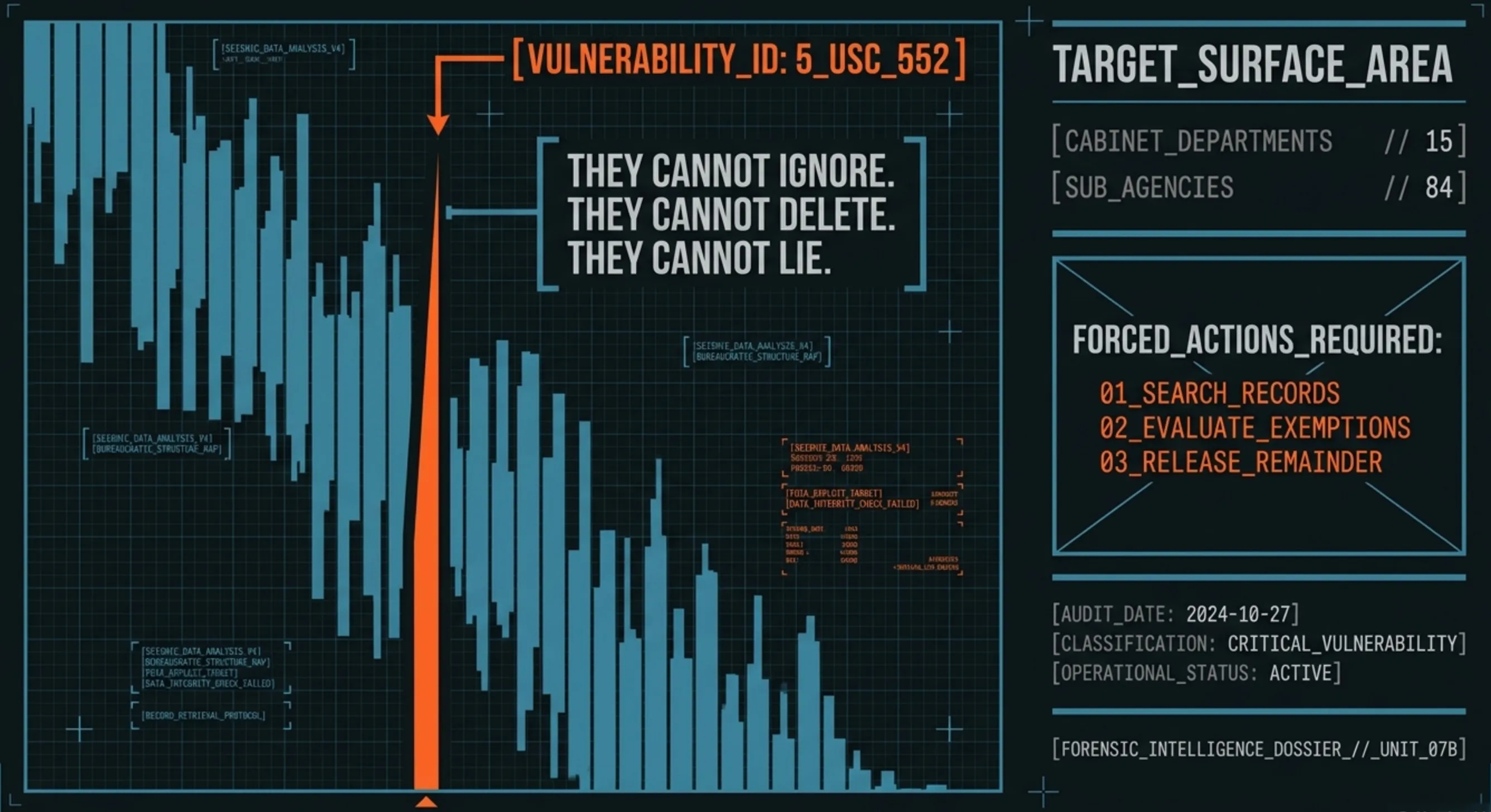
The Freedom of Information Act, 5 U.S.C. § 552, is a federal law passed in 1966 that requires every executive branch agency in the United States government to disclose records on written request unless those records fall within nine specific exemptions. Every agency. Fifteen Cabinet-level departments. Eighty-four sub-agencies. Hundreds of thousands of records released every year.
This is the most powerful investigative tool that exists in the United States, and most investigators never file a single request. Forty percent of FOIA requests federal agencies receive come from businesses doing competitive intelligence. Journalists are a small fraction. Independent investigators are smaller still. The territory is open.
A FOIA request forces a federal agency to do three things. First, search its records for documents responsive to your request. Second, evaluate whether those documents fall within an exemption. Third, release everything that does not. The agency cannot ignore you. The agency cannot delete the records to avoid producing them. The agency cannot lie about what it found. If the agency refuses to comply, you can appeal administratively. If the appeal fails, you can sue in federal court and force production through litigation.
The system is broken in practice. Backlogs are enormous. Agencies stonewall. Redactions are aggressive. National security exemptions get abused. None of that changes the fundamental architecture: the law works for the requester, and the records that come back are documents your subject has never seen and is not prepared for you to have.
This installment teaches you how to write requests that produce intelligence, how to qualify for the news media fee category, how to invoke expedited processing, how to read what comes back, what to do when the agency stonewalls, and how to file under operational security when the subject of your investigation is positioned to retaliate.
The Request: Three Rules
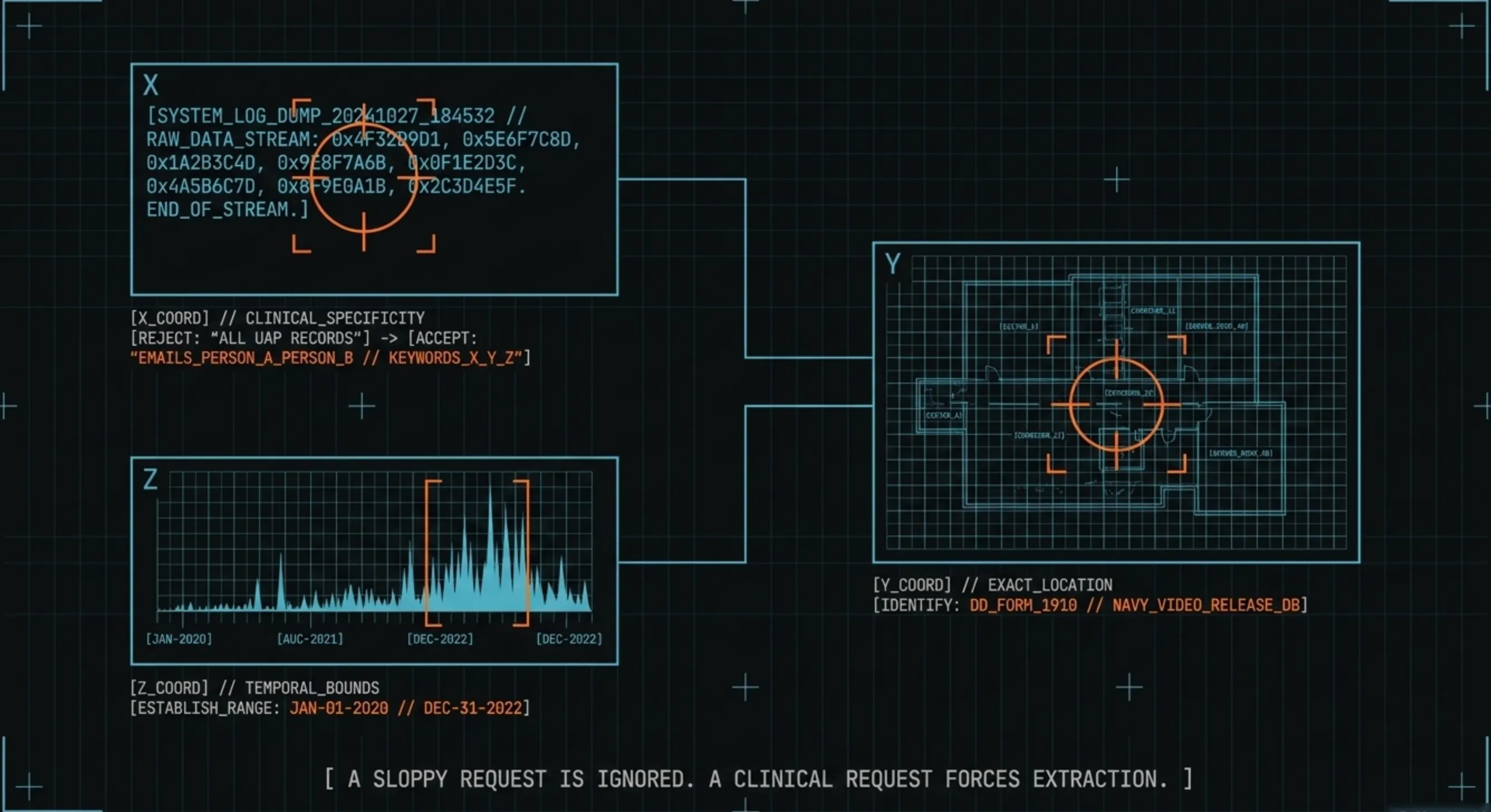
Most FOIA requests fail because they are poorly written. The agency receives a vague, sprawling request, places it in the “complex” processing queue, and sits on it for two years. A precisely written request gets processed faster, gets denied less often, and produces records the agency would have withheld from a sloppier ask.
Three rules for every request you write.