

SUBJECT: PUBLIC RECORDS FORENSICS FOR INVESTIGATIVE RESEARCH // PROPERTY RECORDS, BUSINESS FILINGS, COURT RECORDS, MEMORIAL DATABASES, FEDERAL CONTRACT REGISTRATIONS, CORPORATE FILINGS
DATE: APRIL 4, 2026
CROSS-REF: THE GHOST GENERAL | THE GREEN BURIAL | THE LONG COUNT | FIELDCRAFT
DATA CONFIDENCE: VERIFIED (all databases referenced are publicly accessible, all methods are reproducible)
This is the third installment of FIELDCRAFT. The briefings give you the intelligence. FIELDCRAFT gives you the tradecraft.
Why Public Records
In FIELDCRAFT #002, we showed you how patent databases connect people to technologies. Patents answer the question: what did this person build?
Public records answer a different question: who is this person?
Where do they live. What do they own. Who are they in business with. What institutions have they incorporated. What lawsuits have they filed or been named in. What federal contracts are registered to their organizations. What memorials have been created in their name, and by whom, and when.
These are not hidden databases. They are not classified.
They are not behind paywalls that require institutional credentials. They are public records maintained by county, state, and federal governments, accessible to anyone who knows where to look.
The problem is not access. The problem is that most reporters do not look. They take the press release, call the public affairs officer, and file their story. The public record sits untouched. And the public record is where the story actually lives.
Case Study: THE GHOST GENERAL
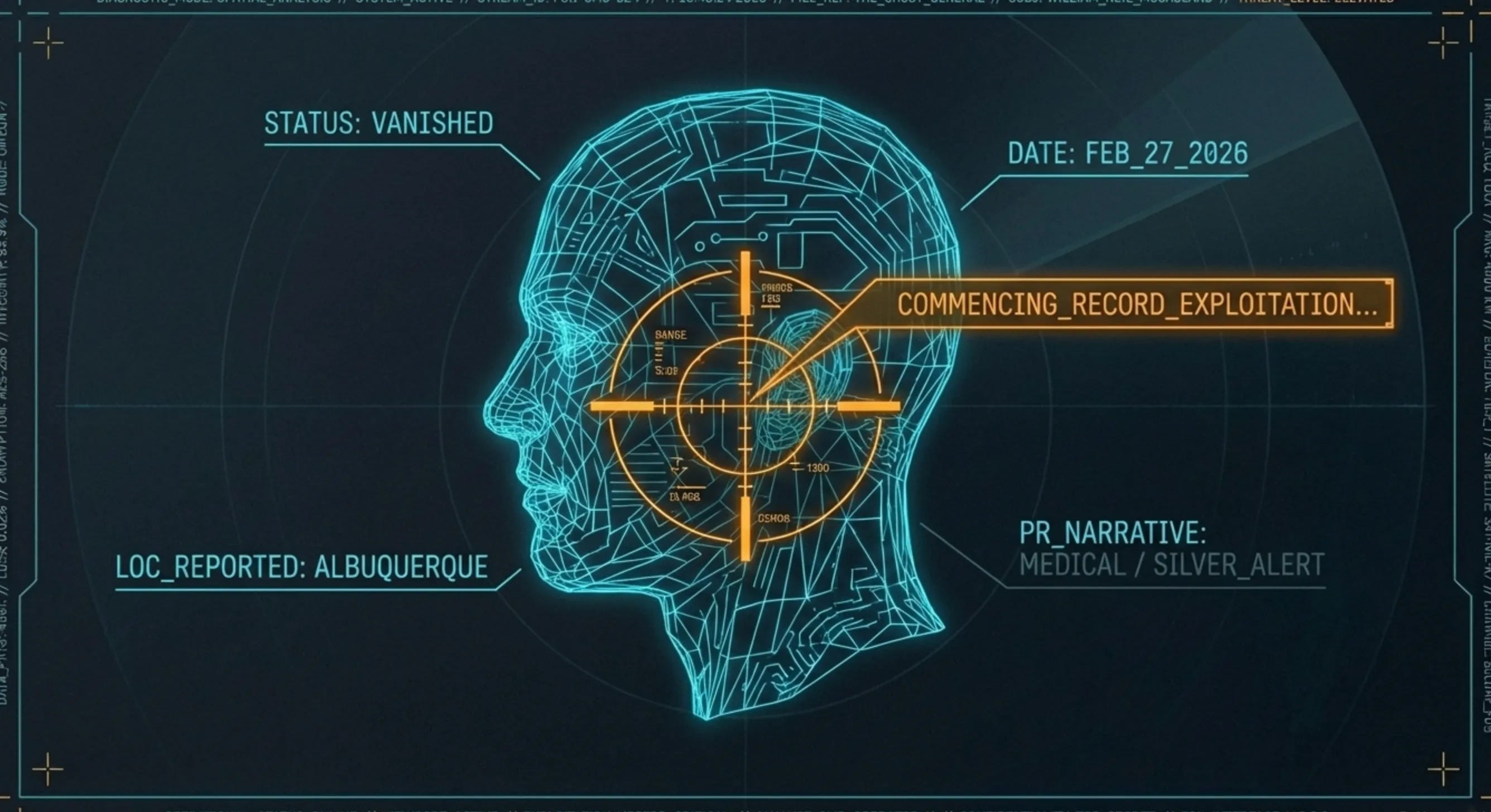
When Major General William Neil McCasland vanished from his home in Albuquerque on February 27, 2026, every news outlet ran the same story. Retired general. Medical concerns. Check your cameras. Silver Alert.
We ran the public records. Here is what they ran and what we found.