

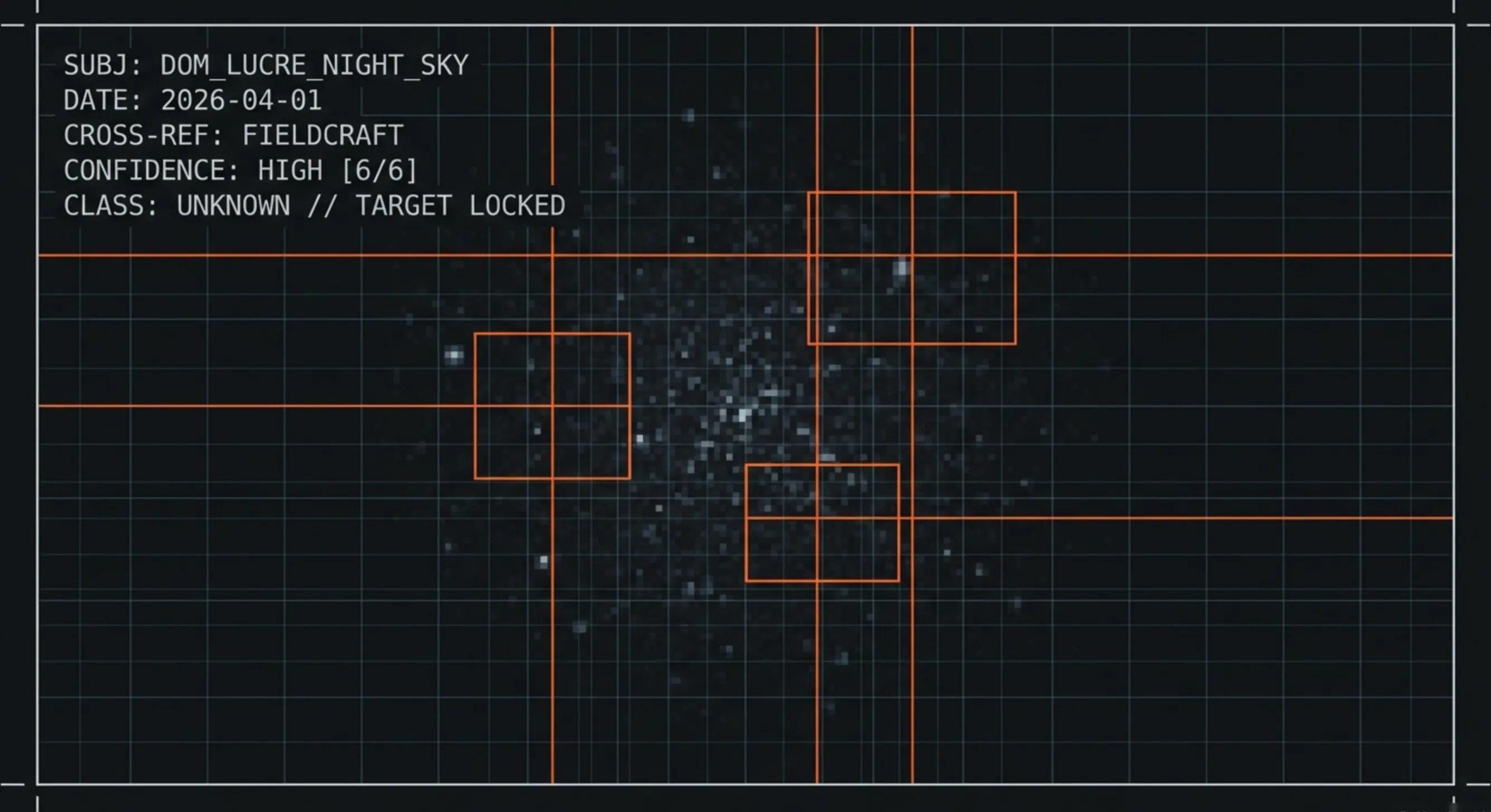
SUBJECT: FORMATION BEHAVIOR ANALYSIS // DOM LUCRE NIGHT SKY VIDEO // OPENCV FORENSIC PIPELINE
DATE: APRIL 2, 2026
CROSS-REF: FIELDCRAFT
DATA CONFIDENCE: HIGH (SIX OF SIX GEOMETRIC METRICS UNANIMOUS; METHODOLOGY REPRODUCIBLE ON SOURCE VIDEO)
THE CLIP
A video is circulating under the caption “BREAKING: This UFO is reportedly being spotted in multiple countries.” It shows a formation of lights in a night sky, filmed handheld from a rooftop. Twenty-eight seconds. A V-shaped cluster of faint points drifts and reshapes as the camera tracks it.
The clip did what clips like this always do. It moved fast, picked up shares, and outran anyone willing to actually look at it. By the time questions get asked, the framing has already hardened.
We decided to ask the footage directly.
THE METHOD
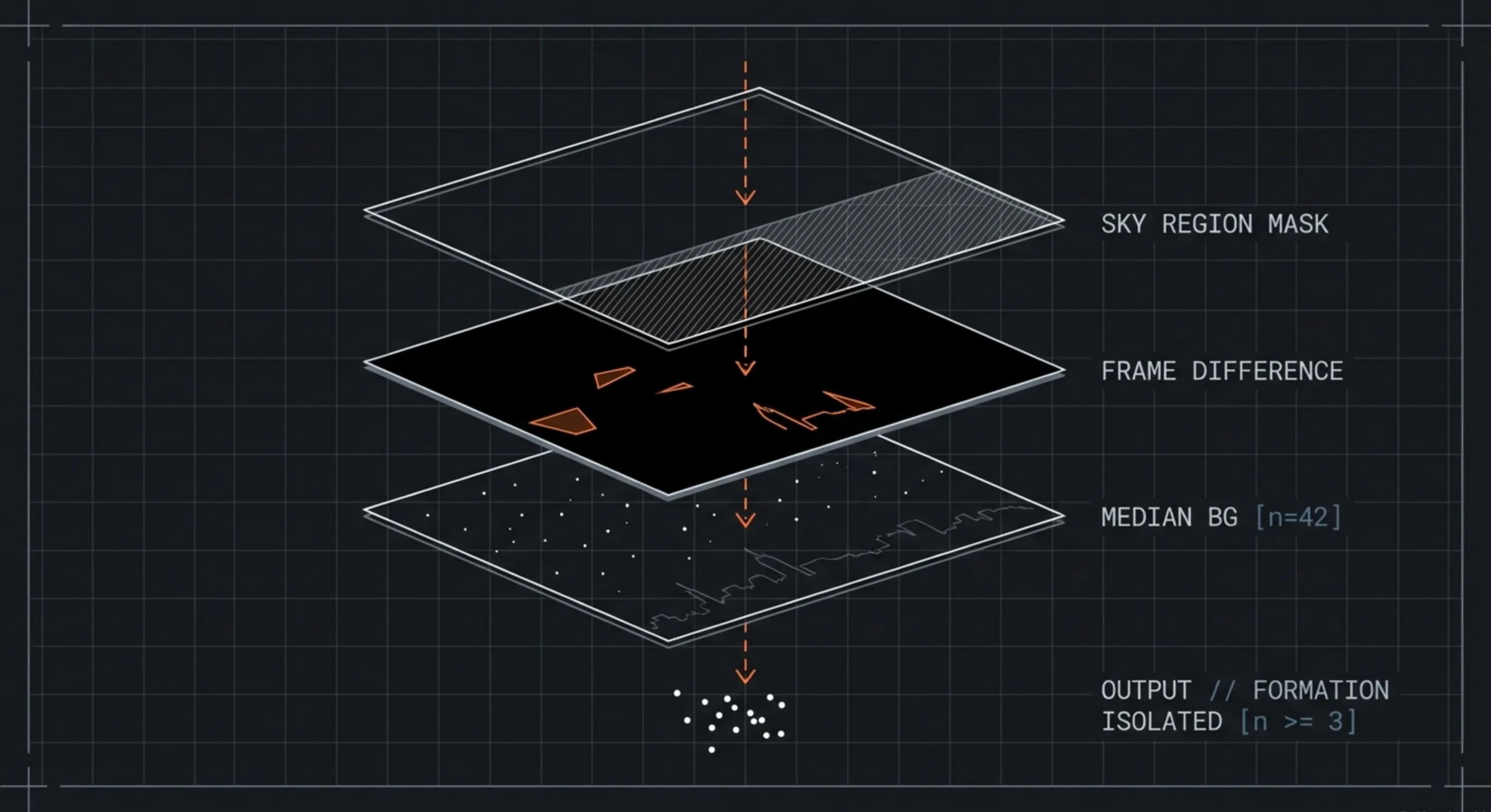
We ran the video through an OpenCV pipeline built to answer one question: does this formation behave like a solid object or like a group of independent things?
Night sky footage is deceptive. A naive brightness detector will lock onto every hot pixel on a rooftop water tank before it finds the object you actually care about. Our first two attempts did exactly that. The detector clustered on building textures and called it a formation. So we tore it down and started over.
The working pipeline uses three layers. A median background model built from 42 sampled frames bakes every static element, the building, the stars, the antenna, into one reference image. Frame-to-frame differencing then isolates anything that moved between consecutive frames. We intersect the two: only objects that are absent from the static background AND confirmed moving survive detection. A sky-only region mask kills the bottom third of the frame where the rooftop lives.
What survives gets clustered. The tightest group of three or more points becomes the formation under the microscope.
THE SIX TESTS
Imagine you glued five flashlights to a frisbee and threw it across a dark field. The lights would hold fixed spacing, locked geometry, constant count, no matter how the frisbee spun. Now imagine five birds in loose formation. None of those things hold. The spacing is uneven. The geometry shifts every wingbeat. Birds enter and leave the group.
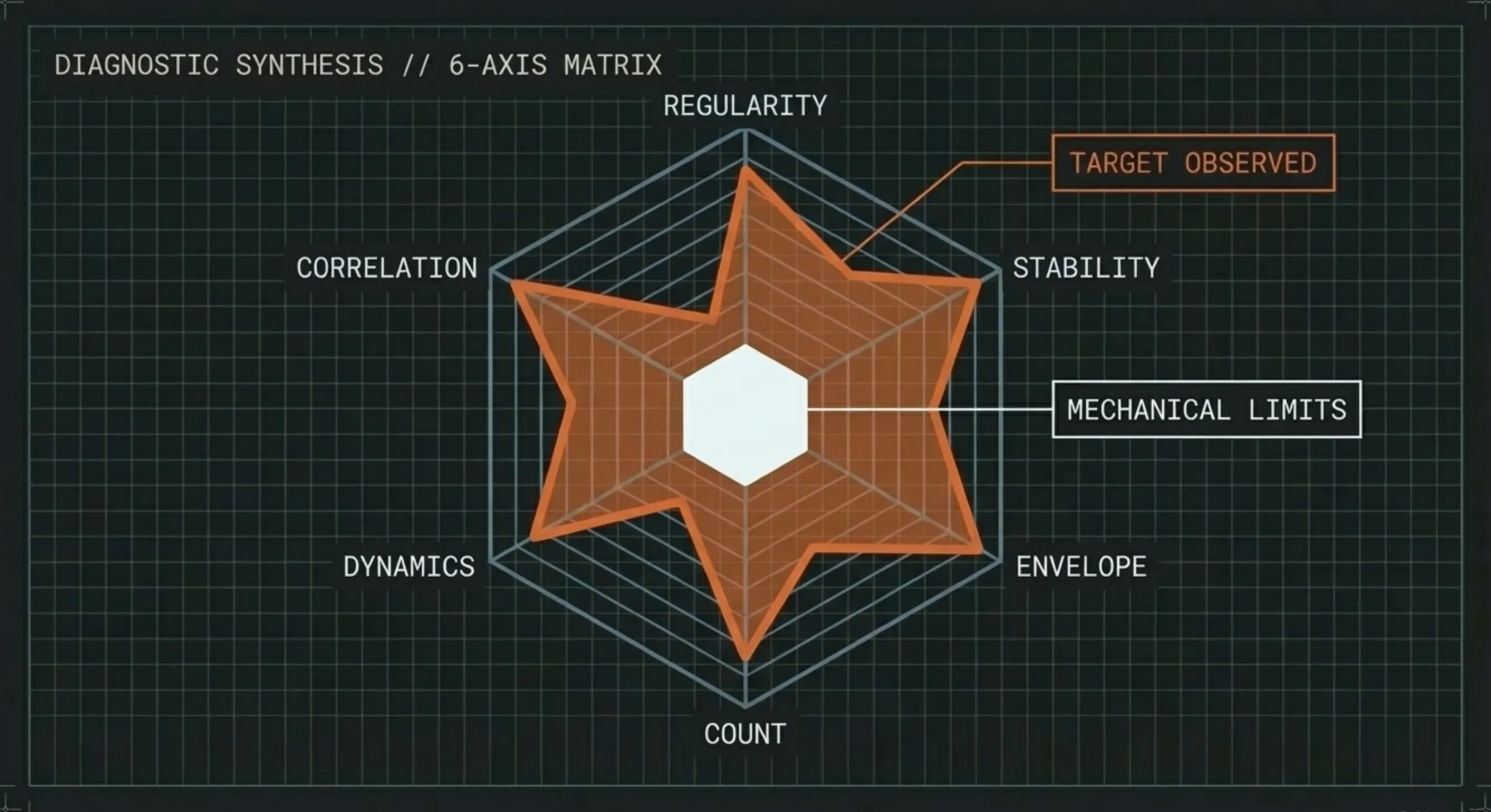
We measured six properties that separate these two scenarios. Every one pointed the same direction.
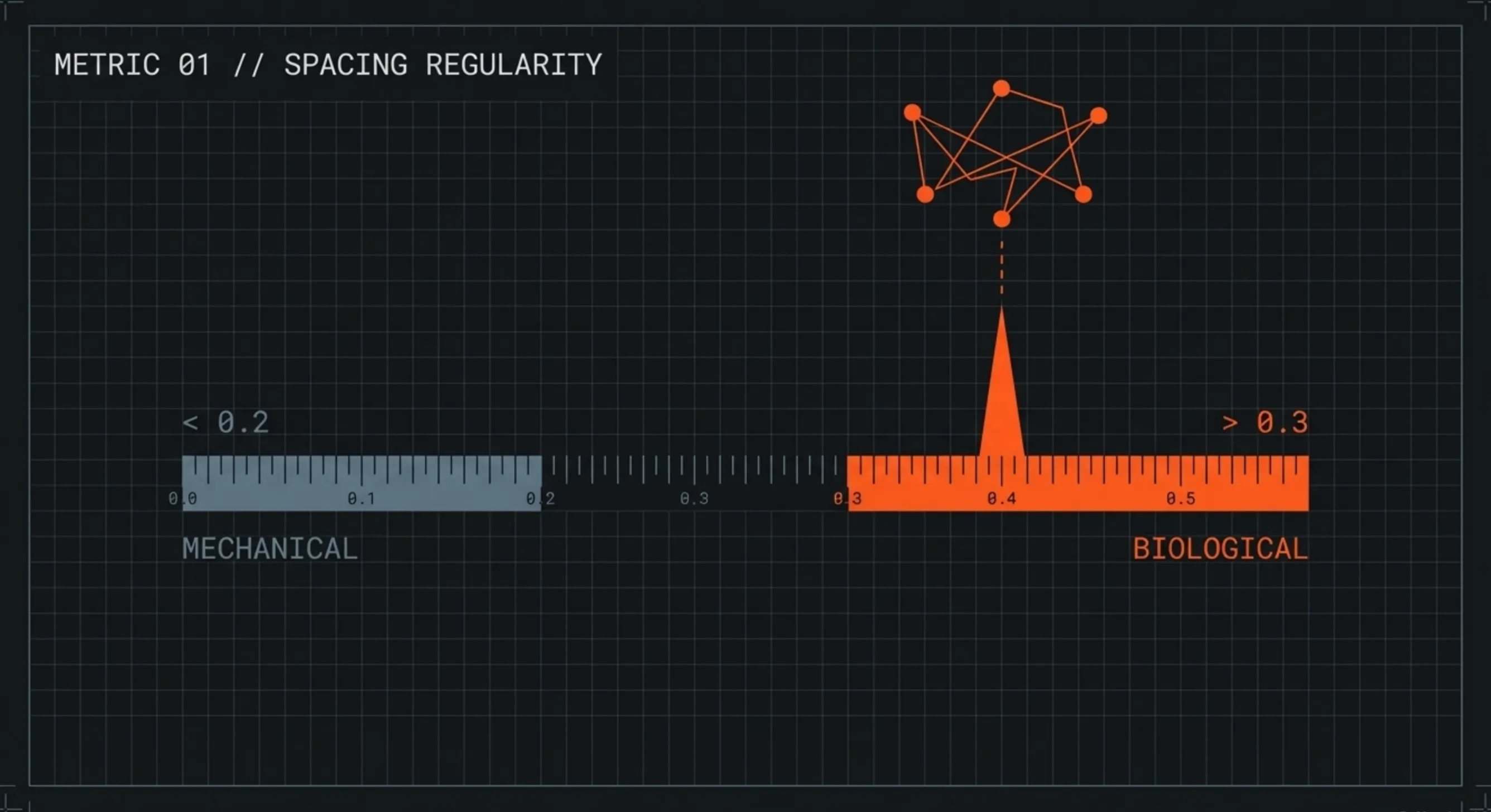
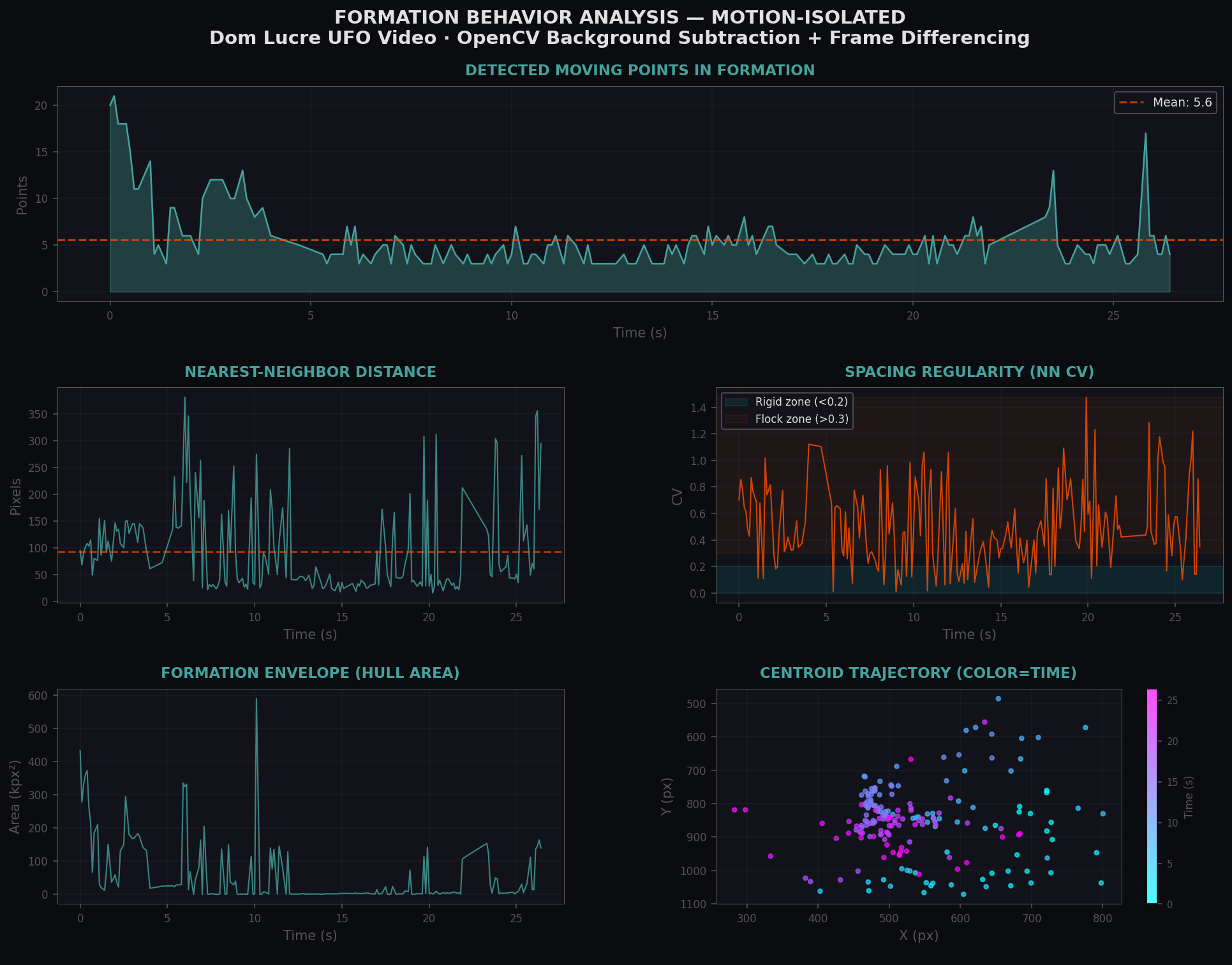
Spacing regularity. How evenly are the points spaced within a single frame? Below 0.2 on the coefficient of variation means mechanical precision. Above 0.3 means biological mess. This formation scored 0.498. Not close.
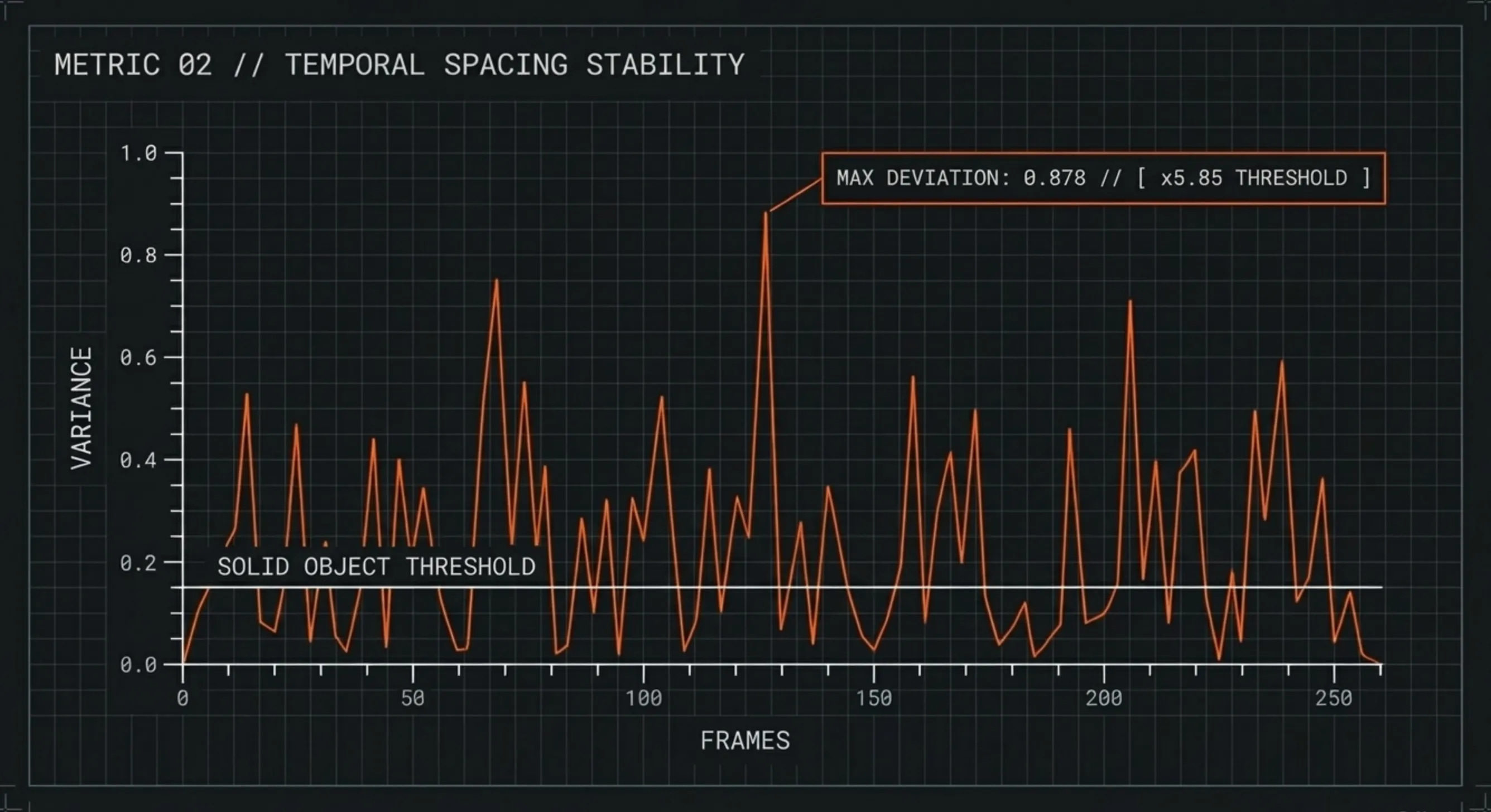
Temporal spacing stability. How much does the spacing change from frame to frame? A solid object holds steady, below 0.15. This formation swung at 0.878. Nearly six times the rigid threshold.
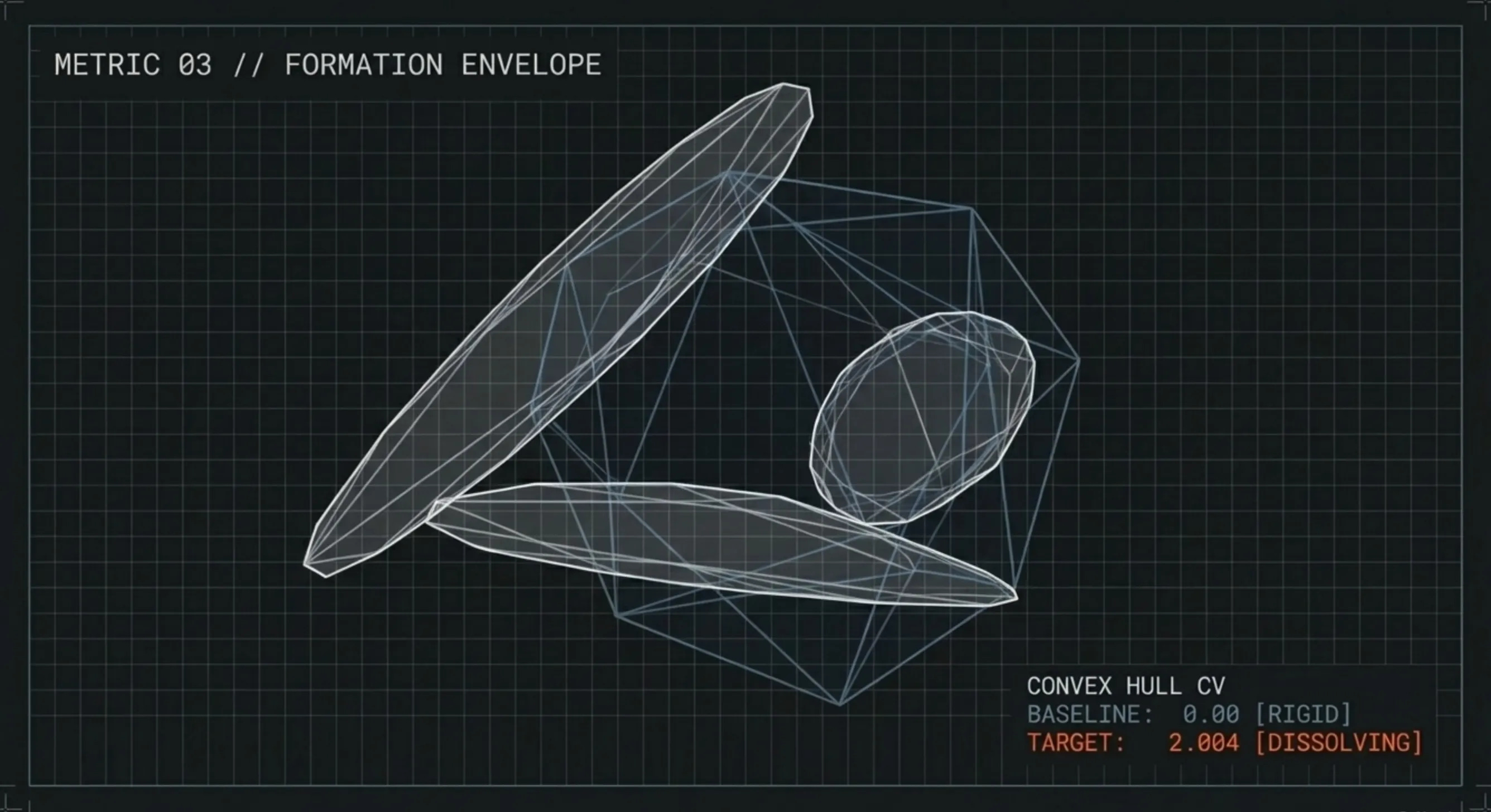
Formation envelope. The convex hull is the smallest shape you can stretch around all the points. For a solid object, that shape stays roughly the same size. This formation’s hull varied with a CV of 2.004. It was not drifting. It was dissolving and rebuilding.
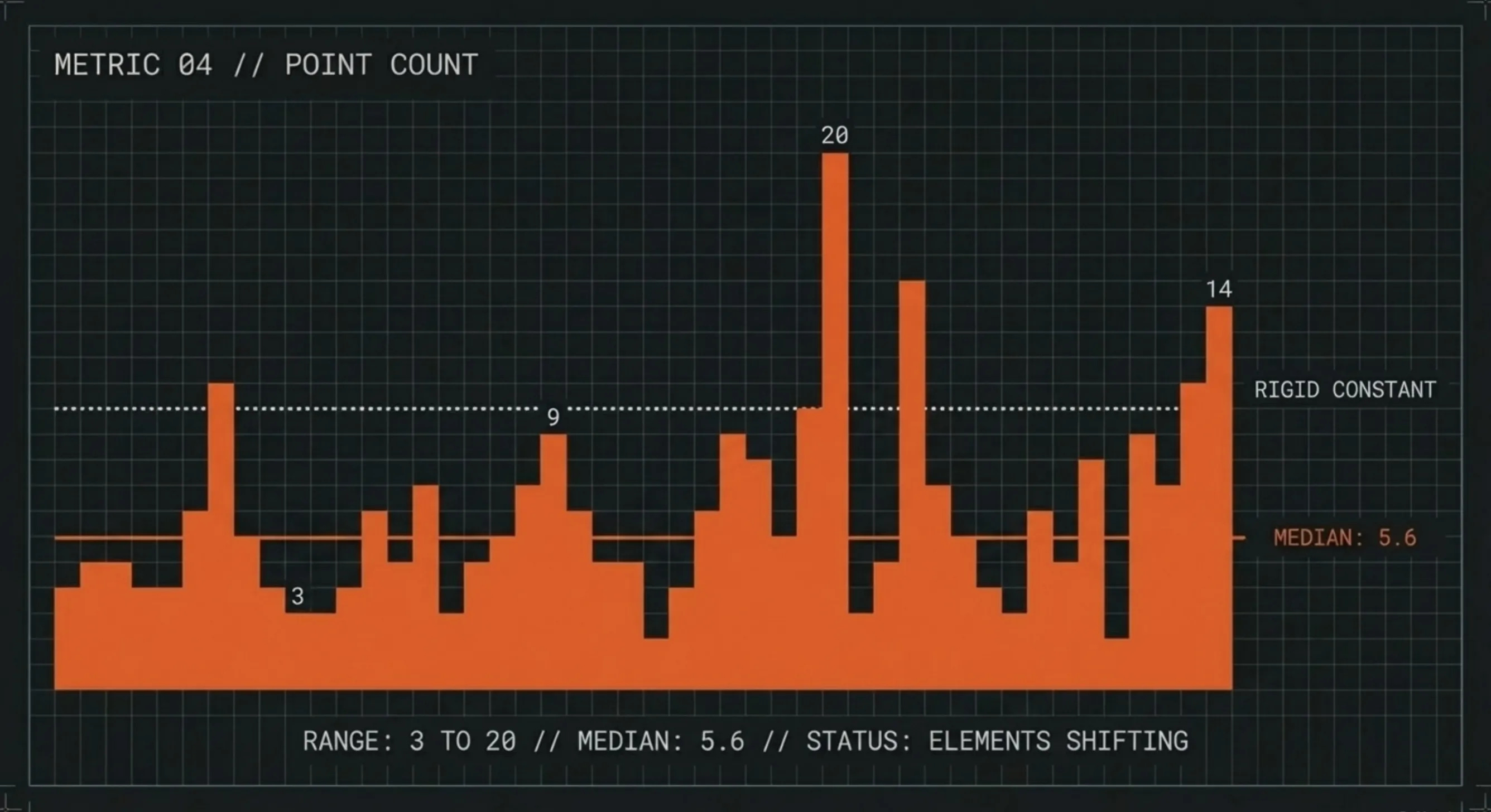
Point count. A craft has a fixed number of lights. This formation’s count ranged from 3 to 20 in clean frames, averaging 5.6. Elements entering and leaving constantly.
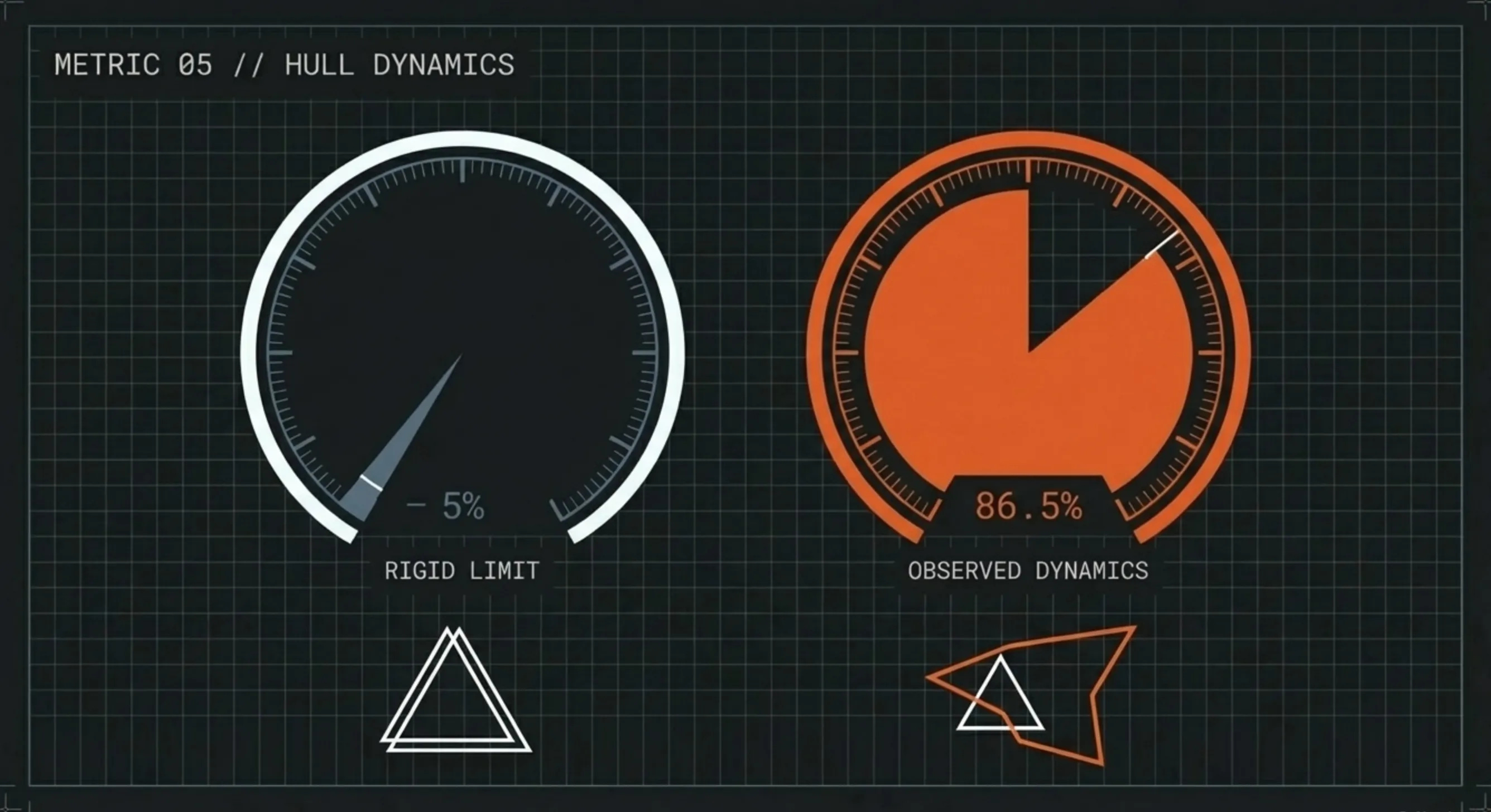
Hull dynamics. Each time step, the formation’s footprint changed by an average of 86.5% of its own area. A solid object would show less than 5%.
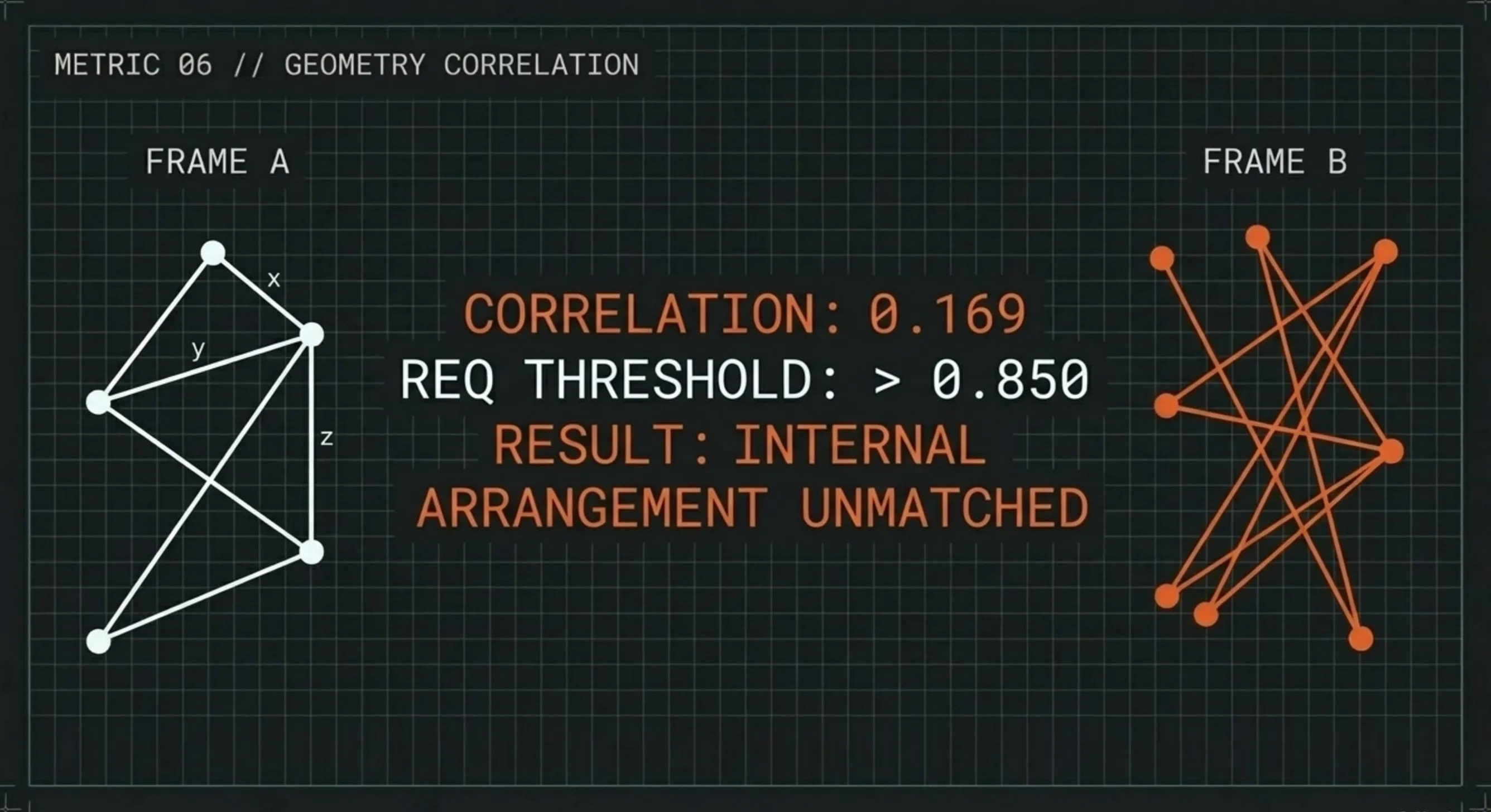
Geometry correlation. The strongest single test. We compared the internal distance relationships of the formation between consecutive frames. If the same rigid thing is rotating or drifting, this correlation stays above 0.85. This formation scored 0.169. One frame’s internal arrangement bore almost no resemblance to the next. The elements were not holding positions relative to each other.
Six for six. No ambiguity in any of them.
This is the kind of analysis we explain more in depth in FIELDCRAFT where we open the toolkit.
THE CENTROID
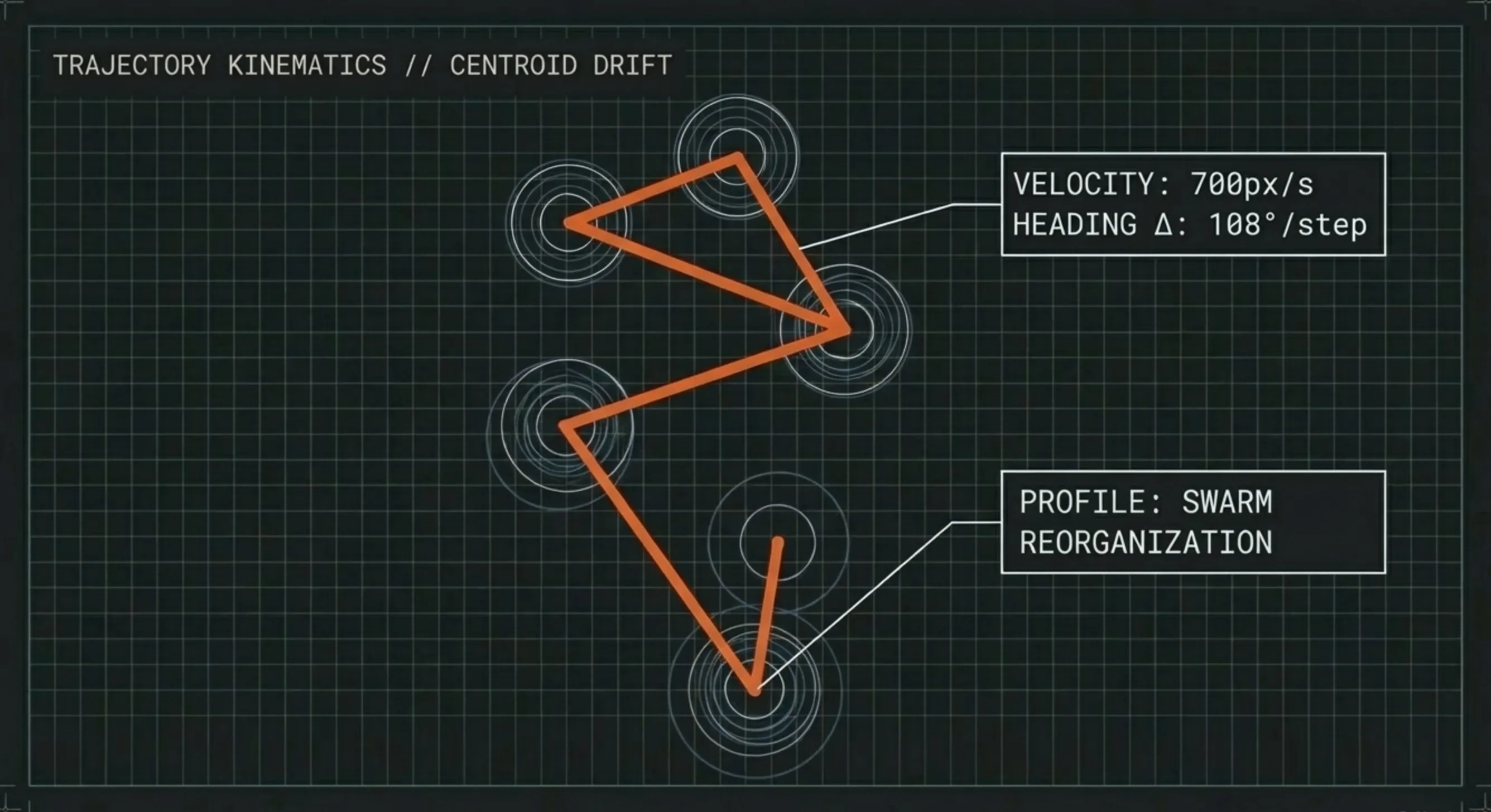
The formation’s center of mass moved at roughly 700 pixels per second with a standard deviation almost as large as the mean, and the heading changed by an average of 108 degrees per step. That is not the trajectory of an object in flight. That is the drift of a group center as individuals reshuffle around each other.
THE LIMITS
Here is what this analysis can tell you: the formation’s geometry behaves like a flock across every metric we tested. Here is what it cannot tell you: species, altitude, whether the points are self-luminous or reflecting city light, or anything about radar signature. This is compressed nighttime phone footage with camera shake. Individual elements merge and split at this resolution. Some frames contain motion artifacts from the handheld jitter, which we filtered out.
Geometry only. But on geometry, the answer is not in question.
THE COST
This is not the first time a bird flock has gone viral as a UFO. V-formations at twilight or under urban light pollution produce exactly this visual signature. A loose chevron of faint points that appears to move as a unit until you look closely enough to see the unit coming apart and reforming with every wingbeat.
The speed at which this clip circulated relative to the speed at which anyone checked it is the real story. The information environment around anomalous aerial phenomena is so saturated with uncritical amplification that footage of birds can reach hundreds of thousands of views before a single person runs it through a free computer vision library.
This is the noise that buries the signal. Every bird flock that travels the internet as a UFO makes the next genuine anomaly easier to wave away. We do this work, the tedious frame-by-frame computational kind, because the field cannot keep spending credibility on starlings.
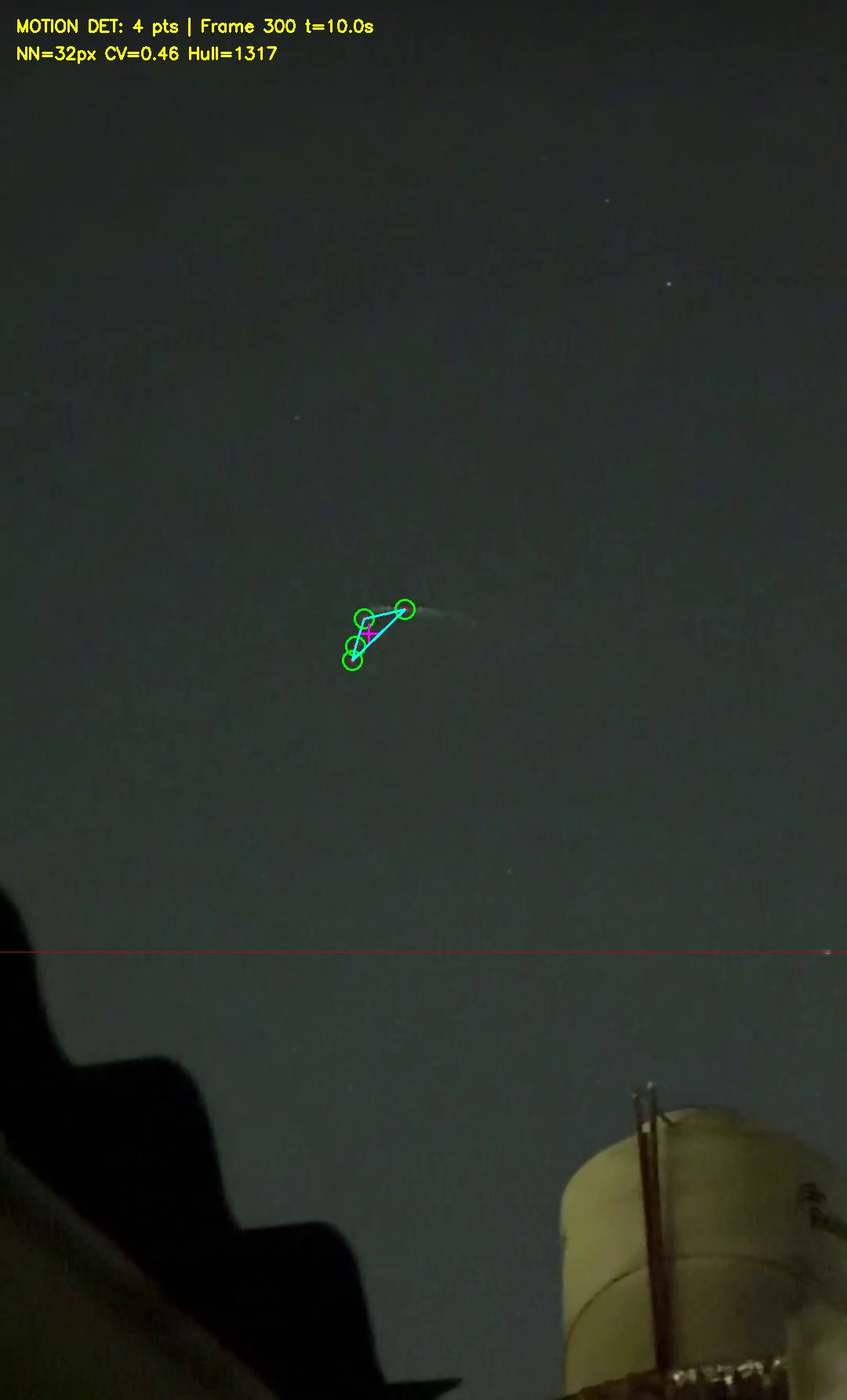
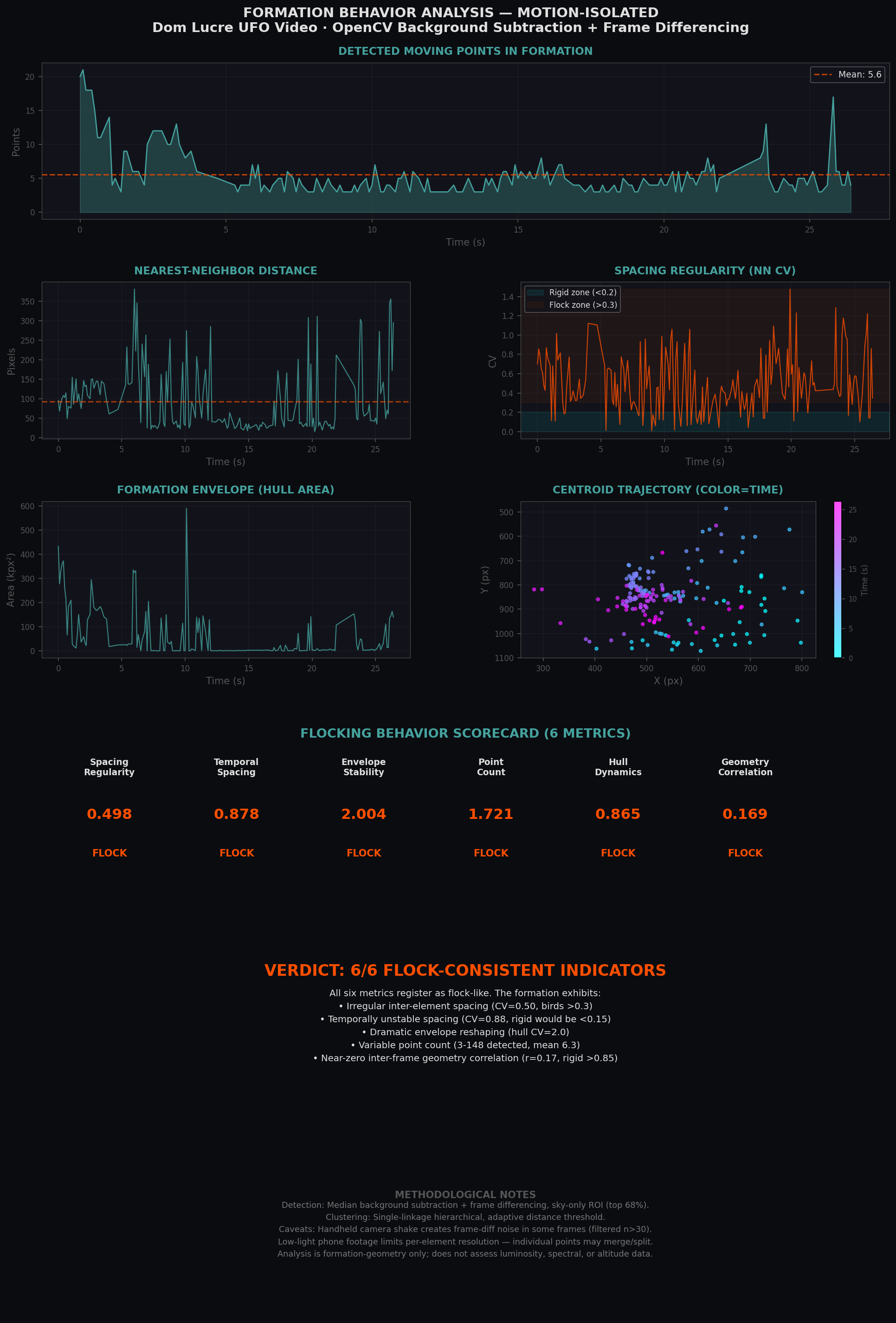
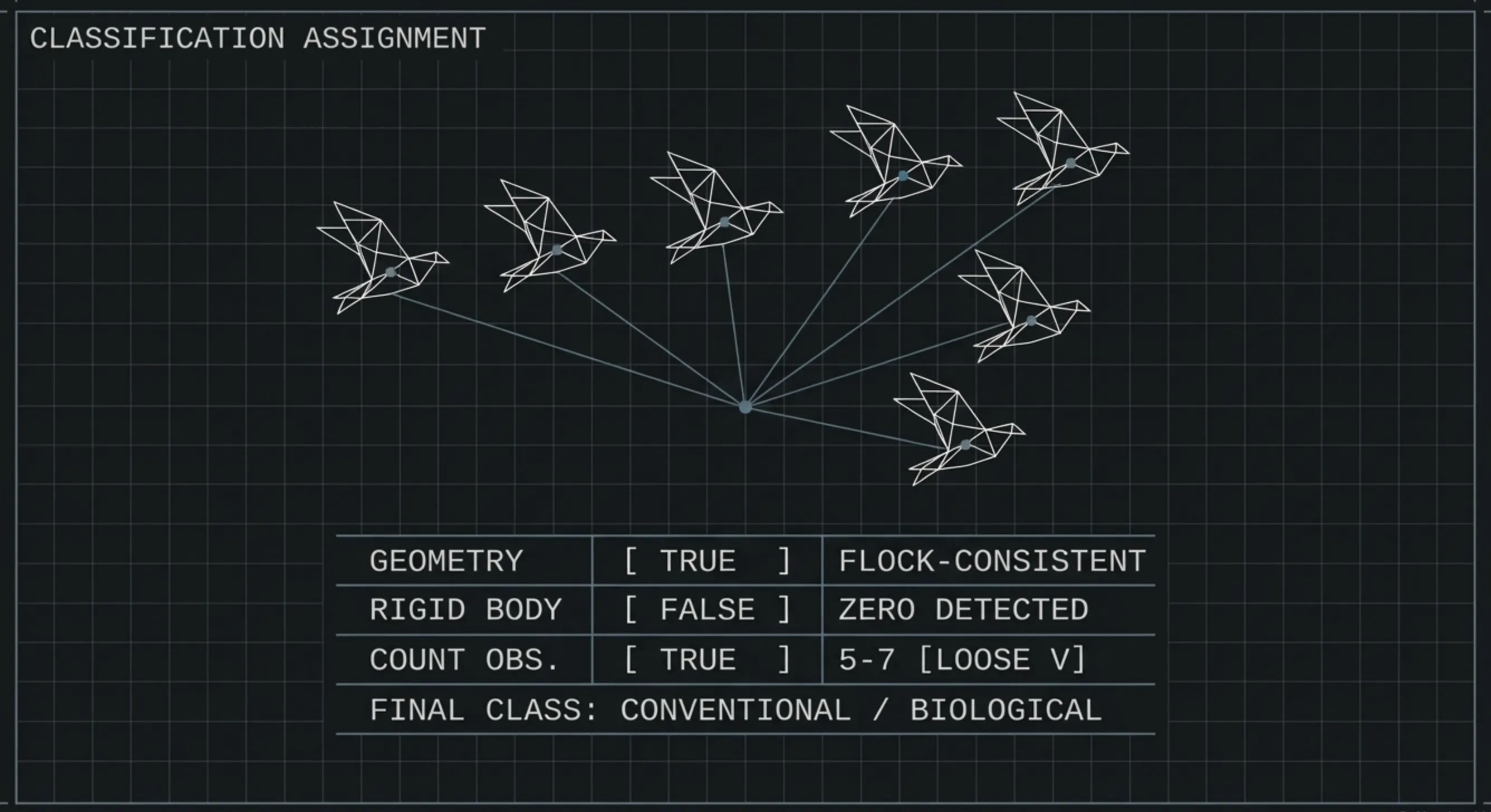
THE SENTINEL ASSESSMENT: The formation in the Dom Lucre viral video scores flock-consistent on all six independent geometric metrics. No rigid-body indicators detected. The footage is consistent with a small group of birds, roughly five to seven, in loose V-formation under nighttime conditions. Classification: conventional, biological.
The sky is full of things worth investigating.
This was not one of them.
Keep looking up.
-- The Sentinel
Every briefing we’ve published is free. That’s not changing. This publication has no institutional backing, no sponsors, and no editorial board. We’re doing the work the newsrooms won’t — sourcing papers, filing FOIAs, building tools, and writing at the pace a once-in-a-civilization event demands.
Paid subscribers fund the investigation directly. They also get access to primary source documents, the comment section on every briefing, Fieldcraft Labs, and the FIELDCRAFT series — the tools and methods behind every investigation we publish. No ads. No sponsors. No strings. Your subscription is a data point against the suppression gradient.
If you can’t subscribe, we don’t care. Read everything. Share everything. The mission is the mission.
Subscribe to The Sentinel Network
Share this investigation. The Suppression Gradient documented what happens when this coverage reaches platforms that do not want you reading it. Every share, every restack, every forwarded link is a data point against the gradient.
Previous briefings: THE ARCHITECT | THE RECORD | THE REFINED FUEL | THE OPERATING SYSTEM | THE BLIND SPOT | THE NARROW BAND | THE ANCIENT ENGINE | THE VERDICT | THE LONG COUNT | THE GREEN BURIAL | THE GHOST GENERAL
Excellent analysis! I've seen this kind of thing too. Years ago, a video was circulating with an object that seemingly blasted by so fast that no one could discern what it was. Of course, everyone jumped to the wrong conclusion that is was a 'UFO'. I didn't see that at all...I saw a peregrine falcon...they have been clocked at over 200 mph., and is the fastest animal on the planet. You have to understand so much in nature to rule these things out, and most people are just to lazy to bother with that, preferring to jump on the bandwagon to nowhere.