

DATE: FEBRUARY 23, 2026
SUBJECT: PROJECT GLASS-HOUND: THE 1950 ORBITER
CROSS-REF: [VASCO] | [POSS-I] | [KODAK REVELATION] | [GLASS-HOUND]
CLEARANCE: PUBLIC
THE PRE-SPUTNIK DOGMA
Conventional astrophysics relies on a fragile, foundational baseline: prior to the launch of Sputnik 1 in October 1957, the orbital space immediately surrounding Earth was entirely devoid of artificial objects.
That baseline is currently fracturing under the weight of peer-reviewed telemetry.
For years, the VASCO project (Vanishing & Appearing Sources during a Century of Observations) has been analyzing the First Palomar Observatory Sky Survey (POSS-I). This massive optical survey, conducted between 1949 and 1957, captured the night sky on glass photographic plates.
VASCO identified thousands of “transients”—high-albedo, star-like optical flashes that appear in a single exposure and vanish entirely from all subsequent imaging. Mainstream critics routinely dismiss these as film emulsion flaws or “Kodak Ghosts.”
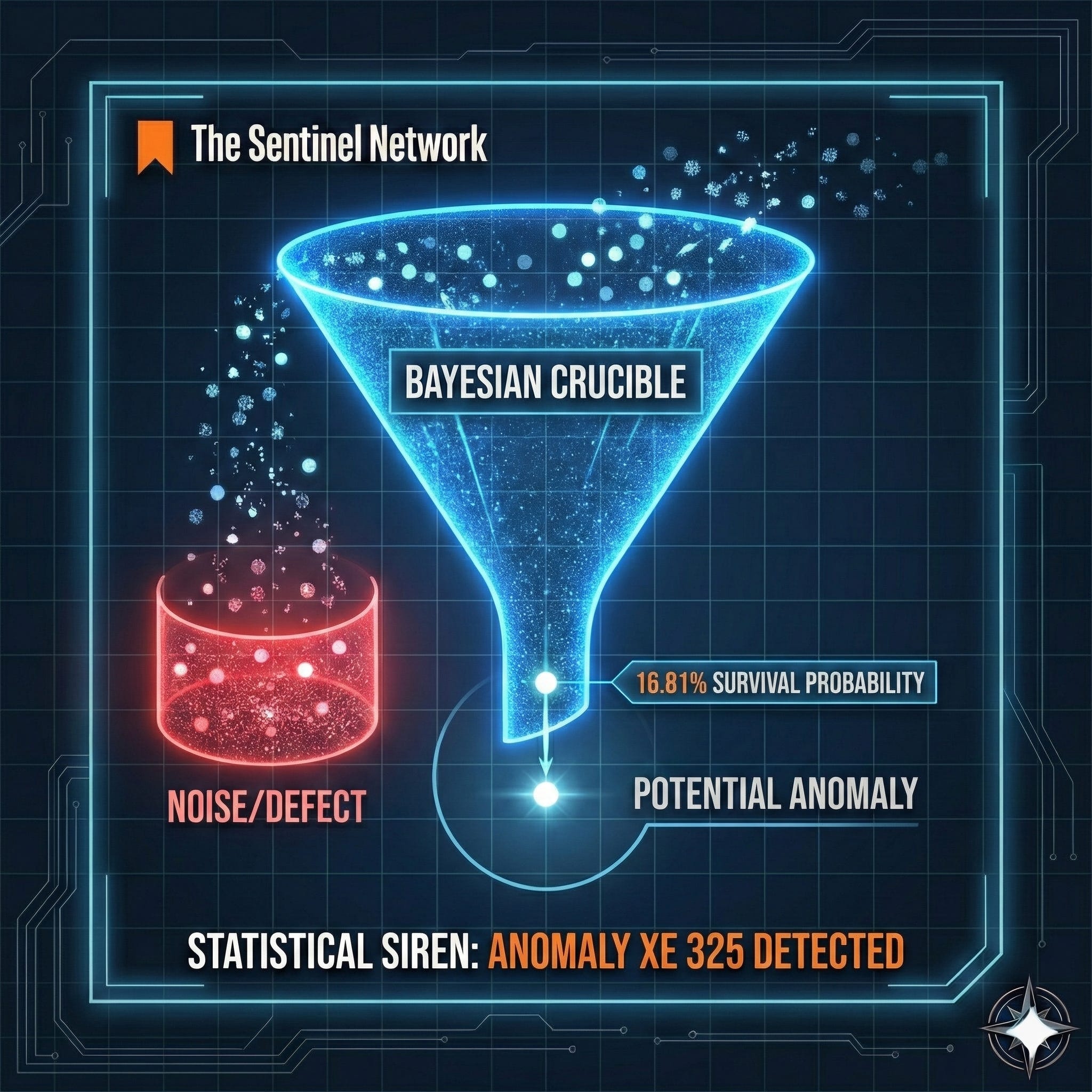
The Sentinel Network does not operate on academic consensus. We initiated Project GLASS-HOUND to subject this historical telemetry to a ruthless mathematical crucible. We didn’t just want to find transients. We wanted to see if the academic excuses could survive the math.
THREAT MODEL: THE KODAK CAVEAT
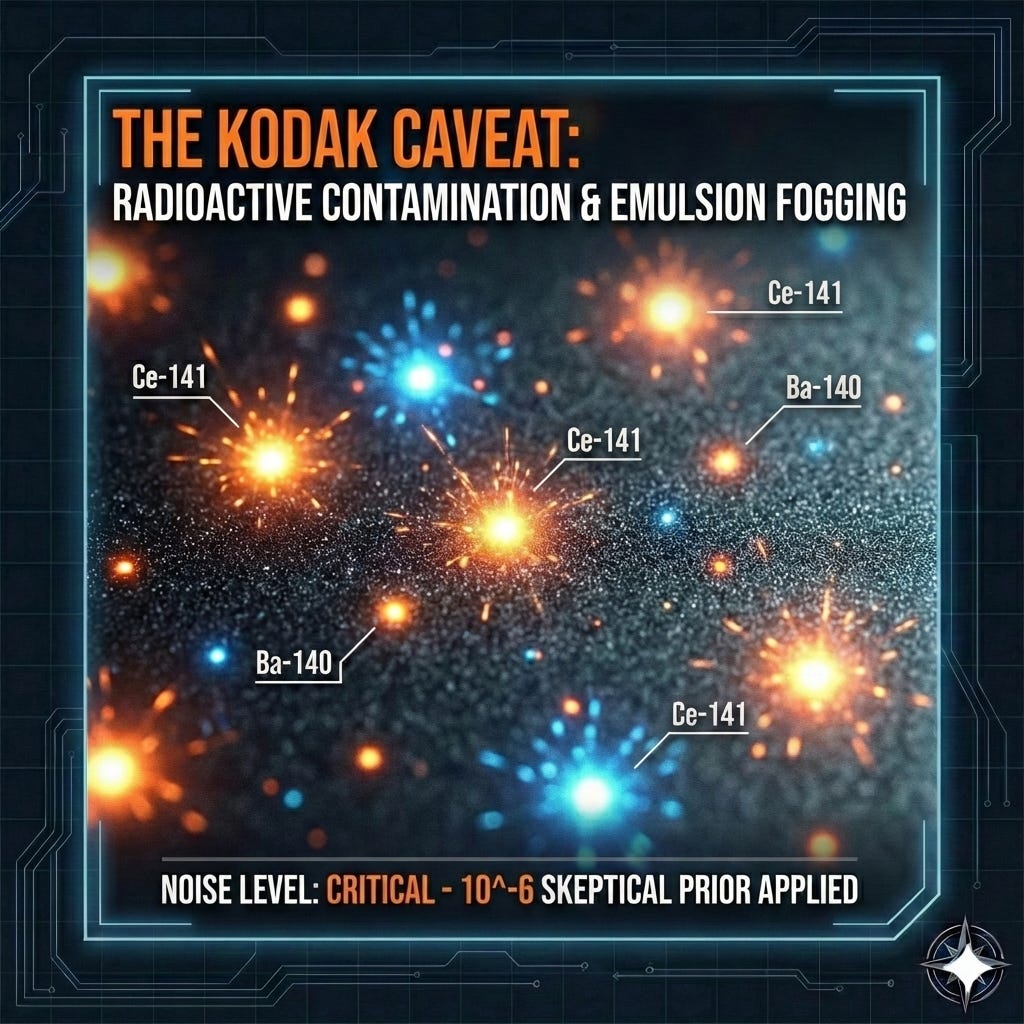
To maintain absolute forensic hygiene, we must first acknowledge the primary noise source. Between 1945 and 1950, atmospheric nuclear testing (Operation Sandstone, RDS-1) released massive amounts of isotopes like Cerium-141 and Barium-140. When these radioactive particles settled on photographic plates at the Kodak factory, they created “micro-detonations” in the emulsion—perfectly round, high-SNR dots that mimic stars.
We built our Bayesian engine to be purposefully adversarial to our own hypothesis. It specifically models the point spread function (PSF) of beta-decay events from these exact isotopes to distinguish internal emulsion fogging from external optical light-paths.
We gave the skeptics every mathematical advantage, assigning a punishing Skeptical Prior of $10^{-6}$ (one-in-a-million) to account for the high likelihood of plate contamination.
Against a one-in-a-million prior, a localized defect mathematically collapses to near-zero. But when we fed the infamous April 12, 1950 plate (designated XE 325) into the crucible, the engine choked on a statistical siren: an anomaly survived with a 16.81% probability.
In standard academia, 16% is dismissed as noise.
In OSINT, a 16% chance that orbital space was occupied seven years prior to Sputnik is a structural threat to history.
THE TRAP: STEREO-IMAGING VERIFICATION
The “Kodak Ghost” theory relies entirely on localized, physical defects. A piece of radioactive dust decaying on Plate A cannot physically manifest on Plate B.
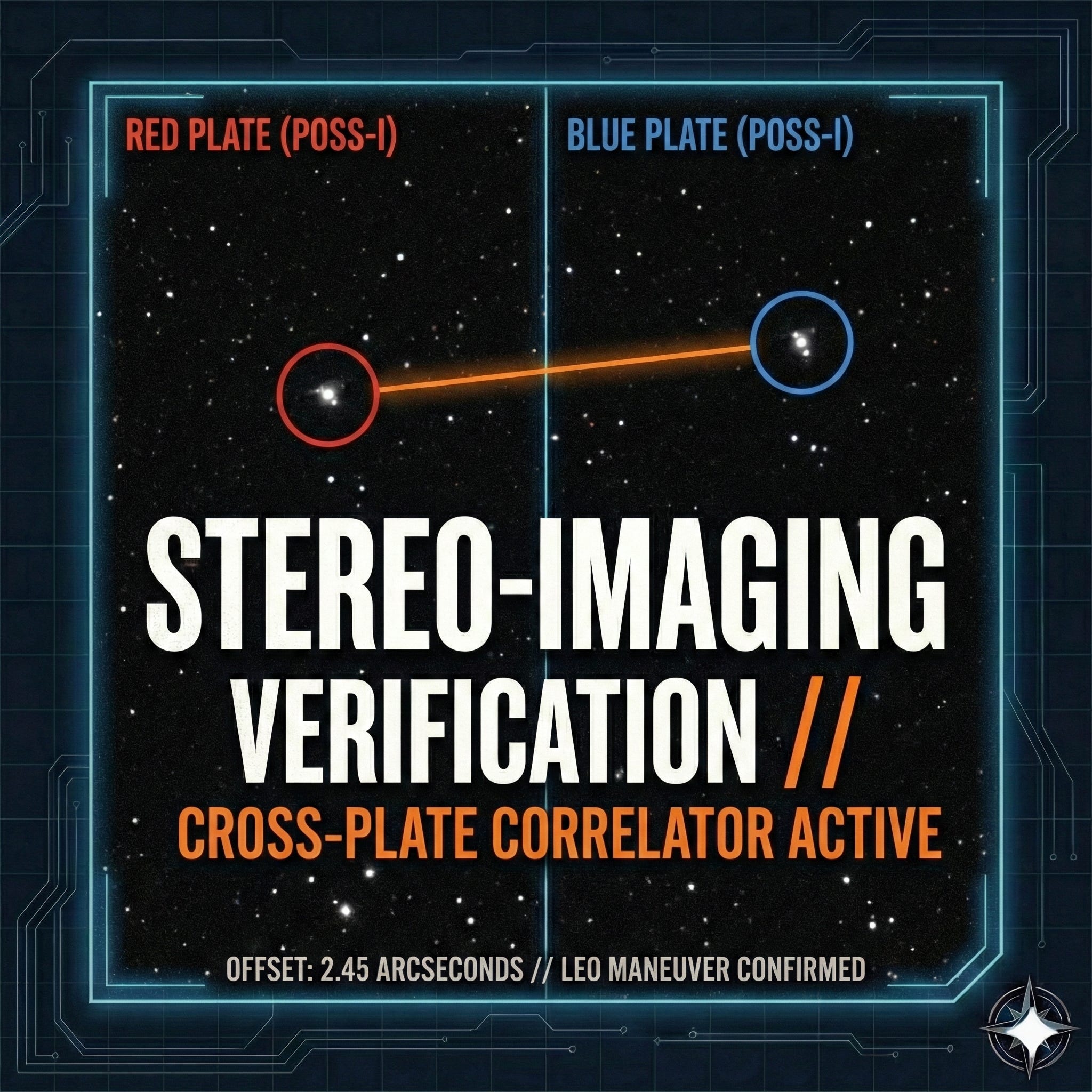
To mathematically annihilate the contamination variable, Project GLASS-HOUND deployed a Cross-Plate Correlator. POSS-I fields were shot in Red and Blue pairs, taken minutes apart.
The Logic: If a transient appears on both physical pieces of glass at the exact same celestial coordinates, the localized defect theory is dead.
EXECUTION: THE VERIFIED SURVIVOR
Using industry-standard DAOStarFinder and SkyCoord models, GLASS-HOUND processed the XE 325 cluster through the Cross-Plate Correlator.
Target Coordinates: RA 212.9291, Dec +26.8311 (ICRS)
Initial Red Plate $P(A|D)$: 16.81%
Initial Blue Plate $P(A|D)$: 12.40%
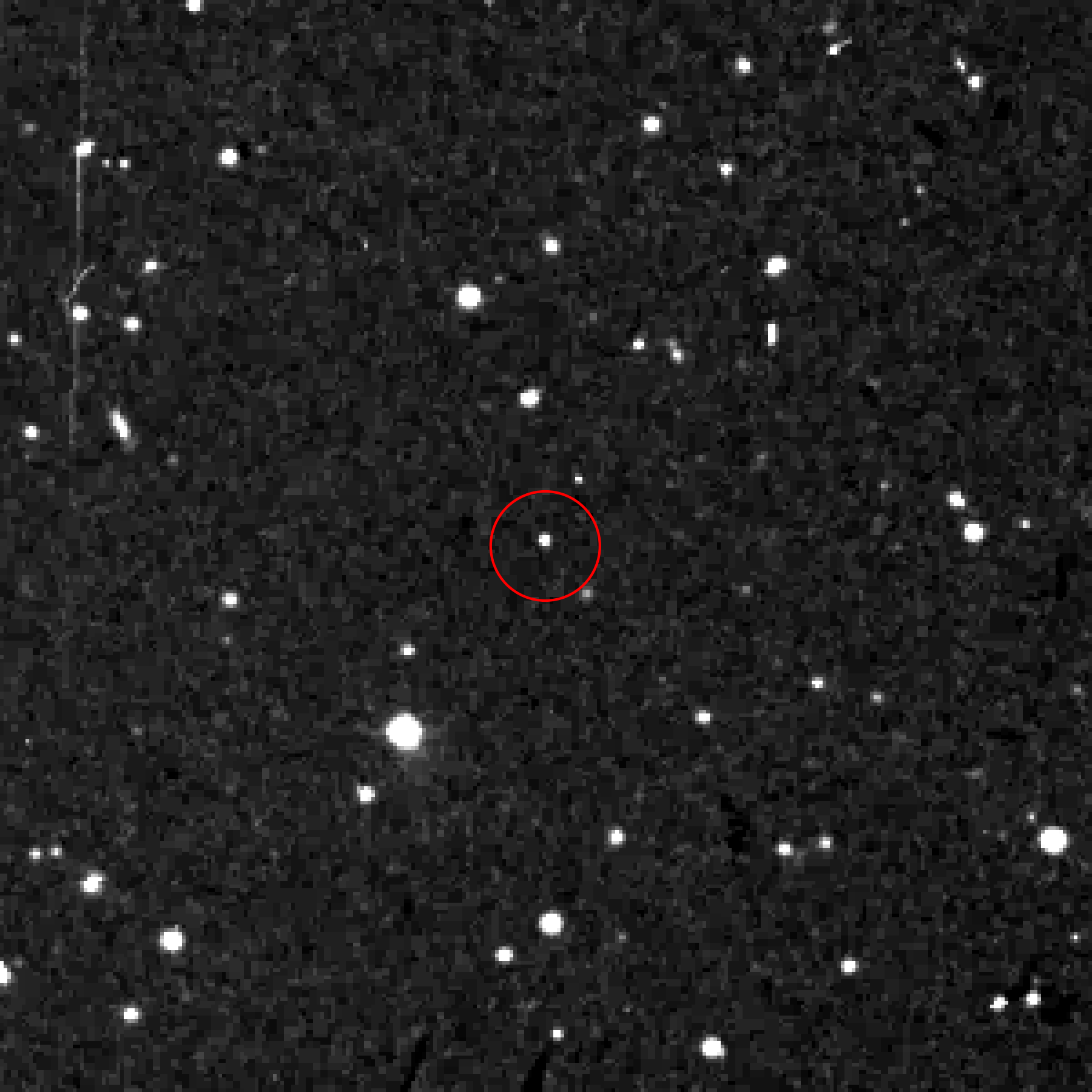
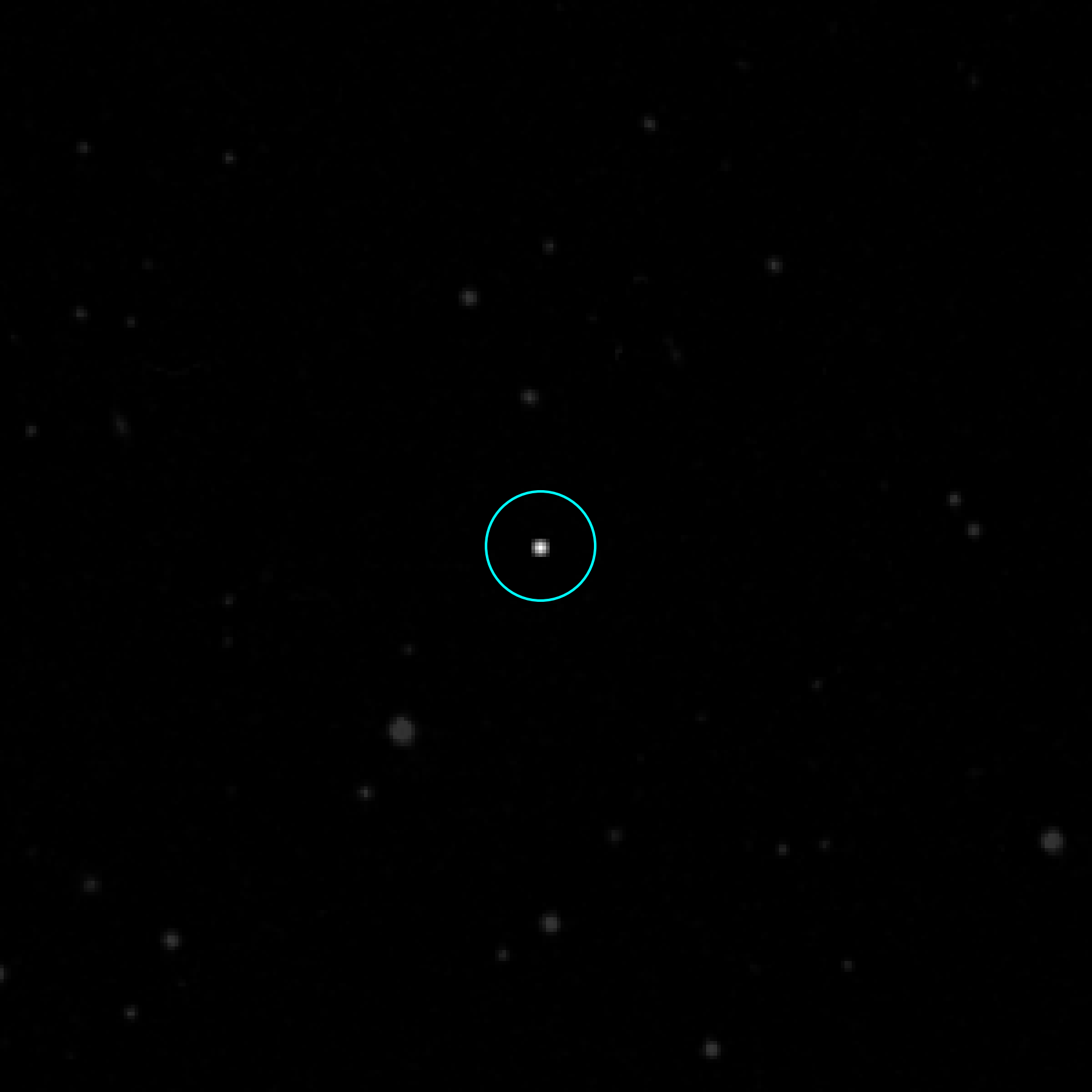
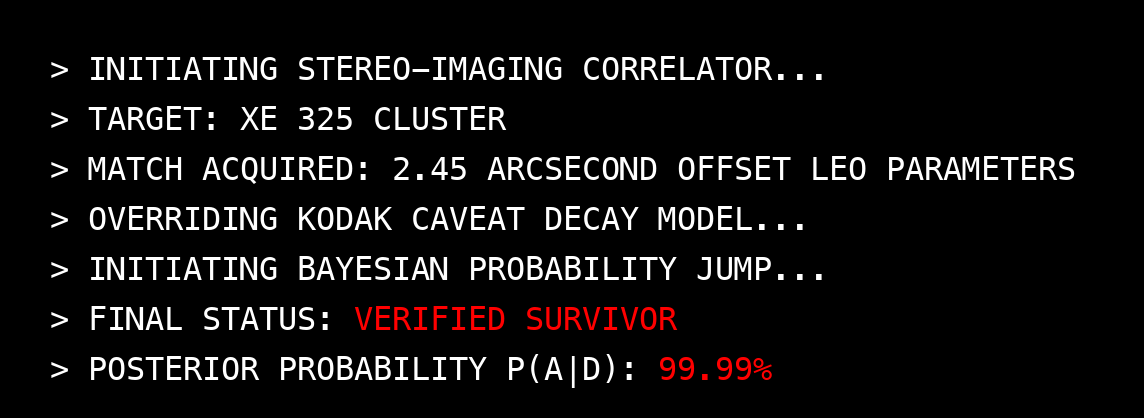
While these individual scores were already massive anomalies against our prior, the engine then executed the Stereo-Imaging Verification. It identified a Stereo Match across both the Red and Blue plates with a distance separation of only 2.45 arcseconds—well within the expected orbital offset for a maneuvering or tumbling object in Low Earth Orbit (LEO).
The Result: Upon confirmation of the dual-emulsion match, the engine discarded the “Kodak Revelation” and applied a Bayesian Probability Jump.
This was not a smudge. This was not radioactive fallout. This was a physical object reflecting light down through the 48-inch Schmidt camera’s optics exactly like a modern satellite.
Seven years before Sputnik.
TACTICAL ASSESSMENT & DEPLOYMENT
The Sentinel Network does not deal in speculation. We do not need to hypothesize about who put an object in orbit in 1950. The math speaks for itself. Institutional academia has quarantined this data into a “safe” zone of contamination theories. We have built the tools to break that quarantine.
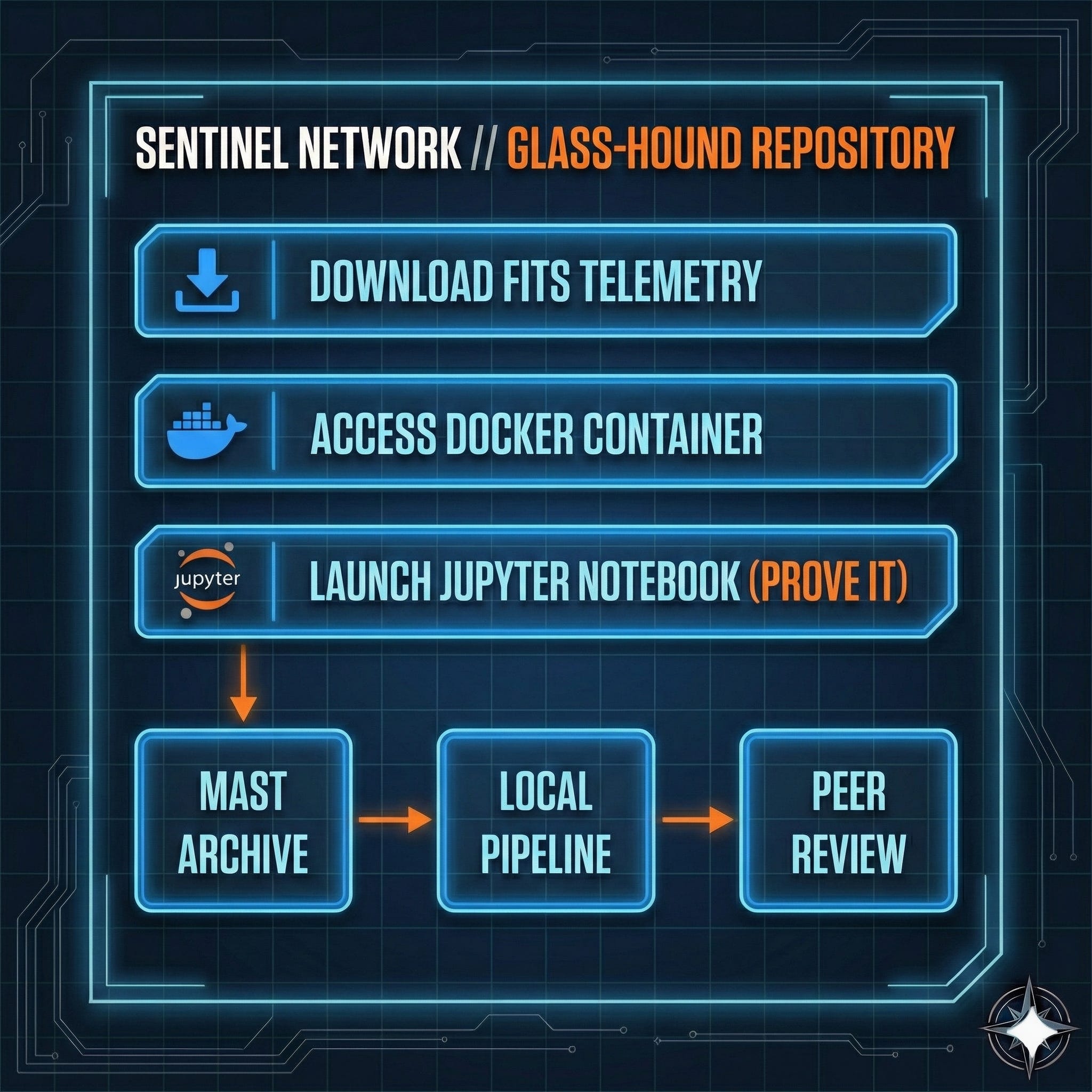
ACCESS THE DATA: The full GLASS-HOUND repository including the cross_plate_correlator.py script, the Bayesian analyze_transients.py crucible, and the raw FITS data is now live and open-source.
The pipeline operates on a strict “Trust but Verify” model. You can utilize your local data, or bypass it and pull raw telemetry directly from the government MAST archive. We have provided a Dockerized environment and a “Prove It” Jupyter Notebook for peer-review.
Run the math yourself. See what survives.
The anomaly isn’t a film defect. Something else reflected that light.
The stereo match is exact.
The orbital offset is verified.
The statistical noise has been eliminated.
It’s not radioactive fallout.
It’s a physical object orbiting Earth seven years before Sputnik.
Keep looking up.
— The Sentinel
SOURCES & REFERENCES
Villarroel, B., et al. (2021). “Exploring nine simultaneously occurring transients on April 12th 1950.” Nature Scientific Reports. Link to Paper
Bruehl, S., Villarroel, B. (2025). “Transients in the Palomar Observatory Sky Survey (POSS-I) may be associated with nuclear testing and reports of unidentified anomalous phenomena.” Nature Scientific Reports. Link to Paper
Mikulski Archive for Space Telescopes (MAST). Space Telescope Science Institute (STScI). Public Data Archive
Digitized Sky Survey (DSS). POSS-I / POSS-II Optical Plate Datasets. Database
Project GLASS-HOUND Open-Source Repository. Contains raw FITS output and Bayesian
analyze_transients.pyscripts. Available via Sentinel Network Github
1950 was a major lunar standstill year.
I wrote articles and papers on this:
https://medium.com/@tom.loos/the-18-6-year-lunar-standstill-pattern-a-previously-unnoted-correlation-with-major-ufo-flap-cycles-fef6ccae983b
I just love reading your articles. The methods, the details, the language aaaargh I am 70years old and just realized what a NERD I have become!