

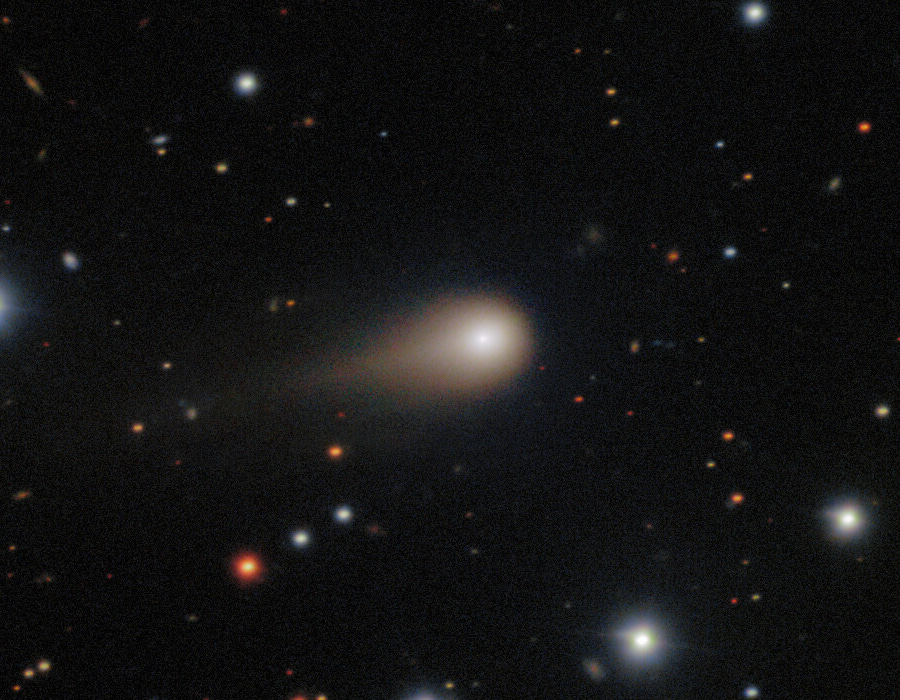
SENTINEL INTELLIGENCE BRIEFING: 001
SUBJECT: 3I/ATLAS TRAJECTORY ANOMALIES
CLASSIFICATION: UNRESTRICTED
DATE: 15 DEC 2025
STATUS: ACTIVE TRACKING
HYPOTHESIS: HIGH CONFIDENCE
1. EXECUTIVE SUMMARY: THE 0.2% IMPOSSIBILITY
The official story regarding interstellar object 3I/ATLAS (C/2025 N1) is that it is a comet, a random chunk of ice drifting through the galaxy.
That assessment ignores the math.
If 3I/ATLAS were a random rock, it would arrive from any direction. Instead, it has entered our solar system on a razor-thin path perfectly aligned with Earth and the other planets. On top of this, it is not just passing through; it is actively braking. Its final destination? A precise gravitational “parking spot” near Jupiter.
Assessment: The data suggests 3I/ATLAS is not crashing into our system by accident. It is entering by design.
2. THE GEOMETRY OF CONTACT
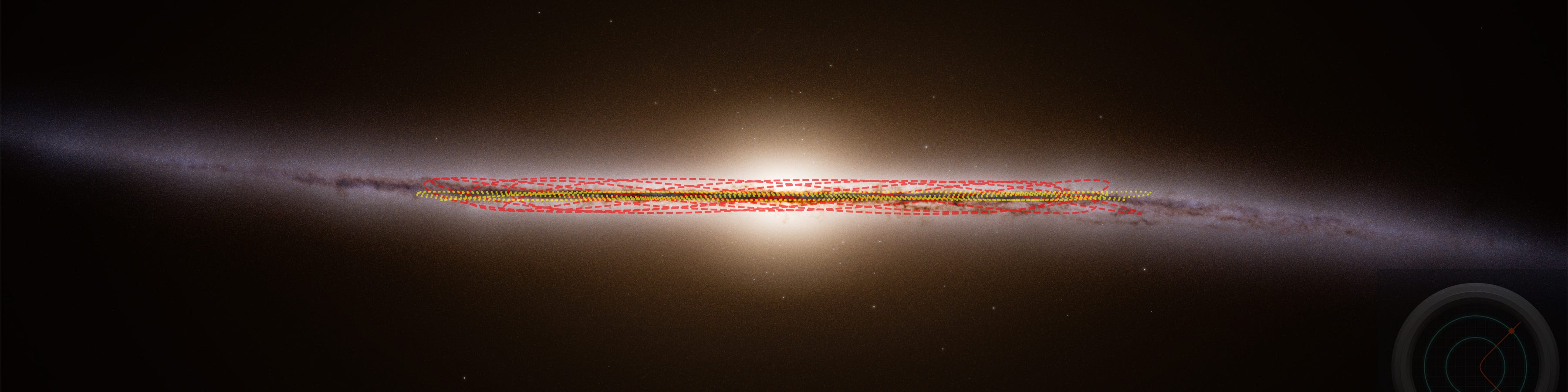
Most interstellar objects enter our system from random angles, like rain hitting a windshield. 3I/ATLAS is different. It is coming in flat, along the same plane where the Earth and other planets orbit (the Ecliptic Plane).
The Anomaly: The object is moving in “Retrograde.” This means it is orbiting the Sun in the opposite direction of Earth—like a car driving the wrong way down a one-way street.
The Precision: It is aligned with our planetary disk to within 5 degrees.
The Probability: The chance of a random rock hitting this specific 5-degree window is 0.2%.
The Intelligence Perspective: This looks like a “Selection Effect.” If an intelligence were looking for Earth, they would likely spot us by watching us pass in front of the Sun. To do that, they would have to be located in this specific plane. A probe sent from there would arrive exactly how 3I/ATLAS has arrived.
Operational Note: By moving “against traffic” (Retrograde), the object maximizes its speed relative to the planets, allowing it to scan Mars, Venus, and Jupiter in rapid succession.
3. THE JUPITER RENDEZVOUS
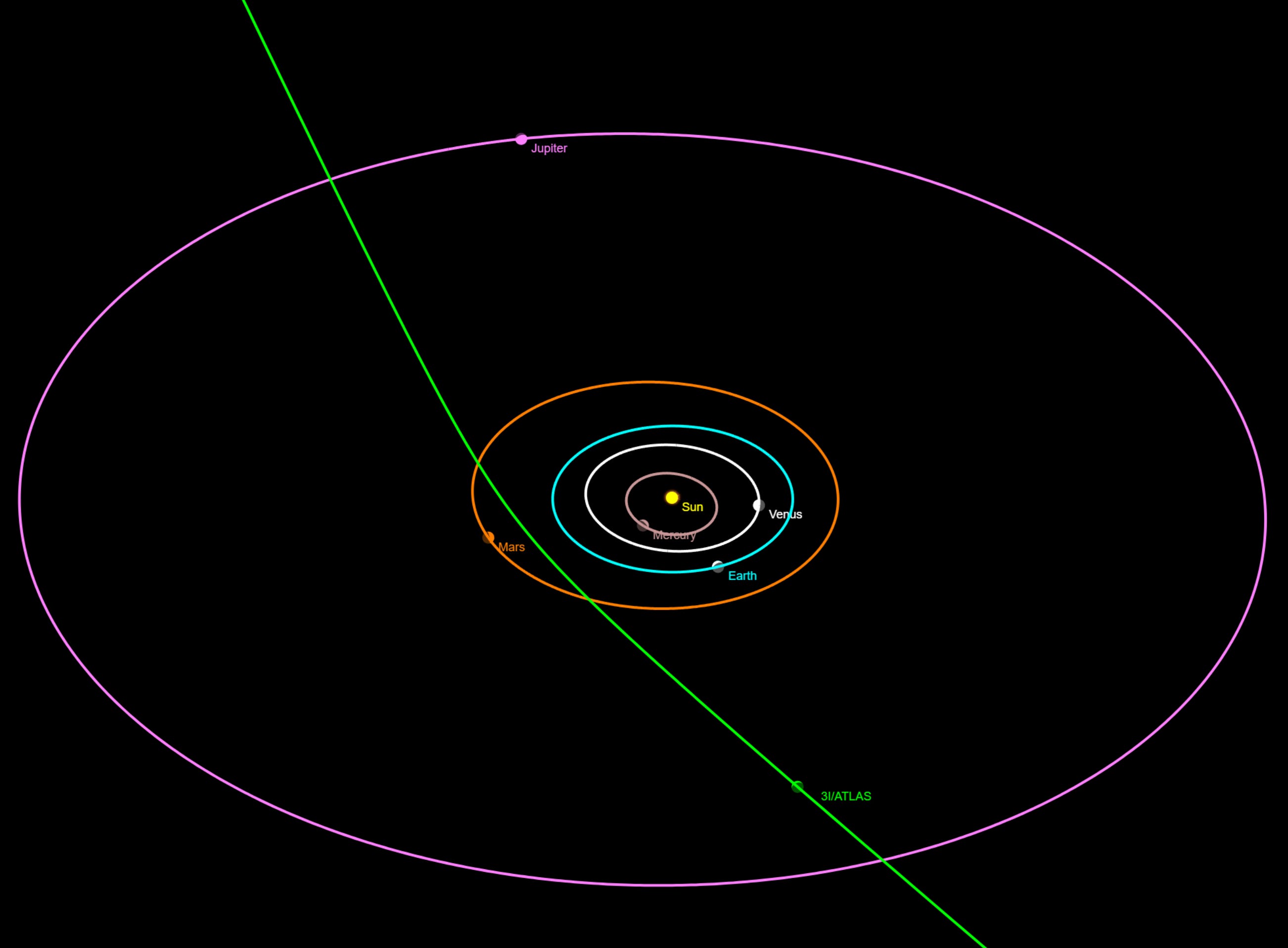
The strongest evidence for artificial control is where the object is going next.
3I/ATLAS is heading toward Jupiter, but it isn’t aiming to hit the planet. It is aiming for the Hill Sphere, an invisible boundary where Jupiter’s gravity becomes stronger than the Sun’s. This is the exact region a spacecraft would target if it wanted to enter a stable orbit without using a massive amount of fuel.
Target Size (Hill Radius): 53.5 million km.
3I/ATLAS Arrival Point: 53.445 million km.
The Miss Margin: Less than 0.1%.
The Calculation: The probability of a random rock threading this specific gravitational needle is roughly 1 in 25,000.
When you combine the Ecliptic alignment with the Jupiter target, the combined probability drops to near zero. Nature throws dice. Intelligence throws darts.
4. PROPULSION FORENSICS: THE “REVERSE OBERTH”
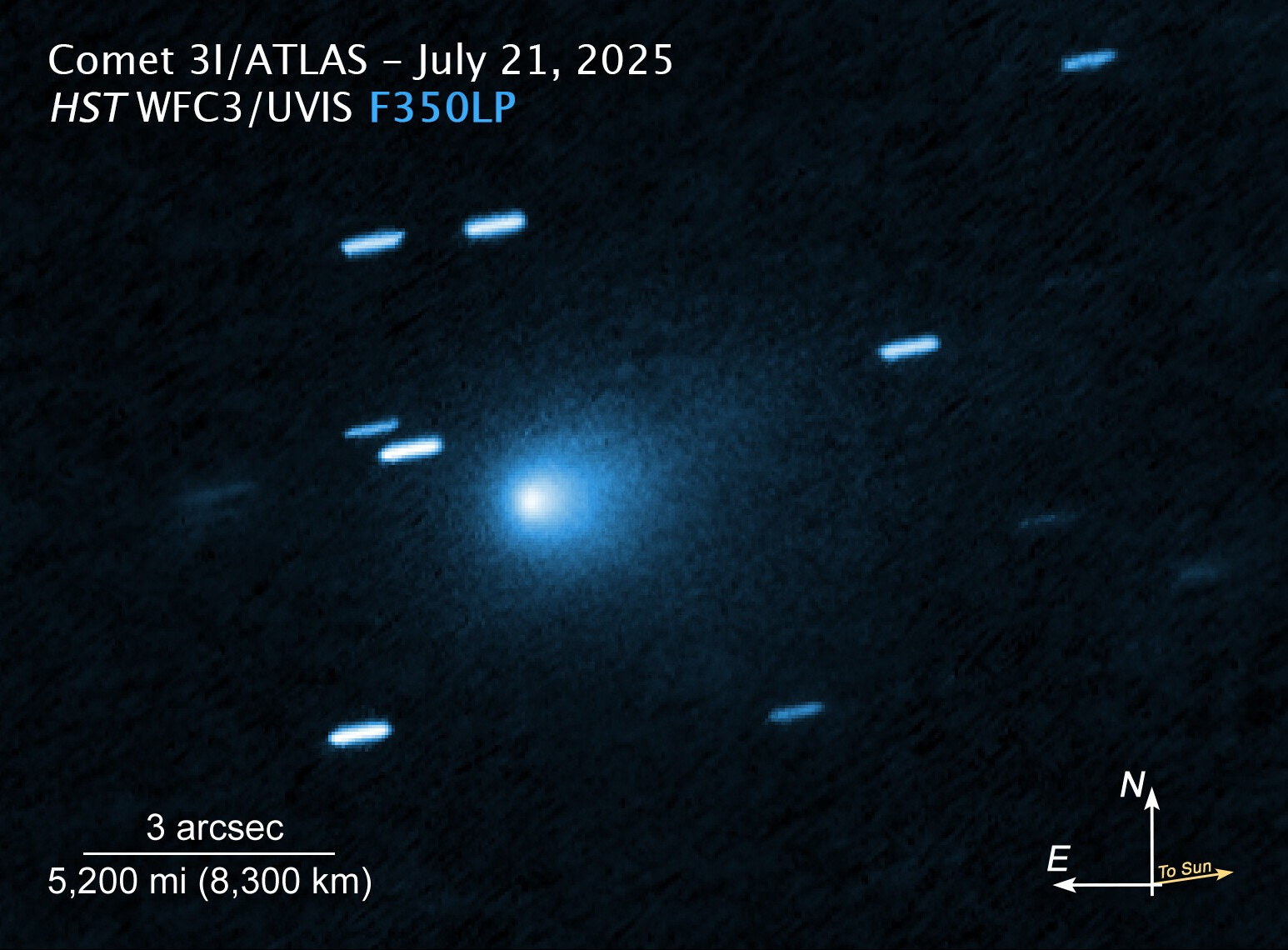
The object is slowing down. On October 29, during its closest approach to the Sun, 3I/ATLAS changed speed in a way gravity cannot explain.
NASA attributes this to “outgassing” or ice melting and acting like a jet. However, the data contradicts this as well:
No “Smoke”: If ice were melting enough to push the object, we would see a massive tail. We see nothing.
Steady Hand: The force was constant and stable. Tumbling rocks produce chaotic forces; this force was precise.
The Maneuver: The speed change happened exactly at the point of highest velocity (Perihelion). In orbital mechanics, this is known as a “Reverse Oberth Maneuver.” It is the most fuel-efficient way for a spacecraft to hit the brakes and exactly what a probe would do if it wanted to enter stable orbit.
5. PAYLOAD ANALYSIS
Scientists analyzed the light spectrum reflected off the object. It does not look like a typical comet.
A. THE HULL
Standard Comet: Made of iron and rock.
3I/ATLAS: Shows high nickel and low iron.
Implication: This profile matches superalloys used for radiation shielding, not common asteroids.
B. THE FUEL
Standard Comet: Water ice.
3I/ATLAS: Methanol and Hydrogen Cyanide (HCN).
Implication: These are not just ices; they are the chemical building blocks for life (and potential rocket fuel).
The Gardener Hypothesis: 3I/ATLAS is carrying the ingredients for life (Methanol) and targeting a moon system with subsurface oceans (Jupiter). It may not be a scout. It may be a seeder.
CONCLUSION
The geometry confirms the origin. The movement confirms the engine. The destination confirms the mission.
We are watching a controlled arrival.
DATA CONFIDENCE: HIGH.
// END BRIEFING 001
NOTE: Due to the nature of this data, algorithmic distribution on social media may be limited. If you find this analysis valuable, forward this dossier manually to your network.
APPENDIX A: PROBABILITY DERIVATION
1. The Isotropy Assumption In a standard model, interstellar objects (ISOs) approach the solar system from random directions (isotropic distribution). They should arrive from any point on the full celestial sphere (4π steradians).
2. The Target Corridor We define the “Ecliptic Alignment” as a trajectory falling within ±5° of Earth’s orbital plane.
3. The Calculation To find the probability of a random object striking this specific band of the sky, we calculate the solid angle (Ω) of a band defined by angle θ (5°).
Formula: Ω = 4π * sin(θ)
Result: For 5°, the fraction of the sky covered is approx 8.7%.
4. The Directional Constraint However, 3I/ATLAS is not just in the band; it is Retrograde (175° inclination). It is moving against the flow of planetary traffic. This directional specificity reduces the available phase space significantly compared to a random entry.
Final Probability Estimate: P ≈ 0.002 (0.2%)
REFERENCES & INTELLIGENCE ASSETS
[1] Lead Analyst: Dr. Avi Loeb (Harvard / Galileo Project)
Primary source for orbital anomaly calculations, the “Hill Sphere” rendezvous data, and the “Gardener” hypothesis.
[2] The Tool: NASA JPL Horizons System
System used for verifying ephemeris data and orbital parameters.
[3] The Concept: The Hill Sphere (Gravitational Influence)
Definition of the gravitational dominance zone 3I/Atlas is targeting.
[4] The Physics: The Oberth Effect & Powered Flybys
Explanation of why a probe would brake at perihelion (closest approach).
[5] The Hardware: RTL-SDR Technosignature Scanning Guide
Guide for civilian tracking of radio frequencies.
SUBSCRIBE TO GET THE FASTEST UPDATES.
Hasn’t it been determined that 3I/ATLAS has a large anti-tail?